



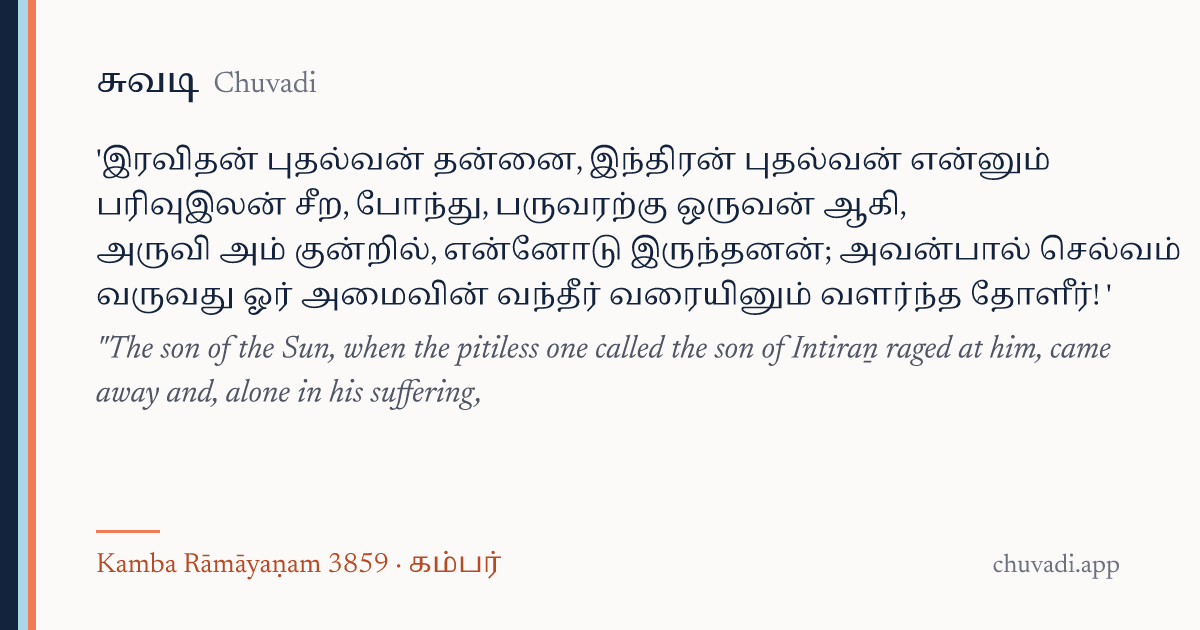
கம்பராமாயணம் 3859 · கிட்கிந்தா 2.22
பாடல் · The poem
Tap a word to see its gloss in the commentary and where else it occurs.
பாட வேறுபாடு · Project Madurai reads
பொருள் · Meaning in Tamil
வரையினும் வளர்ந்த தோளீர் - மலையினும் பெரிதாக வளர்ந்த தோள்களை உடையவர்களே! இரவிதன் புதல்வன்தன்னை - சூரியன் மகனாகிய சுக்கிரீவனை; இந்திரன் புதல்வன் என்னும் - இந்திரன் மகன் என்று கூறப்படும்; பரிவு இலன் - இரக்கமற்றவனாகிய வாலி என்பவன்; சீறப் போந்து - சினந்து துரத்தியதால் அஞ்சி வந்து; பருவரற்கு ஒருவன் ஆகி - துன்பத்தை அனுபவிக்கத் தான் ஒருவனே ஆகி; அருவி அம் குன்றில் - அருவிகள் பாய்கின்ற அழகிய ருசியமுகம் என்னும் இம்மலையில்; என்னோடு இருந்தனன் - என்னோடு தங்கியிருக்கிறான்; அவன்பால் - அவனிடத்து; செல்வம் வருவது ஓர் அமைவின் - செல்வம் வருதற்குரிய ஒரு தன்மையினால், வந்தீர் - (நீங்கள் இங்கு) வந்தீர்கள்.
இராமலக்குவர் வந்ததால் இனிச் சுக்கிரீவன் இழந்த செல்வத்தைப் பெறுவன் என்பதாம். வாலியை வெல்வது அனுமன் கருத்தாதலின் இங்கும் தோள் வலிமையைச் சுட்டிப் பேசினான் எனலாம். சுக்கிரீவன் தமையன் எனக்கூறாது வாலியை 'இந்திரன் புதல்வன்' என அன்னியன் போல் குறித்தது, உடன் பிறந்தார் இருவரிடை ஏற்பட்டுள்ள வேறுபாட்டாலாகும். துன்பத்தைத் தான் ஒருவனாகி அனுபவிப்பதால் சுக்கிரீவன் 'பருவரற்கு ஒருவனாகி' நின்றான். மனைவியையும் வாலி கவர்ந்து கொண்டான் என்பதைக் குறிப்பித்தவாறு.
ஆங்கிலம் · English translationAI
Translation
- "The son of the Sun, when the pitiless one called
- the son of Intiraṉ raged at him, came away and, alone in his suffering,
- has been living with me on this lovely mountain of waterfalls; it is so that good fortune
- may come to him that you have come, you whose shoulders have grown greater than mountains!"
What the poem says
Aṉumaṉ tells the brothers Cukkirīvaṉ's story in brief. Driven out by the merciless Vālī, he fled to this mountain of waterfalls and lives there with Aṉumaṉ, bearing his misery alone. Their arrival, Aṉumaṉ says, must be fate's way of restoring his fortunes.
Aṉumaṉ calls Vālī not "his elder brother" but "the son of Intiraṉ," as if he were a stranger, which shows how far the brothers have fallen apart. "Alone" hints that Vālī has taken even Cukkirīvaṉ's wife.