



கம்பராமாயணம் 3864 · கிட்கிந்தா 2.27
பாடல் · The poem
Tap a word to see its gloss in the commentary and where else it occurs.
பாட வேறுபாடு · Project Madurai reads
பொருள் · Meaning in Tamil
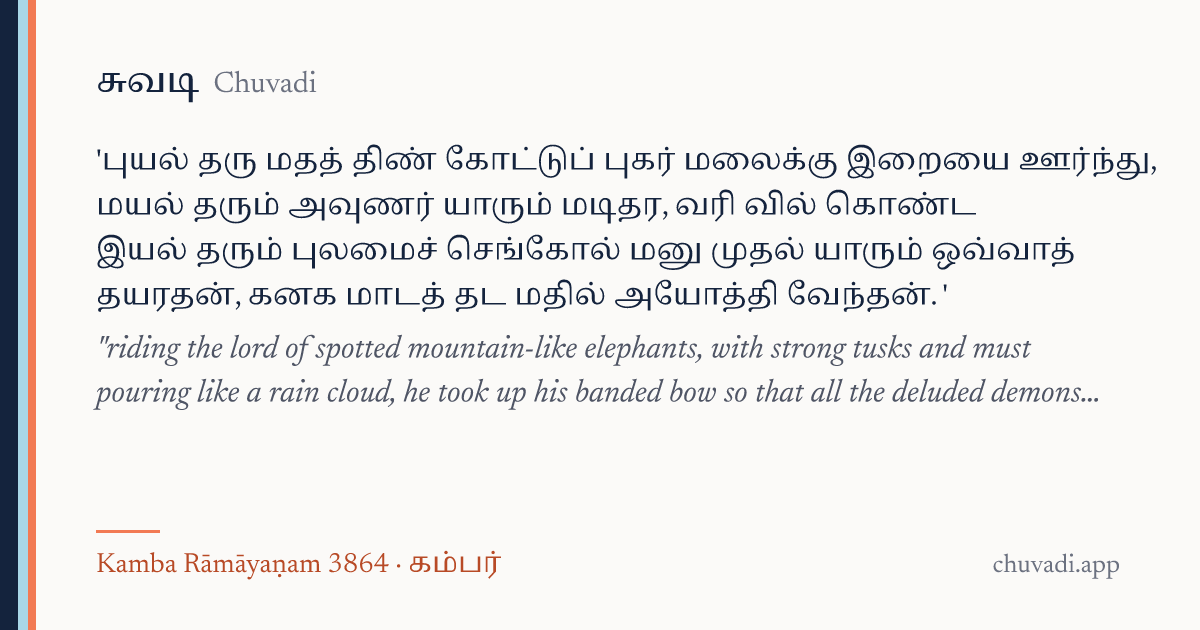
புயல் தரு மதம் - மேகம் போலப் பொழியும் மதத்தையும்; திண் கோடு - வலிமையான தந்தங்களையும்; புகர் - (முகத்தில்) புள்ளிகளையும் உடைய; மலைக்கு இறையை ஊர்ந்து - மலைகள் போன்ற யானைகளுக்குத் தலைவனாகிய பட்டத்து அரச யானையை ஏறிச் செலுத்தி; மயல் தரும் அவுணர் யாரும் - மதி மயக்கம் கொண்ட அசுரர்கள் எல்லாம்; மடிதர - அழியும்படி; வரிவில் கொண்ட - கட்டமைந்த வில்லைக் கொண்டு போர் செய்த; இயல்தரும் புலமைச் செங்கோல் - இயல்பாகப் பொருந்திய அறிவினையும் செங்கோலையும் உடைய; மனு முதல் யாரும் ஒவ்வா - மனு முதலான எந்த அரசர்களும் நிகர் ஆகமாட்டாத; தயரதன் - தயரதன் என்பான்; கனக மாடம் - பொன் மயமான மாளிகைகளையும்; தட மதில் - பெரிய மதிலையும் உடைய; அயோத்தி வேந்தன் - அயோத்தி நகரத்திற்கு வேந்தனாவான்.
மதத்தின் மிகுதி புலப்பட 'புயல் தரு மதம்' என்றார். 'முதல்' என்றதனால் குறிக்கப்பட்டவர் மாந்தாதா, ககுஸ்தன், சகரன், பகீரதன் முதலியோர். 'வெஞ்சினத்து அவுணர் தேர் பத்தும் வென்றுளேற்கு' (1631) எனத் தயரதன் கூறியது காண்க. புயல் தரு மதம் - தரு - உவம உருபு. புகர்மலை - யானையைக் குறித்ததால் உவம ஆகுபெயர்
ஆங்கிலம் · English translationAI
Translation
- "riding the lord of spotted mountain-like elephants, with strong tusks and must pouring like a rain cloud,
- he took up his banded bow so that all the deluded demons perished;
- with natural wisdom and a just sceptre, matched by no king from Maṉu onward,
- he was Tacarataṉ, king of Ayōttī with its golden mansions and broad walls."
What the poem says
The sentence is completed: the king is Tacarataṉ of Ayōttī. Riding his royal elephant, he destroyed the demons with his bow; in wisdom and just rule no king from Maṉu onward could equal him, not even the famous kings of the line such as Māntātā, Kakusthaṉ, Cakaraṉ and Pakīrataṉ.
Ayōttī is pictured with golden mansions and broad walls.