



கம்பராமாயணம் 3866 · கிட்கிந்தா 2.29
பாடல் · The poem
Tap a word to see its gloss in the commentary and where else it occurs.
பொருள் · Meaning in Tamil
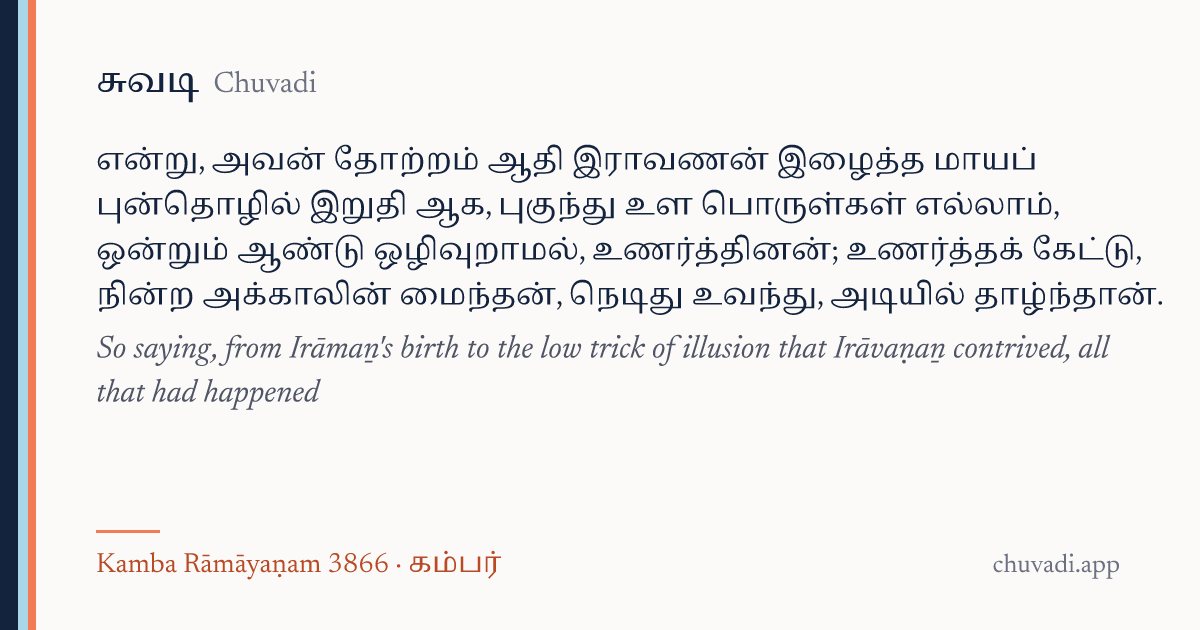
என்று - என்று இவ்வாறு; அவன் தோற்றம் ஆதி - இராமபிரானின் பிறப்பு முதல்; இராவணன் இழைத்த - இராவணன் செய்த; மாயப் புன்தொழில் இறுதி ஆக - வஞ்சனையாகிய கீழ்த்தரமான செயல் ஈறாக, புகுந்து உள பொருள்கள் எல்லாம் - நடந்துள்ள செய்திகளையெல்லாம்; ஒன்றும் ஆண்டு ஒழிவு உறாமல் - எந்த ஒரு நிகழ்ச்சியும் விடுபட்டுப் போகாமல், உணர்த்தினன் - எடுத்துரைத்தான்; உணர்த்த - அவ்வாறு சொல்ல; கேட்டு நின்ற - கேட்டுக் கொண்டு நின்ற; அக்காலின் மைந்தன் - காற்றின் மைந்தனாகிய அந்த அனுமான்; நெடிது உவந்து - பெரிதும் மகிழ்ந்து; அடியில் தாழ்ந்தான் - இராமபிரான் திருவடிகளில் விழுந்து வணங்கினான்.
இராவணன் இழைத்த மாயப் புன்தொழில் - வஞ்சனையால் சீதையைக் கவர்ந்த செயல். சீதையைக் கவர்ந்த செயலைக் கூறவும் விரும்பாததால் கம்பர் 'மாயப்புன் தொழில்' எனக் குறித்தார். இலக்குவன் கூறிய வரலாற்றால் இராமன் வணங்கத்தக்க குணங்களை உடையவன் என அனுமன் அறிந்ததால் நெடிது மகிழ்ந்து அவனது திருவடிகளில் வணங்கினான்.
ஆங்கிலம் · English translationAI
Translation
- So saying, from Irāmaṉ's birth to the low trick of illusion
- that Irāvaṇaṉ contrived, all that had happened
- he told, leaving nothing out; and hearing it as it was told,
- the son of the Wind, standing there, rejoiced greatly and fell at his feet.
What the poem says
Ilakkuvaṉ tells the whole story, from Irāmaṉ's birth to Irāvaṇaṉ's deceitful abduction of Cītai, which the poet only calls "the low trick of illusion," as if unwilling to name it.
Hearing all this, Aṉumaṉ is filled with joy, recognising that Irāmaṉ is worthy of worship, and he falls at his feet.