



கம்பராமாயணம் 3867 · கிட்கிந்தா 2.30
பாடல் · The poem
Tap a word to see its gloss in the commentary and where else it occurs.
பாட வேறுபாடு · Project Madurai reads
பொருள் · Meaning in Tamil
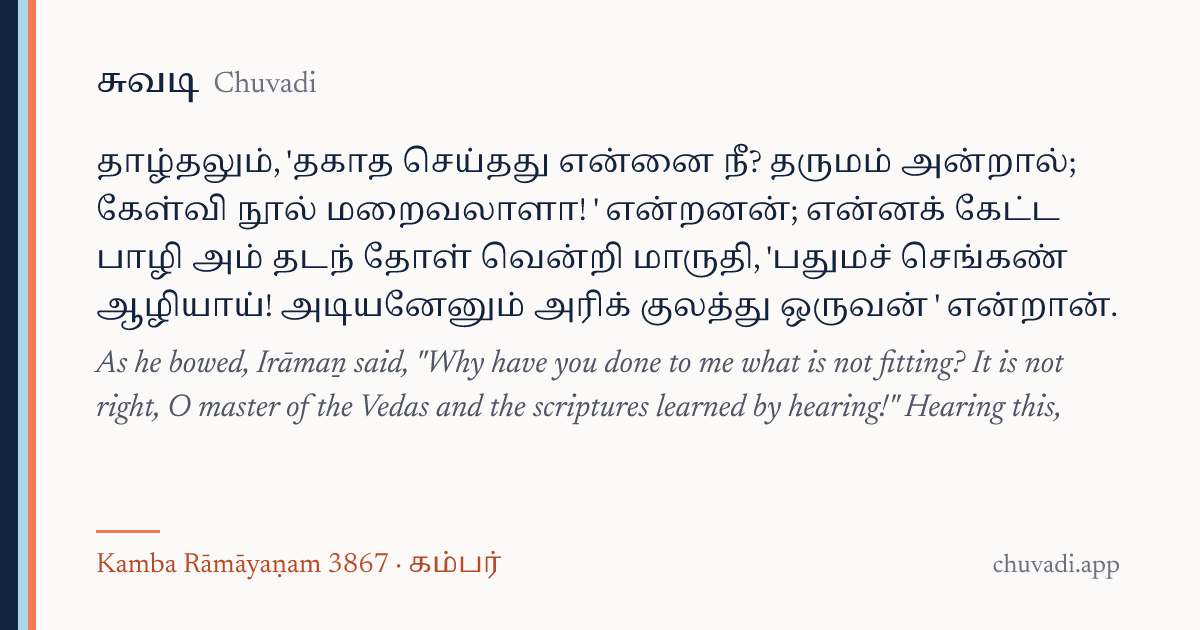
தாழ்தலும் - (அனுமன் தன்னை) வணங்கிய அளவில்; கேள்வி நூல் மறைவலாளா - (இராமன் அனுமனை நோக்கி) கேட்டறிந்த சாத்திரங்களிலும் வேதங்களிலும் வல்ல அந்தணனே! நீ - ; தகாத செய்தது என்னை? - செய்யத்தகாத காரியத்தைச் செய்தது ஏன்? தருமம் அன்று - (அந்தணன் அரசனை வணங்குதல்) தருமம் அன்று; என்றனன் - என்று கூறினனாக; என்னக் கேட்ட - அவ்வாறு கூறியதைக் கேட்ட; பாழி அம் தடந்தோள் - வலிமையான அழகிய பெரிய தோள்களை உடைய; வென்றி மாருதி - வெற்றிமிக்க அனுமன்; பதுமச் செங்கண் ஆழியாய் - 'செந்தாமரை மலர்போன்ற சிவந்த கண்களையும் ஆணைச் சக்கரமும் உடையவனே! அடியனேனும் - அடியனாகிய யானும்; அரிக்குலத்து ஒருவன் - குரங்குக் குலத்தில் தோன்றிய ஒருவனே யாவேன்; என்றான் - என்று கூறினான்.
நால்வகை வருணத்தோருள் அந்தணர் உயர்ந்தோராகக் கருதப்பட்டதால் அந்தணனாகிய அனுமன் அரசனாகிய தன்னை வணங்குதல் தகாது; தருமம் ஆகாது என்றனன் இராமன். அனுமன் அந்தணன் வேடத்தில் இருந்தமையால் இராமன் இங்ஙனம் கூறினான்.
கேள்வி நூல் - வேதம்; சுருதி. செவி வழியாக மட்டும் கேட்கப்படுதலின் வேதத்தைக் கேள்வி நூல் என்பது பழ மரபு. கேட்டற்கரிய நூற்பொருளைக் கற்றறிந்தார் வழிக்கேட்டலும் ஆம். 'கற்றிலனாயினும் கேட்க' என்றார் வள்ளுவரும். (குறள். 414). மறை - வேதம். மருத்துவின் மகனாதலின் 'மாருதி' என்பது அனுமன் பெயராயிற்று. ஆழியாய் - ஆணைச் சக்கரம் உடையவனே என்பது பொருள். தயரத சக்கரவர்த்தியின் மகனாதலின் காடாளும் இராமனை இங்ஙனம் அனுமன் விளித்தான்.
அடியேன் தானும் - உம்மை இறந்தது தழீஇய எச்ச உம்மை. சுக்கிரீவனே அன்றி யானும் எனப் பொருள்படும். ஆல் - அசை.
ஆங்கிலம் · English translationAI
Translation
- As he bowed, Irāmaṉ said, "Why have you done to me what is not fitting? It is not right,
- O master of the Vedas and the scriptures learned by hearing!" Hearing this,
- the victorious son of Māruta, with his strong, broad, handsome shoulders, said,
- "O you with red lotus eyes and the wheel of command, I, your servant, am one of the monkey race."
What the poem says
Since Aṉumaṉ is still disguised as a brahmin student, Irāmaṉ protests: it is not right for a brahmin, learned in the Vedas, to bow to a man of the warrior class.
Aṉumaṉ answers simply that he is not a brahmin at all but one of the monkey people, like his master Cukkirīvaṉ. He addresses Irāmaṉ as the bearer of the wheel of command, honouring him as an emperor's son even in the forest.