



கம்பராமாயணம் 3875 · கிட்கிந்தா 3.3
பாடல் · The poem
Tap a word to see its gloss in the commentary and where else it occurs.
பொருள் · Meaning in Tamil
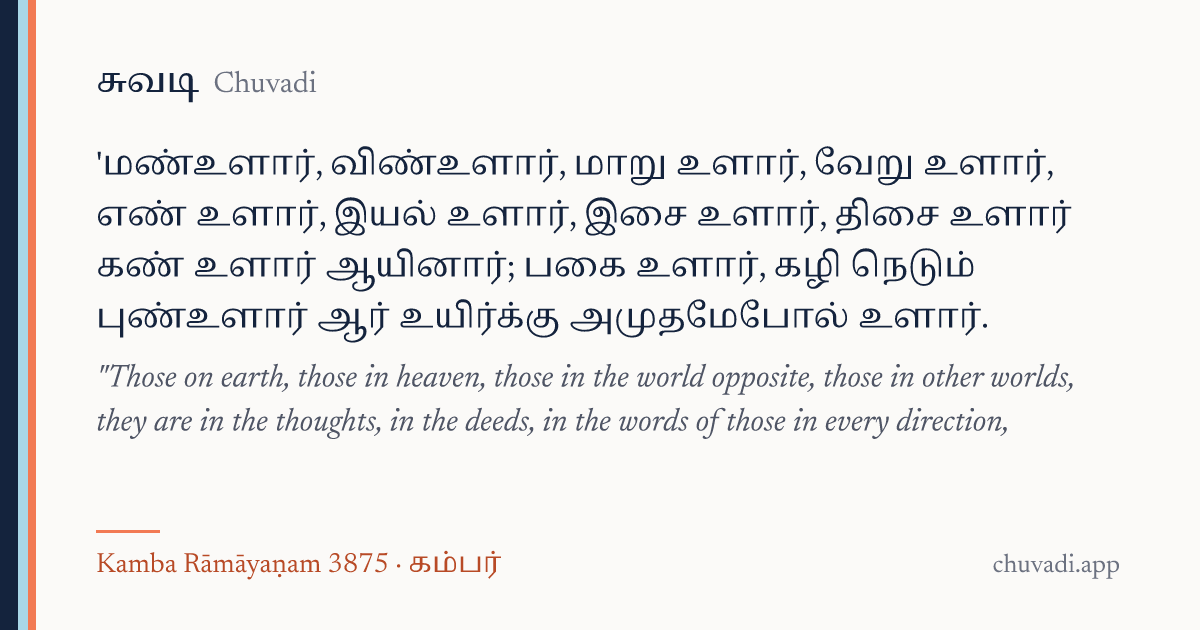
மண் உளார் - (இராமலக்குவர்) மண்ணுலகத்தில் உள்ள மனிதர்களும்; விண் உளார் - விண்ணுலகத்துள்ளோராகிய தேவர்களும்; மாறு உளார் - இவ்விரண்டு உலகங்களுக்கும் மாறான பாதாள உலகத்து நாகரும்; வேறு உளார் - அவற்றிற்கும் வேறான உலகங்களில் இருப்பவர்களும்; திசை உளார் - எட்டுத்திசையிலும் உள்ளவர்களும்; எண் உளார் - (ஆகிய இவர்களின்) மனத்தில் உள்ளவர்களும்; இயல் உளார் - செயலிலே இருப்பவர்களும்; இசை உளார் - சொல்லிலே உள்ளவர்களும்; கண் உளார் ஆயினார் - கண்ணிலே இருப்பவர்களும் ஆவார்கள்; பகை உளார் - தமக்குப்பகைவர்களே உடையவர்களும்; கழிநெடும் புண் உளார் - அப்பகைவர்களால் உண்டாக்கப்பட்ட மிகப் பெரிய புண்களை உடையவர்களுமாய்; ஆர் உயிர்க்கு - தம்மை அடைந்தவர்களின் அரிய உயிர்க்கு; அமுதமே போல் உளார் - அமிழ்தத்தைப் போன்றவரும் ஆவர்.
இராமலக்குவரின் தெய்வத்தன்மையும் வீரமும் கருணையும் இப்பாடலில் உணர்த்தப்பட்டன. 'மண் உளார், விண் உளார் மாறு உளார் வேறு உளார் எண் உளார், இயல் உளார் இசை உளார் திசை உளார்' என்றதால் இராமலக்குவரின் எங்கும் நீக்கமற நிறைந்துள்ள தெய்வத்தன்மை விளங்கும். 'பகை உளார் புண் உளார் ஆர்உயிர்க்கு அமுதமே போல் உளார்' என்றதால் அவர்கள் தம்மை அடைந்தோரின் பகையழித்துக் காக்கும் வீரமும், கருணையும் புலனாகின்றன. 'கண்ணுளார்' என்றது உறுப்புக்களில் சிறந்ததாகிய கண்ணுள் இருப்பவர் எனக் கண்ணின் சிறப்பை உணர்த்திற்று. 'கண்ணாவான் என்றும், மண்ணோர் விண்ணோர்க்குத் தண்ணார் வேங்கட விண்ணோர் வெற்பனே' என்பது திருவாய்மொழி (1-8-3). பேரின்பத்தை அளிக்க வல்லவராதலின் இவர்களுக்கு அமிழ்தம் உவமை ஆயிற்று. 'அச்சமுற்று அடைந்தார்க்கு அமிழ்து அன்னவன்' என்றார் சிந்தாமணியாரும். (சீவக. 157) 'கழிநெடும்புண்' என்ற தொடரில் கழி மிகுதிப்பொருள் உணர்த்தும் உரிச்சொல்.
ஆங்கிலம் · English translationAI
Translation
- "Those on earth, those in heaven, those in the world opposite, those in other worlds,
- they are in the thoughts, in the deeds, in the words of those in every direction,
- they have become the very eyes of all; to those who have enemies, and long, deep
- wounds from them, they are like nectar to their precious lives."
What the poem says
Aṉumaṉ describes the brothers to Cukkirīvaṉ in a run of short rhyming phrases. They dwell in the minds, deeds and words of all beings, on earth, in heaven, in the underworld and in every direction; they are as dear to all as their own eyes, a hint of their all-pervading divinity.
To those who suffer from enemies and are deeply wounded by them, the brothers are like life-giving nectar, which is exactly what Cukkirīvaṉ, wounded by Vālī, needs.