



கம்பராமாயணம் 3880 · கிட்கிந்தா 3.8
பாடல் · The poem
Tap a word to see its gloss in the commentary and where else it occurs.
பொருள் · Meaning in Tamil
உளை வயப் புரவியான் - பிடரி மயிரை உடைய குதிரைப்படை கொண்ட தசரதன்; உதவ - அரசை அளிக்க; உற்று - ஏற்றுக் கொண்டு; ஒருசொலால் - (பின்னறி சொல் ஒன்றால், அளவு இல் கற்பு உடைய சிற்றவை - அளவில்லாத (உயர்ந்த) கற்புடைய சிற்றன்னையாகிய கைகேயி; பணித்தருளலால் - கட்டளையிட்டு அருளியதால்; வளையுடைப் புணரி சூழ் - சங்குகளை உடைய கடலால் சூழப்பட்ட; மகிதலத் திரு எலாம் - நிலவுலகை ஆளும் செல்வம் எல்லாம்; இளையவற்கு உதவி - இளையவனாகிய பரதனுக்கு அளித்து; இத்தலை எழுந்தருளினான் - இக்காட்டிற்கு வந்துள்ளான்.
இராமன் பெற்றோர் சொற்கேட்டமையும், பரதனுக்கு நாடளித்த செயலும் அவன் உயர்பண்பை உணர்த்துவன. இதனால் அவனுக்குச் செல்வத்தில் பற்றின்மையும் புலப்படுகிறது. சிற்றன்னை 'பரதன் நாடாள நீ காடாள்க' எனச் சொன்ன ஒரு சொல்லிலே இராமன் நாடளித்த எளிமை நோக்கி 'ஒரு சொலால் பணித்தருள' என்றான். விடுதற்கு அரிய செல்வம் ஆதலின் 'மகிதலத் திரு எலாம்' எனப்பட்டது. வாலியைக்கொன்ற பின்னர் கிட்கிந்தையரசை இராமன் கொள்வானோ என்ற ஐயம் சிறிதும் சுக்கிரீவனுக்கு ஏற்படக்கூடாது என்பதற்காக இராமன் நாடு கொடுத்த செய்தி இங்குக் கூறப்படுகிறது. தனக்குரிய நாட்டையே தம்பிக்கு அளித்தவன் இவ்வரசைப் பெற விழையான் என்பது இதனால் உறுதி செய்யப் பெறுகிறது. கைகேயியை 'அளவுஇல் கற்புடைய சிற்றவை' என்று குறித்தும், அவள் சொல்லியதைப் 'பணித்து அருளலால்' என்று குறித்தும் கூறிய நயம் சிந்தனைக்கு உரியது.
ஆங்கிலம் · English translationAI
Translation
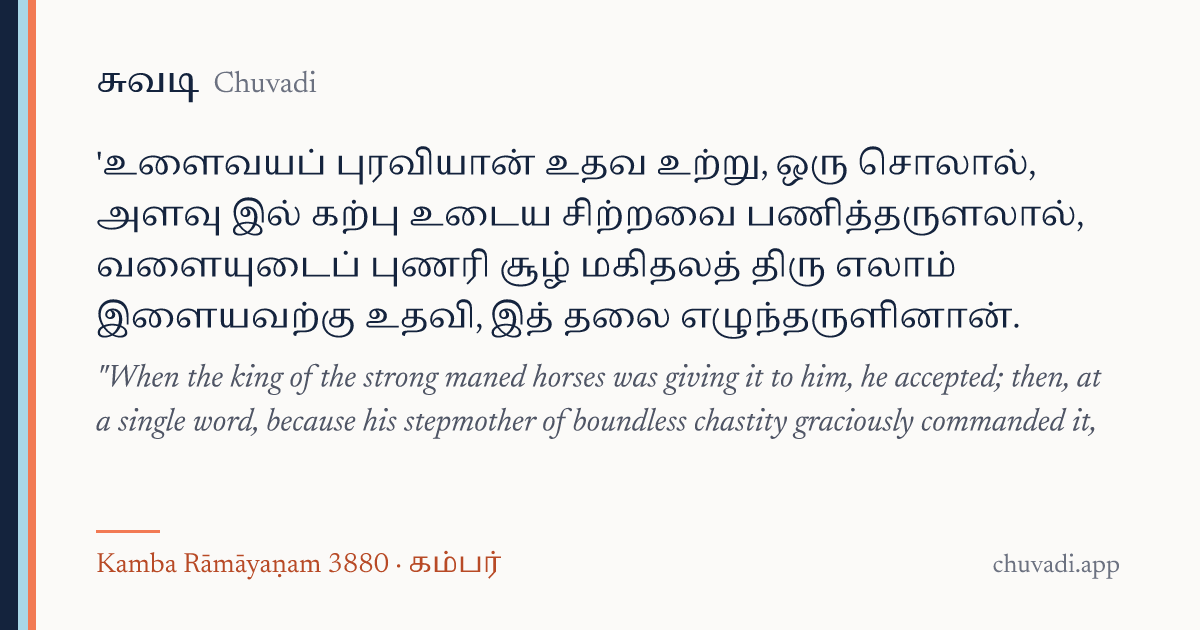
- "When the king of the strong maned horses was giving it to him, he accepted; then, at a single word,
- because his stepmother of boundless chastity graciously commanded it,
- all the wealth of the earth, ringed by the conch-filled sea,
- he gave to his younger brother, and graciously came here."
What the poem says
Aṉumaṉ tells how Irāmaṉ accepted the throne his father offered, then at a single word from his stepmother Kaikēyi gave the whole kingdom to his younger brother Paratan and came to the forest.
This detail is aimed at a fear Cukkirīvaṉ might have: after killing Vālī, would Irāmaṉ take the monkey kingdom for himself? A man who gave away his own kingdom to his brother will not want another's. The commentary notes the courtesy with which Kaikēyi is spoken of here.