



கம்பராமாயணம் 3883 · கிட்கிந்தா 3.11
பாடல் · The poem
Tap a word to see its gloss in the commentary and where else it occurs.
பாட வேறுபாடு · Project Madurai reads
பொருள் · Meaning in Tamil
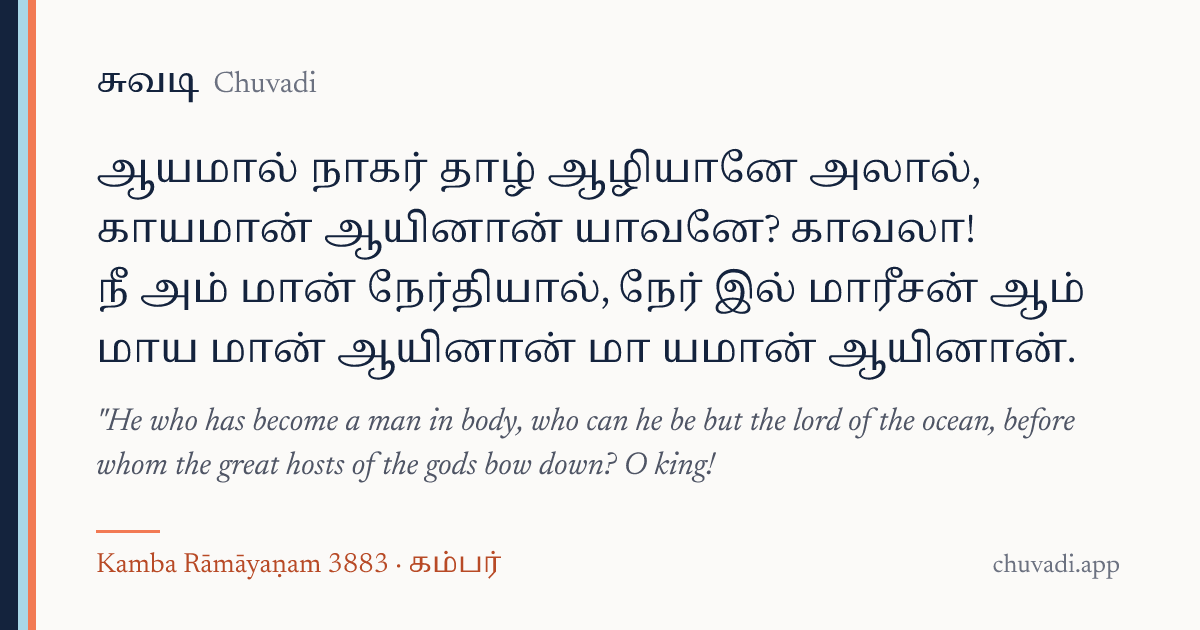
காவலா - அரசே; காயமான் ஆயினான் - மானிட உடம்பில் தோன்றும் இந்த இராமன்; ஆயமால் நாகர் தாழ் - கூட்டமாகவுள்ள பெருமை பொருந்திய தேவர்கள் வணங்குகின்ற; ஆழியானே அலால் - திருப்பாற்கடலில் யோக நித்திரை செய்தருளும் திருமாலே அல்லாது; யாவனே - வேறு யாரவன்? நீ அம்மான் நேர்தி - நீ அப்பெருமைக்குரியவனுடன் நட்புக் கொள்வாயாக; நேர்இல் - நிகரில்லாத வலிமையுடைய; மாரீசன் ஆம் - மாரீசன் என்கின்ற, மாயமான் ஆயினான் - மாயமானாய் வந்த அரக்கனுக்கு; மா யமான் ஆயினான் - (இந்த இராமன்) பெரிய யமனாக நின்று அழித்தவனாவான்.
காயம் - உடம்பு; மான் - மனிதன். உடம்பால் மனிதனாகத் தோன்றியவன் என்பதால், தன்மையால் தெய்வம் என்பது பெறப்படும். யாவனே - ஏ, எதிர்மறை, வேறு எவனுமாகான்; இராமன் திருமாலே என்பதை வற்புறுத்த வந்தது. யமான் - யமன் என்பதன் நீட்டல் விகாரம்.
ஆங்கிலம் · English translationAI
Translation
- "He who has become a man in body, who can he be but the lord of the ocean,
- before whom the great hosts of the gods bow down? O king!
- Make friends with that great one; for to Mārīcaṉ, who had no equal,
- when he became the magic deer, he became a mighty Yama."
What the poem says
Aṉumaṉ tells Cukkirīvaṉ plainly that this man in human body can be none other than Tirumāl, who lies on the ocean and is worshipped by the gods, and urges him to make friends with him. The demon Mārīcaṉ, who took the form of a magic golden deer to lure Irāmaṉ away from Cītai, found in him a great Yama, the god of death.
The verse is a famous display of sound play, ringing changes on māṉ ("man," "deer") and yamāṉ ("Yama").