



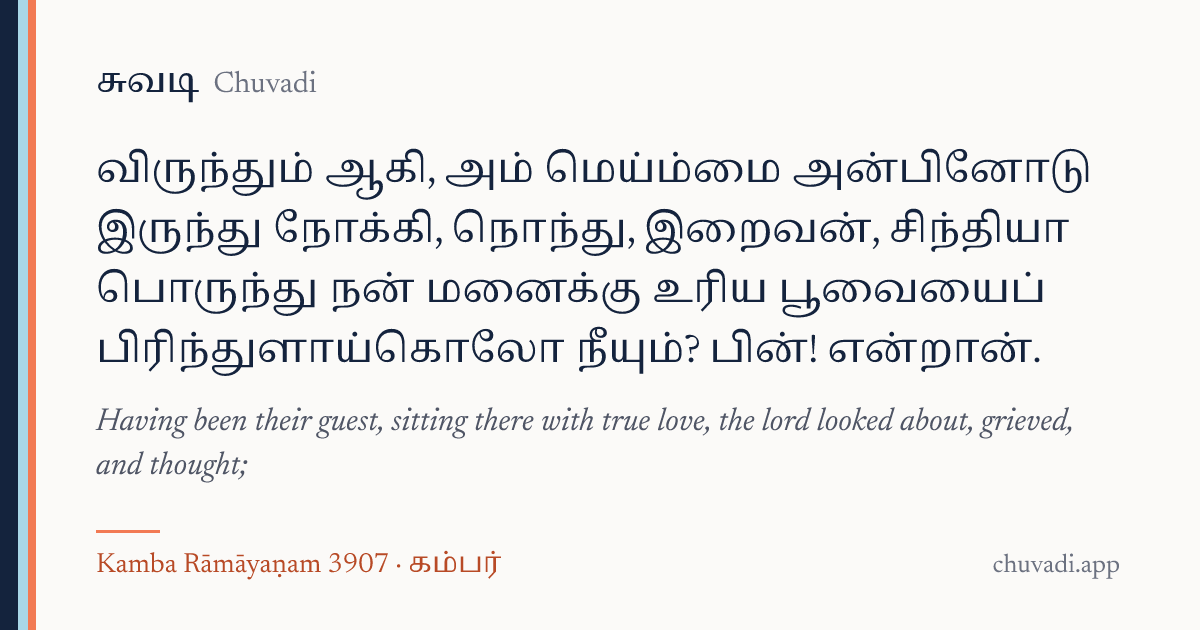
கம்பராமாயணம் 3907 · கிட்கிந்தா 3.35
பாடல் · The poem
Tap a word to see its gloss in the commentary and where else it occurs.
பாட வேறுபாடு · Project Madurai reads
பொருள் · Meaning in Tamil
அம்மெய்ம்மை அன்பினோடு இருந்து - அத்தகைய உண்மையான அன்புடனே இருந்து; இறைவன் - இராமன்; விருந்தும் ஆகி - (வானரர்க்குச்) சிறந்த விருந்தினனாகி; நோக்கி - தனக்கு அவர்கள் விருந்து நடத்தியதைப் பார்த்து; நொந்து - (சுக்கிரீவன் மனைவியைக் காணாமையால்) மனம் வருந்தி; சிந்தியா - ஆலோசித்து; பின் - பின்னர்; பொருந்தும் நல்மனைக்கு - (சுக்கிரீவனைப் பார்த்து) பொருந்திய நல்ல இல்லற வாழ்க்கைக்கு; உரிய பூவையை - உரியவளான மனைவியை; நீயும் பிரிந்துளாய் கொல் - (என்னைப்போல) நீயும் பிரிந்துள்ளாயோ? என்றான் - என்று வினவினான்.
விருந்தினனாகிய தன்னைச் சுக்கிரீவன் மனைவி இல்லாமல் உபசரிப்பதைக் கண்டு 'நன்மனைக்குரிய பூவையைப் பிரிந்துளாய் கொல்' என இராமன் வினவினான். மனையாள் இல்லாத இடத்து விருந்தோம்புதல் சிறக்காது என்பர். மகளிரும் விருந்தோம்புதலைத் தலையாய கடனாகக் கொண்டனர் என்பதை 'வைகலும் விருந்தும் அன்றி விளைவன யாவையே?' (67) என்ற அடிகள் உணர்த்தும். 'விருந்தெதிர் கோடலும் இழந்த என்னை' (சிலம்பு - 2 - 10 - 73) என்ற கண்ணகியின் வருத்தமும் விருந்தோம்பலில் மகளிர் பங்கை உணர்த்தும். மனை - இல்லற வாழ்க்கை; இடவாகுபெயர்; பூவை - உவமை ஆகுபெயர்; நீயும் - உம்மை இறந்தது தழுவிய எச்ச உம்மை.
ஆங்கிலம் · English translationAI
Translation
- Having been their guest, sitting there with true love,
- the lord looked about, grieved, and thought;
- then he said, "Are you, too, parted from the lovely one
- who belongs to your good home?"
What the poem says
After the meal Irāmaṉ notices that Cukkirīvaṉ has entertained him without a wife beside him, and is saddened. Hospitality was the joint duty of husband and wife, so her absence tells him something is wrong.
He asks gently whether Cukkirīvaṉ, like himself, has been separated from his wife. The commentary recalls Kaṇṇaki's lament in the Cilappatikāram that, parted from her husband, she had lost even the chance to welcome guests.