



கம்பராமாயணம் 3906 · கிட்கிந்தா 3.34
பாடல் · The poem
Tap a word to see its gloss in the commentary and where else it occurs.
பாட வேறுபாடு · Project Madurai reads
பொருள் · Meaning in Tamil
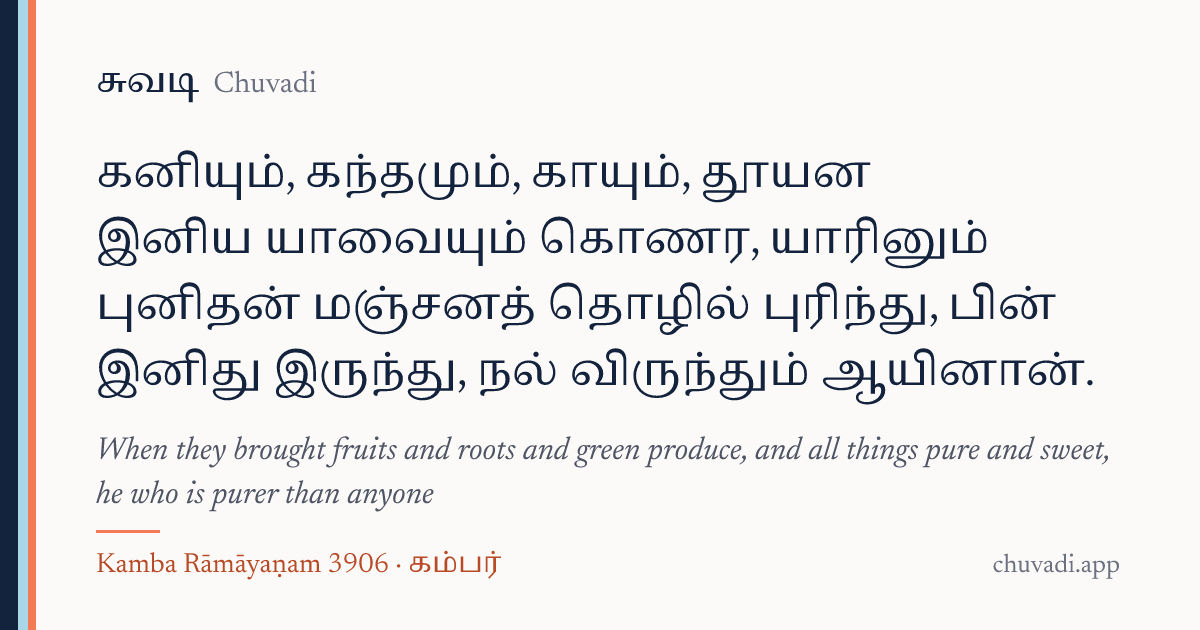
கனியும் - பழங்களும்; கந்தமும் - கிழங்குகளும்; காயும் - காய்களும்; தூயன இனிய யாவையும் - தூய்மையாயும் இனிமையாயும் உள்ள யாவற்றையும்; கொணர - (வானரர்கள்) கொண்டுவர; யாரினும் புனிதன் - யாவரினும் தூய்மையானவன் ஆகிய இராமன்; மஞ்சனத் தொழில் புரிந்து - நீராடுதலைச் செய்து; பின் இனிது இருந்து - பின்னர் இனிமையாக இருந்து; நல் விருந்தும் ஆயினான் - சுக்கிரீவற்கு நல்ல விருந்தாளியும் ஆனான். (விருந்துண்டான்).
சுக்கிரீவன் தன் பரிவாரங்களைக் கொண்டு விருந்து அளிக்க, இராமன் நீராடி விருந்துண்டான். கந்தம் - கிழங்கு - வடசொல். விருந்து - புதுமை - விருந்தினர்களைக் குறித்ததால் உவம ஆகுபெயர். விருந்தும் - உம்மை இறந்தது தழுவிய எச்ச உம்மை - நண்பன் ஆனதை உடன் தழுவியது.
ஆங்கிலம் · English translationAI
Translation
- When they brought fruits and roots and green produce, and all things
- pure and sweet, he who is purer than anyone
- performed his bath, and afterwards,
- sitting at ease, became their honoured guest as well.
What the poem says
The monkeys bring fruits, roots and other pure, sweet forest food. Irāmaṉ, the purest of all, bathes and then sits down to the meal, becoming Cukkirīvaṉ's honoured guest as well as his friend.