



கம்பராமாயணம் 3943 · கிட்கிந்தா 3.71
பாடல் · The poem
Tap a word to see its gloss in the commentary and where else it occurs.
பொருள் · Meaning in Tamil
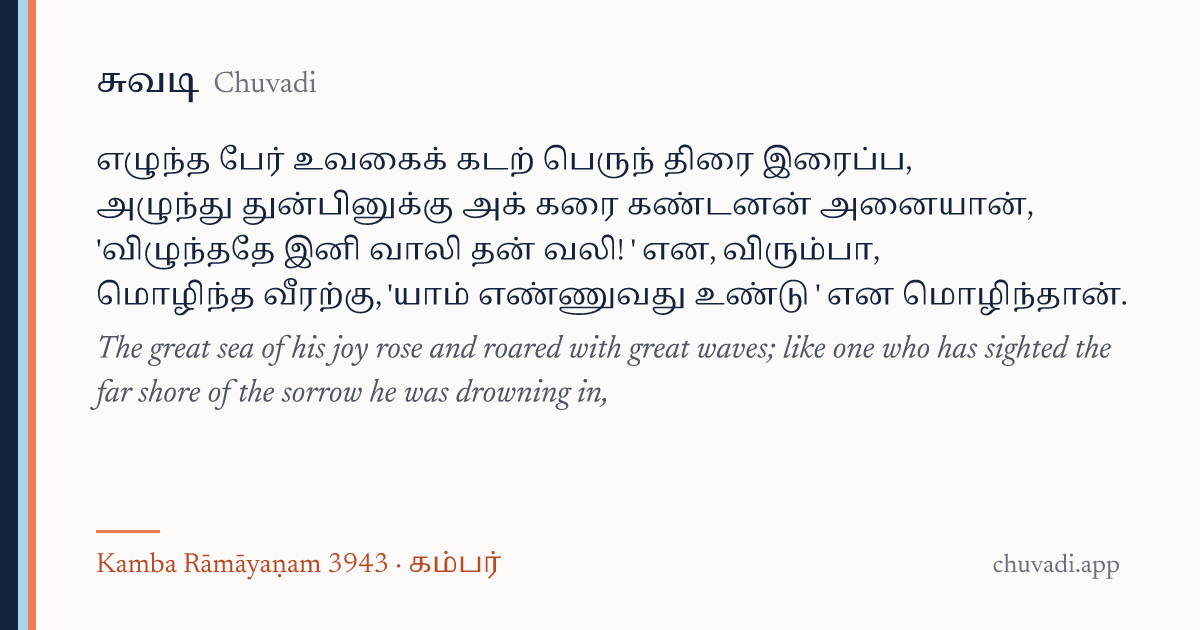
பேர் உவகைக் கடல் - (இராமன் கூறியதைக் கேட்ட மாத்திரத்தில்) பெரிய மகிழ்ச்சியாகிய கடல்; பெருந்திரை எழுந்து - பெரிய அலைகளோடு பொங்கி எழுந்து; இரைப்ப - ஒலிக்க; அழுந்து துன்பினுக்கு - தான் அழுந்திடக் கிடந்த துயரமாகிய கடலுக்கு; அக்கரை கண்டனன் - எல்லை கண்டவனை; அனையான் - ஒத்து விளங்கும் சுக்கிரீவன்; இனி, வாலிதன் வலி - "இனி வாலியின் வலிமை; வீழ்ந்ததே- அழிந்ததேயாம்'; என விரும்பா - என்று விருப்பமுற்று; மொழிந்த வீரற்கு- (தன்னிடம்) பேசிய இராமனிடம்; யாம் எண்ணுவது உண்டு - 'நாங்கள் ஆலோசிக்க வேண்டுவது ஒன்றுளது'; என மொழிந்தான் - என்று சொன்னான்.
இராமன் சொல்லைக் கேட்டதும் சுக்கிரீவன் பெரிதும் மகிழ்ந்தான் என்பதால் 'பேருவகைக்கடல் பெருந்திரை இரைப்ப' என்றார். பேருவகைக்கடல் என்பது உருவகம். 'அக்கரை' என்றதால் துயரமாகிய கடலுக்கு என உருவமாகக் கொள்ளல் வேண்டும். இராமன் உரையால் வாலியை இறந்துபட்டவனாகவே சுக்கிரீவன் உணர்ந்ததால் 'விழுந்ததே வாலி தன் வலி' எனப்பேசினான். விழுந்ததே - தெளிவுபற்றி எதிர்காலம் இறந்தகாலமாய் வந்த கால வழுவமைதி.
'எண்ணித் துணிக கருமம்' என்பதால் சுக்கிரீவன் இராமனிடம் 'யாம் எண்ணுவது உண்டு' என்றான். 'யாம்' என்று அனுமனை உள்ளிட்ட அமைச்சர்களை உளப்படுத்திக் கூறியதாகும்.
விழுந்ததே - ஏகாரம் தேற்றம்.
ஆங்கிலம் · English translationAI
Translation
- The great sea of his joy rose and roared with great waves;
- like one who has sighted the far shore of the sorrow he was drowning in,
- saying with longing, "Vālī's might has fallen now!",
- he told the hero who had spoken, "There is something we must consider."
What the poem says
Cukkirīvaṉ's joy is pictured as a sea surging with waves, and his grief as a sea whose far shore he can now see. To him Vālī is as good as dead, so he speaks of the fall in the past tense.
Still, a deed should be weighed before it is undertaken, so he says that he and his ministers, Aṉumaṉ among them, have something to discuss first.