



கம்பராமாயணம் 3951 · கிட்கிந்தா 3.79
பாடல் · The poem
Tap a word to see its gloss in the commentary and where else it occurs.
பொருள் · Meaning in Tamil
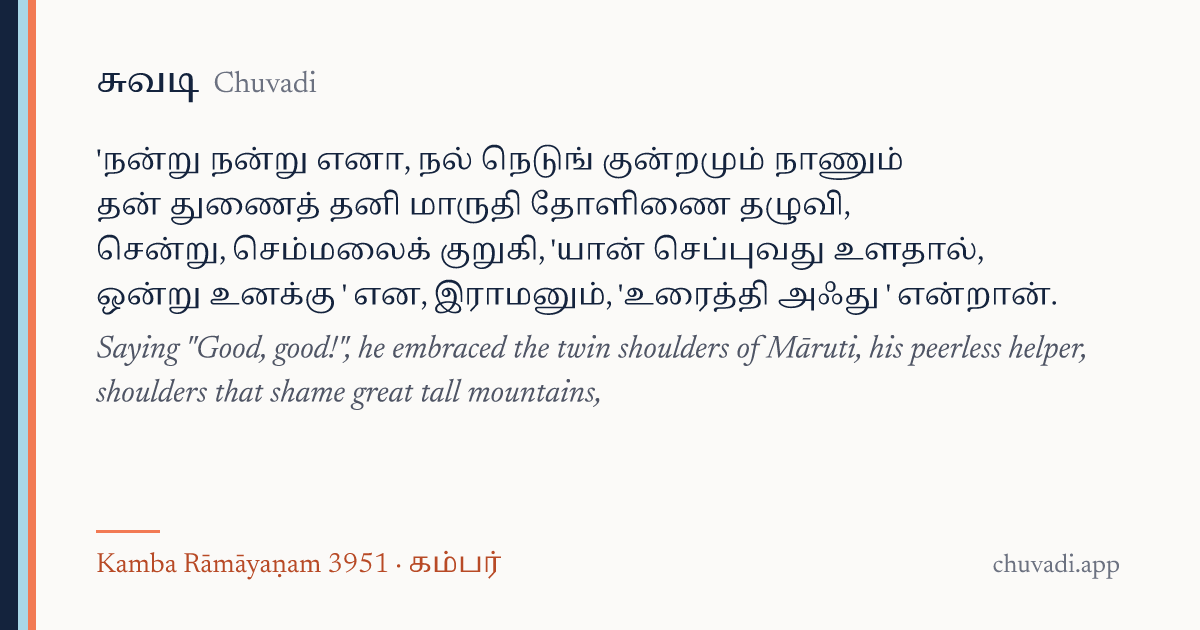
நன்று நன்று எனா - (அனுமன் கூறியதைக் கேட்ட சுக்கிரீவன் 'நீ சொன்னது நல்லது நல்லது' என்று மகிழ்ந்து; தன் தனித் துணை மாருதி - தனது ஒப்பற்ற துணையாக விளங்கும் அனுமனின்; நல் நெடுங்குன்றமும் நாணும் - நல்ல பெரிய மலைகளும் நாணும்படியான; தோளிணை தழுவி - தோள்கள் இரண்டையும் தழுவிக் கொண்டு; செம்மலைச் சென்று குறுகி - இராமனைச் சென்றடைந்து; யான் - உனக்குச் செப்புவது - உனக்குச் சொல்வது; ஒன்று உளது என - ஒரு செய்தி உள்ளது" என்று சொல்ல; இராமனும் - ; அஃது உரைத்தி - "அதனைச் சொல்வாய்"; என்றான் - என்று சொன்னான்.
அனுமன் கூறிய உபாயம் தனக்கும் ஏற்புடைத்தாக இருந்தமையால் அவனது அறிவின் திறம் பாராட்டும் வகையில் 'நன்று, நன்று' என்று கூறியதோடு அமையாது அவன் தோள்களைத் தழுவியும் தன் மகிழ்ச்சியைச் சுக்கிரீவன் புலப்படுத்தினான்.
அமைச்சர் பலருள் சுக்கிரீவனுக்கேற்ற ஒப்பற்ற துணையாய் இருப்பவன் ஆதலின் அனுமனைத் 'தன் துணைத் தனிமாருதி' என்றார் அனுமன் தோளிணை 'எம் மலைக் குலமும் தாழ இசை சுமந்தெழுந்த தோளான்' (3766) என்றது காண்க. நன்று நன்று - அடுக்கு வியப்பைக் குறிப்பது. குன்றமும் - உயர்வு சிறப்பும்மை.
ஆங்கிலம் · English translationAI
Translation
- Saying "Good, good!", he embraced the twin shoulders
- of Māruti, his peerless helper, shoulders that shame great tall mountains,
- then went and drew near the noble one: "There is something
- I would say to you"; and Irāmaṉ said, "Tell it."
What the poem says
Delighted with Aṉumaṉ's plan, Cukkirīvaṉ praises it twice over and hugs him. Māruti, "son of the Wind", is Aṉumaṉ, his matchless helper among all his ministers, whose shoulders put mountains to shame. Then he goes back to Irāmaṉ to make his request.
This verse closes the canto of the alliance; the next canto tells of the seven trees.