



கம்பராமாயணம் 3988 · கிட்கிந்தா 5.16
பாடல் · The poem
Tap a word to see its gloss in the commentary and where else it occurs.
பொருள் · Meaning in Tamil
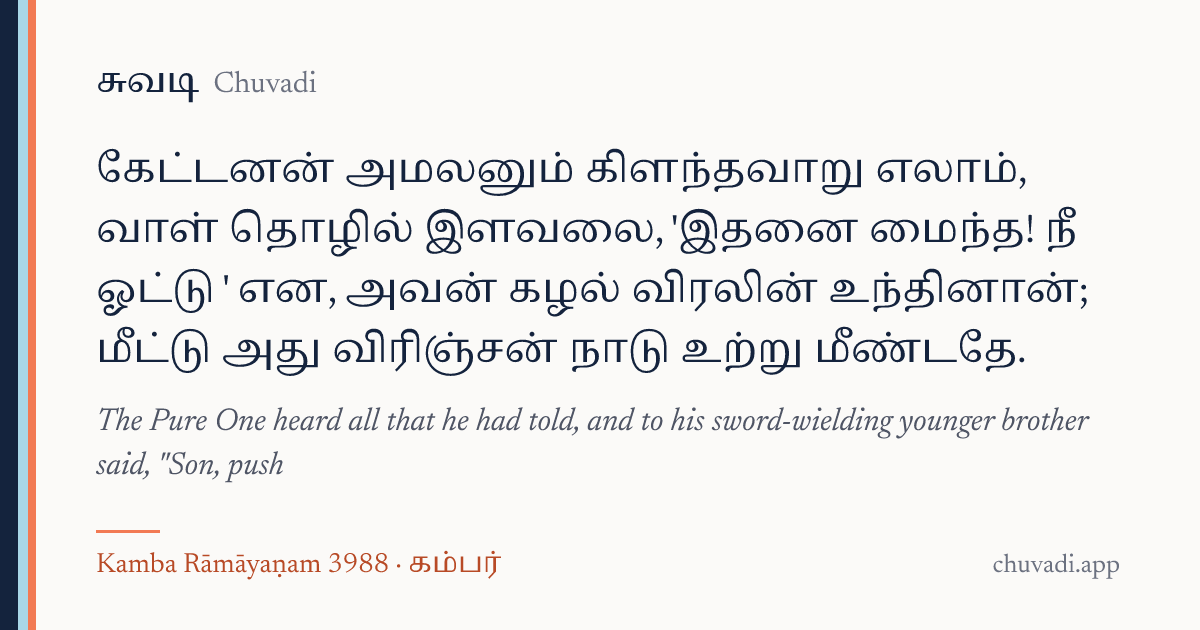
அமலனும் - இராமனும்; கிளந்தவாறு எலாம் கேட்டனன் - (சுக்கிரீவன்) சொன்ன வரலாறு முழுமையும் கேட்டு; வாள் தொழில் இளவலை - வாளேந்திப் போர் செய்யும் தொழிலுடைய தம்பியாய் இலக்குவனை (நோக்கி); மைந்த - 'வீரனே! இதனை நீ ஓட்டு என - இந்த உடலை நீ அப்பால் தள்ளு' என்று கூற; அவன் - அந்த இலக்குவன்; கழல் விரலின் உந்தினான் - தன் கால் விரல்களால் தள்ளி எறிந்தான்; அது - அவ்வெலும்புக்கூடு; மீட்டு விரிஞ்சன் நாடு - மறுபடியும் பிரமலோகத்தை, உற்று மீண்டதே - அடைந்து திரும்பி வந்து வீழ்ந்தது.
மராமரத்தை எய்து தன் வலிமையைக் காட்டிய இராமன், தன் இளவலின் ஆற்றலைச் சுக்கிரீவனுக்குக் காட்டத் துந்துபியின் உடலைத் தூக்கி எறியுமாறு கூறினன். முன்பு வாலி தூக்கி எறிந்த போது ஒரு முறை, பிரமலோகம் வரை சென்று வந்ததால் இங்கு 'மீட்டு' என்றார். வாலி கையால் சுழற்றி எறிந்த உடல் எச்சத்தை இலக்குவன் கால் விரலால் எற்றி வலிமைப் பெருமிதத்தைப் புலப்படுத்தினான் என்பதை உணர்க. இச்செய்கையால், இலக்குவனும் இராமன் போலவே வலியவன் என்பதை உணர்த்தியவாறு.
மைந்த - அன்பினால் வந்த மரபு வழுவமைதி எனலுமாம்.
ஆங்கிலம் · English translationAI
Translation
- The Pure One heard all that he had told,
- and to his sword-wielding younger brother said, "Son, push
- this away"; and he flicked it with a toe of his anklet-wearing foot;
- and it went once more to Viriñcaṉ's world and came back down.
What the poem says
Having shown his own strength on the trees, Irāmaṉ now lets Cukkirīvaṉ see Ilakkuvaṉ's. With just a toe, Ilakkuvaṉ kicks the skeleton that Vālī had to whirl and throw with his hands. It flies all the way to Brahmā's (Viriñcaṉ's) world "once more", as it did when Vālī threw it, and falls back. Ilakkuvaṉ is as mighty as his brother.
The canto of Tuntupi ends here.