



கம்பராமாயணம் 40 · பால 2.20
பாடல் · The poem
Tap a word to see its gloss in the commentary and where else it occurs.
பாட வேறுபாடு · Project Madurai reads
பொருள் · Meaning in Tamil
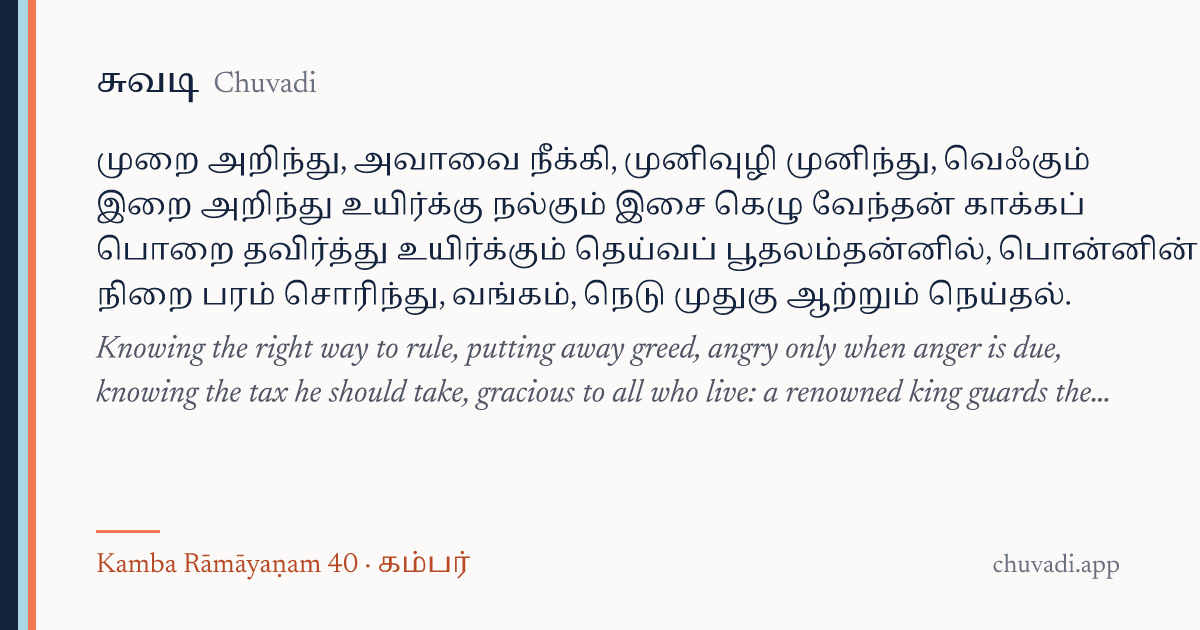
முறை அறிந்து - ஆளும் முறையை அறிந்து; அவாவை நீக்கி - ஆசையை அகற்றி; முனிவுழி முனிந்து - கோபிக்க வேண்டிய போதில் கோபித்து; வெஃகும் இறை அறிந்து - தான் விரும்பும் வரியின் அளவை அறிந்து; உயிர்க்கு நல்கும் - தன் குடிகளுக்கு இரங்கும்; இசைகெழு வேந்தன் காக்க - புகழ் அமைந்த மன்னன் பாதுகாப்பதால்; பொறை தவிர்த்து - (பாவமாகிய) சுமை நீங்கப் பெற்று; உயிர்க்கும் தெய்வப் பூதலம்தன்னில் - (அமைதியாகிய) இளைப்பாறுகின்ற தெய்வத் தன்மை வாய்ந்த நிலம் போலே; பொன்னின் நிறை பரம் நெய்தல் சொரிந்து - பொன்னாகிய நிறைந்த பாரத்தை நெய்தல் நிலத்திலே இறக்கிவிட்டு; வங்கம் நெடுமுதுகு ஆற்றும் - கப்பல்கள் நீண்ட முதுகுகளை ஆற்றிக் கொள்ளும்.
மன்னன் முறை அறிந்து உயிர்க்கு நல்குவோனாக அமைந்து பொறுப்பை ஏற்றிருப்பதால் நிலமகள் தன் சுமை இறக்கி நிம்மதிப் பெருமூச்சு விடுகிறாள். கப்பல்கள் ஏற்றிவந்த சுமையை நெய்தல் நிலத்தில் இறக்கிவிட்டு நெடுமுதுகு ஆற்றுகின்றன. உவமையணி. முறை; அரச நெறி. இறை; ஆறில் ஒரு பங்கு வரி; பழங்கால வழக்கு இது. பரம் - பாரம் என்பதன் குறுக்கல் விகாரம்.
ஆங்கிலம் · English translationAI
Translation
- Knowing the right way to rule, putting away greed, angry only when anger is due,
- knowing the tax he should take, gracious to all who live: a renowned king guards the land;
- and like the holy earth that breathes freely once its burden is lifted, the ships
- unload their full cargo of gold on the seashore and rest their long backs.
What the poem says
Turning to the sea coast, the poet describes trading ships unloading their cargoes of gold. He compares them to the earth itself. Because Kōcalam is ruled by a renowned king who knows the right way to govern, the earth goddess is relieved of her burden and breathes a sigh of relief. Such a king is free of greed, angry only when he should be, takes no more than the customary sixth share as tax, and is kind to all his subjects. In the same way, the ships set down their heavy loads and straighten their long backs.