



கம்பராமாயணம் 39 · பால 2.19
பாடல் · The poem
Tap a word to see its gloss in the commentary and where else it occurs.
பாட வேறுபாடு · Project Madurai reads
பொருள் · Meaning in Tamil
எங்கும் - அந்த நாட்டில் எல்லா இடங்களிலும்; முந்து முக்கனியின் - கனிகளில் முதன்மையாக எண்ணப்படுகின்ற வாழை, பலா, மா ஆகிய முப்பழங்களுடனும்; நானா முதிரையின் - பல் வகைப்பட்ட பருப்புகளுடனும்; முழுத்த நெய்யின் - பரிமாறப்பட்ட பொருள்கள் முழுகும்படி வார்த்த நெய்யுடனும்; செந்தயிர்க் கண்டம் - செந்நிறமுள்ள தயிர்க் கட்டிகளுடனும்; கண்டம் இடை இடை செறிந்த சோற்றின் - கண்ட சருக்கரை இடையிடையே செறிந்துள்ள சோற்றுடனும்; தம் தம் இல் இருந்து - தங்கள் தங்கள் வீட்டில் இருந்து; விருந்தொடும் தமரினோடும் தாமும் - விருந்தினருடனும் உறவினருடனும் கலந்து தாங்களும்; அந்தணர் அமுத உண்டி - தேவர்களுக்கு உரிய அமுதம் போன்ற உணவினை; அயிலுறும் அமலைத்து - உண்ணுகின்ற ஆரவாரம் உடையது (அந்தக் கோசலம்)
'மூட நெய்பெய்து' என்ற கோதையார் ஆட்சி கருதத் தக்கது. சிவப்பு நிறம் வரும் வரையில் காய்ச்சிய பாலில் பிரையிட்டது செந்தயிர். 'தாமும் விருந்தொடும் தமரினோடும்' என்ற செய்யுள் தொடர் இல்லறத்தார் முறைமை நோக்கி 'விருந்தொடும் தமரினோடும் தாமும்' என நிரல் மாற்றி உரை கொள்ளப்பட்டது. அந்தணர் இங்கே தேவர். 'தம் இல் இருந்து தமது பாத்து' உண்ணுதலும், 'தென்புலத்தார் தெய்வம், விருந்து, ஒக்கல், தான்' என்று அமைதலுமாகிய திருக்குறள் நெறியினை நினைவூட்டுவது இப்பாடல்.
ஆங்கிலம் · English translationAI
Translation
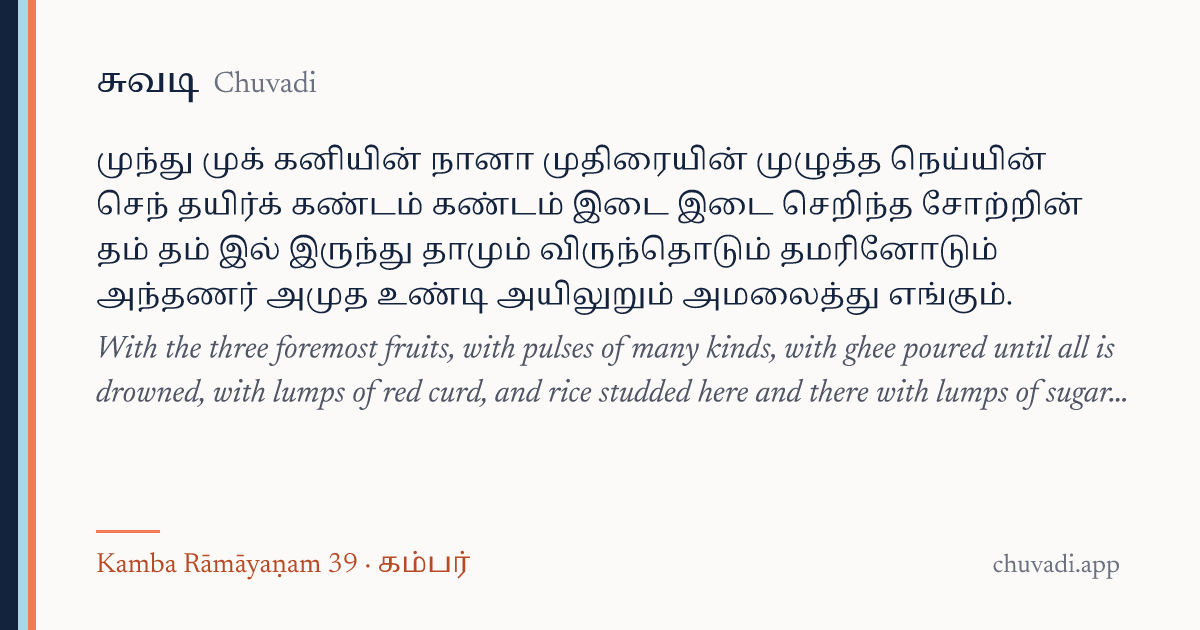
- With the three foremost fruits, with pulses of many kinds, with ghee poured until all is drowned,
- with lumps of red curd, and rice studded here and there with lumps of sugar candy,
- each in their own homes, they themselves, together with their guests and kin,
- eat food like the nectar of the gods: everywhere the land rings with it.
What the poem says
Every household in Kōcalam sits down to a lavish meal. There are the three classic fruits, mango, jackfruit and banana, many kinds of lentils, and ghee poured until the food is drowned in it. There is thick red curd, made from milk boiled until it reddens, and rice studded with lumps of sugar candy. People eat in their own homes with guests and relatives, and the whole land resounds with the cheerful noise of feasting.
The scene recalls the Tirukkuṟaḷ's ideal householder, who eats at home what he has earned, after sharing it with ancestors, gods, guests and kin.