



கம்பராமாயணம் 4022 · கிட்கிந்தா 6.34
பாடல் · The poem
Tap a word to see its gloss in the commentary and where else it occurs.
பொருள் · Meaning in Tamil
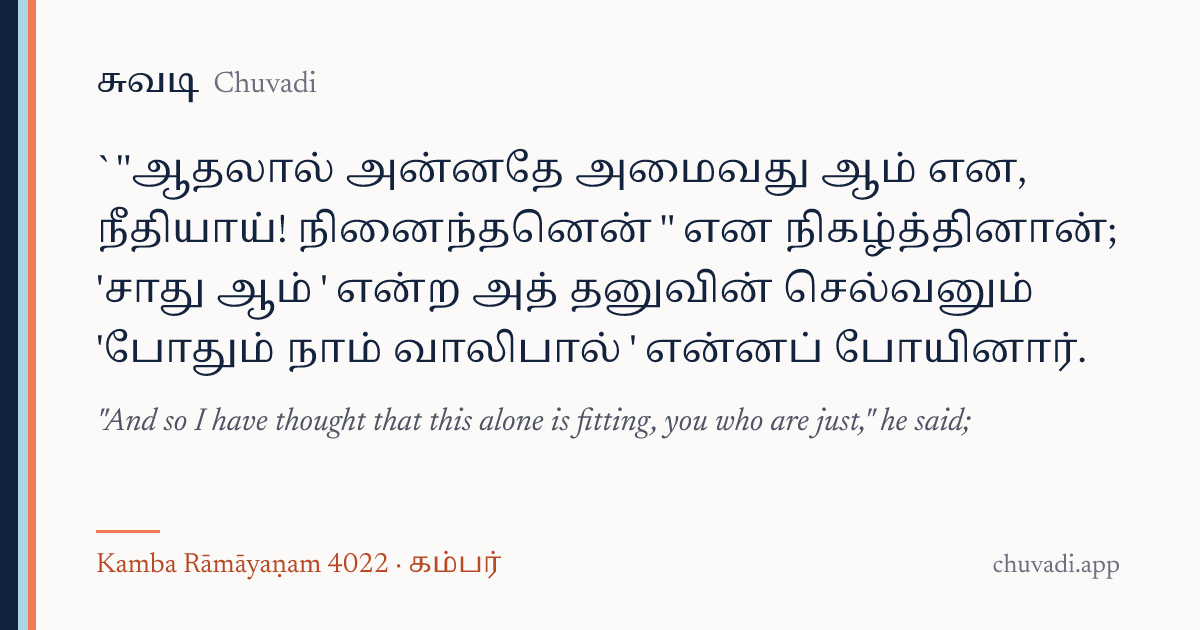
ஆதலால் - 'ஆதலால்' நீதியாய் - நீதிநெறியை உடையவனே! அன்னதே - முன்னர் வாலியைக் கொன்று வானரப் படைகளைக் கொண்டு சீதையைத் தேடி அறிவதே; அமைவது ஆம் என - பொருத்தமான செயலாகும் என்று; நினைந்தனென்- எண்ணுகிறேன்; என நிகழ்த்தினான்- என்று அனுமன் கூறினான்; சாது ஆம் என்ற - நின் கருத்து ஏற்கத் தக்கதே என்று கூறிய; அத்தனுவின் செல்வனும் - அந்த வில்வீரனாகிய இராமனும்; நாம் வாலி பால் போதும் - 'நாம் வாலி இருக்குமிடம் போவோம்'; என்ன- என்று கூற; போயினர் - அவர்கள் அனைவரும் அங்குச் சென்றார்கள்.
மேலே 29வது பாடலில் கூறிய செய்தியையே இப்பாடலில் 'அன்னது' எனச் சுட்டப்பட்டது. வாலியைக் கொன்று, படை திரட்டிச் சீதையைத் தேடுதலே ஆண்டுச் சுட்டிய பொருளாகும். சாது - நல்லது, ஏற்கத்தக்கது, உடன்பட்ட எனும் பொருளில் அமைவது. "சாதுவாய் நின் புகழின் தகையல்லால் பிறிதில்லை" (திருவாய்மொழி. 3-1- ட. "சாது என்று உணர்கிற்றியேல்' (5895) எனப் பின்னரும் கூறுவார். தனுவின் செல்வன் - இராமன். இராமன் த்தப்ப து குறிக்கும் தொடர். முதலடி முற்றுமோனை.
ஆங்கிலம் · English translationAI
Translation
- "And so I have thought that this alone is fitting,
- you who are just," he said;
- and that lord of the bow said, "It is good,
- let us go to Vālī," and they went.
What the poem says
Irāmaṉ, the "lord of the bow", accepts Aṉumaṉ's plan: first kill Vālī, then raise the army and search. They all set out for Vālī's realm.
The canto of seeing the jewels ends here. The next tells of the slaying of Vālī.