



கம்பராமாயணம் 4021 · கிட்கிந்தா 6.33
பாடல் · The poem
Tap a word to see its gloss in the commentary and where else it occurs.
பாட வேறுபாடு · Project Madurai reads
பொருள் · Meaning in Tamil
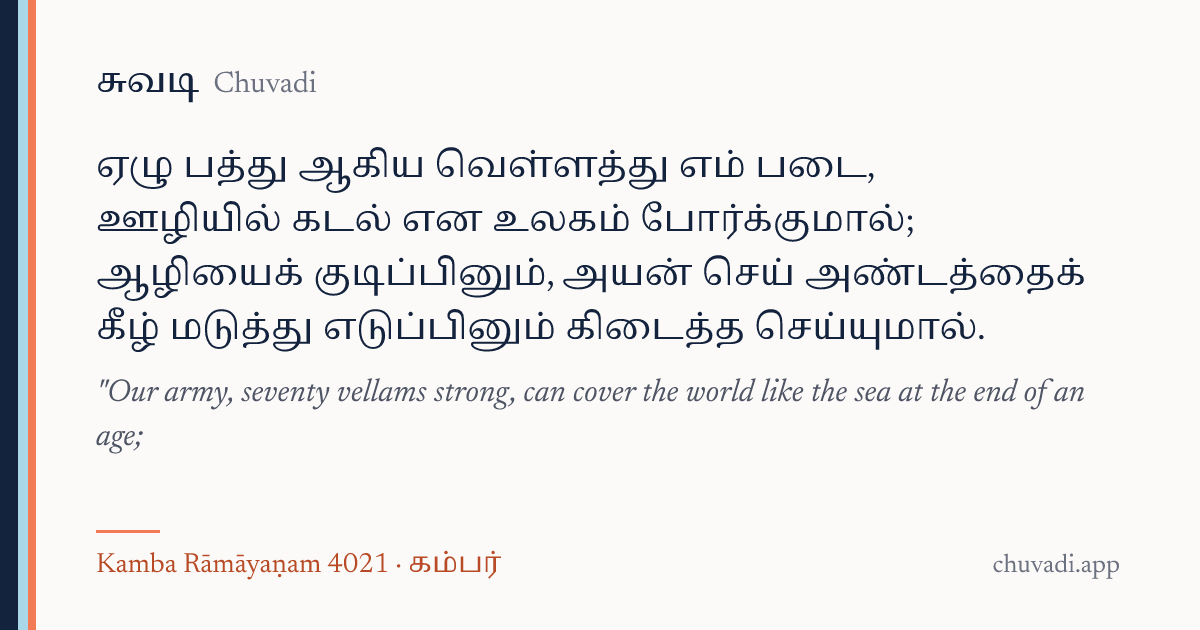
ஏழு பத்து ஆகிய வெள்ளத்து- எழுபது வெள்ளம் என்ற அளவினை உடைய; எம்படை - எங்கள் வானரப் படை; ஊழியில் கடல் என - யுக முடிவுக் காலத்தில் பொங்கி எழும் கடல் போல; உலகம் போர்க்கும் - உலகம் முழுவதும் பரவி மூடவல்லது; ஆழியைக் குடிப்பினும் - (மற்றும் அது) கடலைக் குடிக்க வேண்டுமென்றாலும்; அயன் செய் அண்டத்தை - நான்முகனால் படைக்கப் பெற்ற பிரமாண்டத்தை; கீழ் மடுத்து எடுப்பினும் - கீழே கையைச் செலுத்திப் பெயர்த்து எடுக்க வேண்டுமென்றாலும்; கிடைத்த செய்யும் - இட்ட கட்டளையை ஏற்றுச் செய்யும்.
வானரப்படையின் மிகுதியும், ஆற்றலும் கட்டுப்பாடும் இப்பாடலில் உணர்த்தப்பட்டன.
வெள்ளம் - ஒரு பேரெண். இவ்வெண்ணிக்கை முன்னரும் 'வெள்ளம் ஏழு பத்து உள்ள' (3831) என அனுமனால் குறிக்கப்பட்டது. வானரப் படைகள் எதையும் செய்யவல்லன என அனுமன் உரைப்பது 'மலை அகழ்க்குவனே, கடல் தூர்க்குவனே, வான் வீழ்க்குவனே, வளி மாற்றுவனே' எனும் (பட்டினப் 271 - 273) கரிகாலன் வீரச்செயலோடு ஒப்பிடத்தக்கது.
ஆங்கிலம் · English translationAI
Translation
- "Our army, seventy vellams strong,
- can cover the world like the sea at the end of an age;
- even if it must drink up the ocean, or reach under
- the cosmos Brahmā made and lift it up, it will do as it is told."
What the poem says
A vellam is a vast number. Aṉumaṉ boasts that the monkey army could flood the world like the ocean at the end of time, drink the sea dry or lift up the whole universe, and that it is disciplined enough to obey any order. The commentary compares the boast to an old Tamil poem's praise of the Chola king Karikālaṉ.