



கம்பராமாயணம் 4043 · கிட்கிந்தா 7.21
பாடல் · The poem
Tap a word to see its gloss in the commentary and where else it occurs.
பொருள் · Meaning in Tamil
எவரும் அஞ்ச - (அப்பொழுது வாலி) காண்பவர் எவரும் அஞ்சும்படியாக; ஞாலமும் - நிலவுலகமும்; நால்திசைப் புனலும் - நான்கு திசைகளிலும் உள்ள கடல்களும்; நாகரும் - தேவர்களும்; மூலமும் - எல்லாவற்றிற்கும் ஆதி காரணமான தத்துவங்களும்; முற்றிட - அழியும்படி; முடிவில் தீக்கும் - யுகமுடிவில் அனைத்தையும் எரிக்கும்; அக்காலமும் - அந்த ஊழிக்காலத்தினையும்; ஒத்தனன் - ஒத்து விளங்கினான். கடலில் தான் கடை - (முன்பு) தன்னால் கடையப்பெற்ற பாற்கடலில் தோன்றிய; ஆலமும் ஒத்தனன் - ஆலகால நஞ்சையும் ஒத்து விளங்கினான்.
வாலியின் கொடுந்தோற்றமும் வெகுளியும் புலப்பட, ஊழித்தீப் போலவும், தான் கடைந்தபோது பாற்கடலினின்று வெளிப்பட்ட ஆலகால நஞ்சு போலவும் விளங்கினான் என்றார். நாகர் - தேவர்கள், நாகர்கள் என இருவரையும் குறிக்கும் சொல். பாற்கடல் கடைகையில் தேவர்களும் அசுரர்களும் தளர்ச்சி உற்ற போது வாலி தன் இரு கரங்களால் கடைந்தான் ஆதலின் 'தான் கடை கடலில்' என்றார். இச் செய்தி 'சுழலும் வேலையைக் கடையும் தோளினான்' (3823) என்னும் இடத்தும் கூறப்பட்டது. பாற்கடலில் வெளிப்பட்ட ஆலகால நஞ்சு யாவரையும் அஞ்சி ஓடச் செய்ததுபோல வாலியும் தன்னைக் கண்டார் யாவரும் அஞ்சி ஓடுமாறு வெளிப்பட்டான் என்பதாம். காலம் - காலாக்கினிக்கு (ஊழிக்காலத்தீ) ஆகுபெயர்.
ஆங்கிலம் · English translationAI
Translation
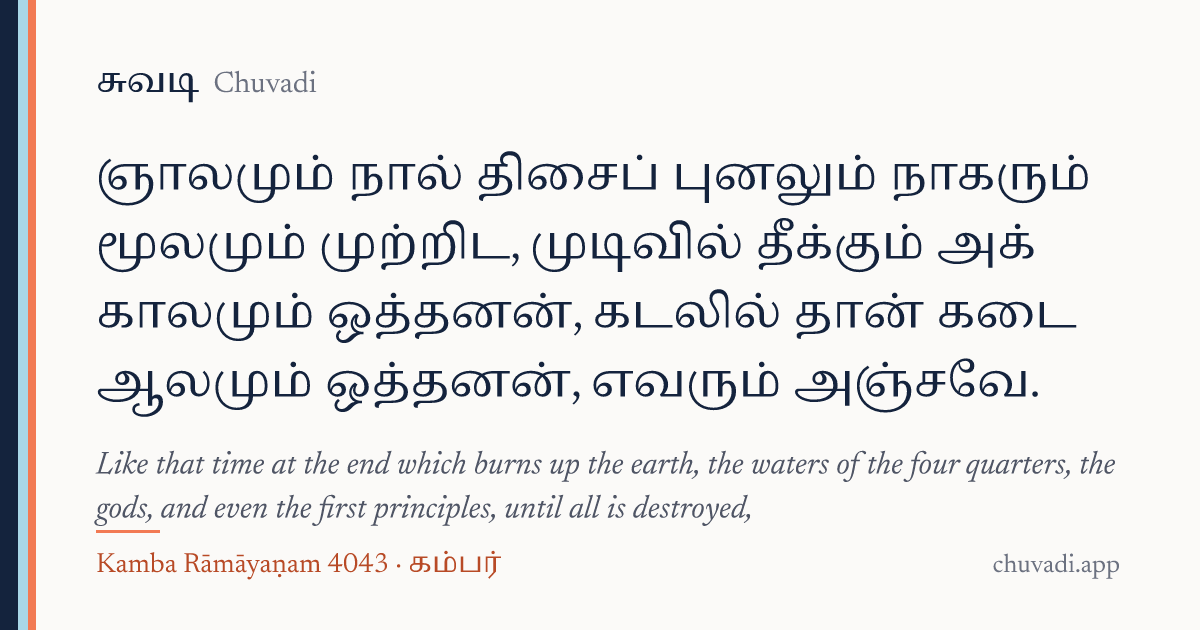
- Like that time at the end which burns up the earth, the waters of the four quarters,
- the gods, and even the first principles, until all is destroyed,
- so he appeared; and like the poison that rose from the ocean he himself had churned
- he appeared, so that all who saw him were afraid.
What the poem says
Two comparisons capture how terrifying Vālī looks. He is like the fire at the end of an age that consumes earth, seas, gods and the very elements, and like the deadly ālakālam poison that rose when the Ocean of Milk was churned.
Vālī himself helped churn that ocean: when the gods and demons grew tired, he worked the churning with his own two arms. Just as the poison sent everyone running, so does Vālī now. The word nākar can mean both gods and serpent people.