



கம்பராமாயணம் 4042 · கிட்கிந்தா 7.20
பாடல் · The poem
Tap a word to see its gloss in the commentary and where else it occurs.
பொருள் · Meaning in Tamil
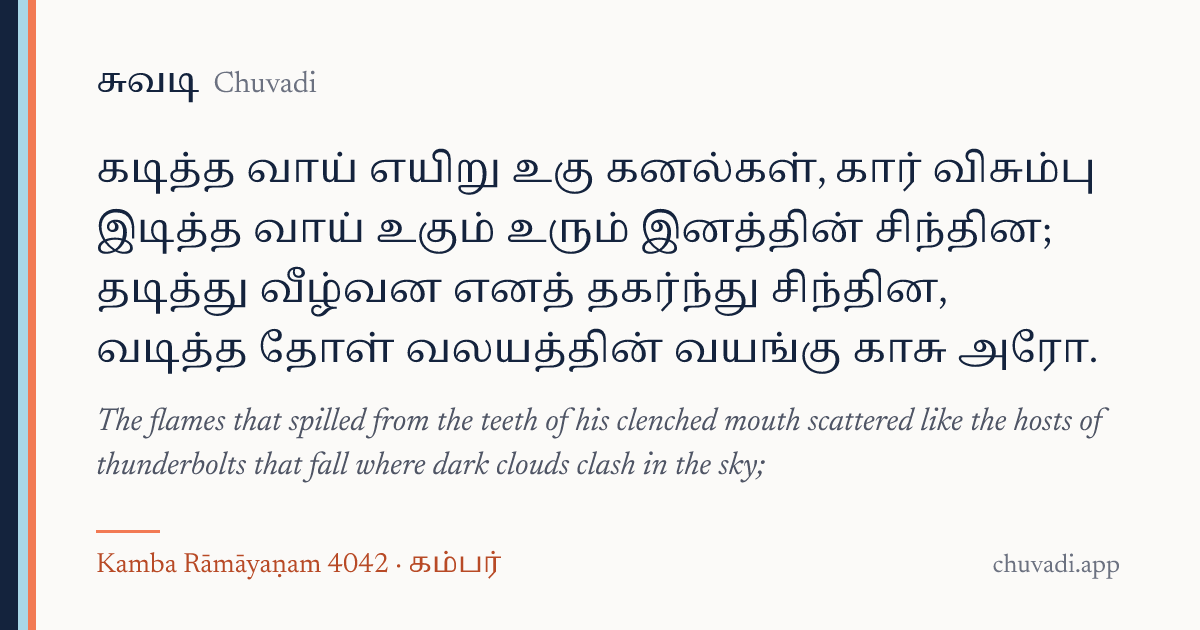
கடித்த வாய் எயிறு உகு - (வாலி வெகுண்டு) கடித்த வாயிலிலுள்ள பற்களினின்று வெளிப்பட்ட; கனல்கள் - தீப்பொறிகள்; கார்விசும்பு இடித்தவாய் - கரிய மேகங்கள் விசும்பிடத்து ஒன்றோடொன்று மோதிய நிலையில்; உகும் உரும் இனத்தின் - விழும் இடிகளின் கூட்டம் போல; சிந்தின - எங்கும் சிதறின; வடித்த தோள் வலயத்தின் - (அவன் தோள்தட்டி ஆர்த்த நிலையில்) சிறந்த அவன் தோள் வளைகளில்; வயங்கு காசு - விளங்குகின்ற இரத்தினங்கள்; தடித்து வீழ்வன என - மின்னல்கள் கீழே விழுந்தாற்போல; தகர்ந்து சிந்தின - சிதறி வீழ்ந்தன.
எயிறு தோன்றப் பற்களைக் கடித்தல் - வெகுளியில் தோன்றும் மெய்ப்பாடு. காசு - இரத்தினம். 'தப்பின மணி, காசும், சங்கமும் மயிலன்னார்' (1189), 'திறம் செய் காசு ஈன்ற சோதி' (1129) என்னும் இடங்களில் இரத்தினம் எனும் பொருளில் 'காசு' ஆளப்பட்டுள்ளமை காண்க. தடித்து - மின்னல். வாலியின் வெகுளி மிகுதியை உயர்வு நவிற்சியால் கூறிய பாடல். அரோ - அசை.
ஆங்கிலம் · English translationAI
Translation
- The flames that spilled from the teeth of his clenched mouth scattered
- like the hosts of thunderbolts that fall where dark clouds clash in the sky;
- and like lightning flashes falling, there broke and scattered
- the gleaming gems from the armlets on his finely shaped shoulders.
What the poem says
Vālī grinds his teeth in anger, and fire flies from his mouth like thunderbolts from colliding storm clouds. As he slaps his shoulders, the jewels set in his armlets shatter and fall like streaks of lightning. Here kācu means a gem, as it does in other places in the poem. The exaggeration conveys the height of his fury.