



கம்பராமாயணம் 4041 · கிட்கிந்தா 7.19
பாடல் · The poem
Tap a word to see its gloss in the commentary and where else it occurs.
பாட வேறுபாடு · Project Madurai reads
பொருள் · Meaning in Tamil
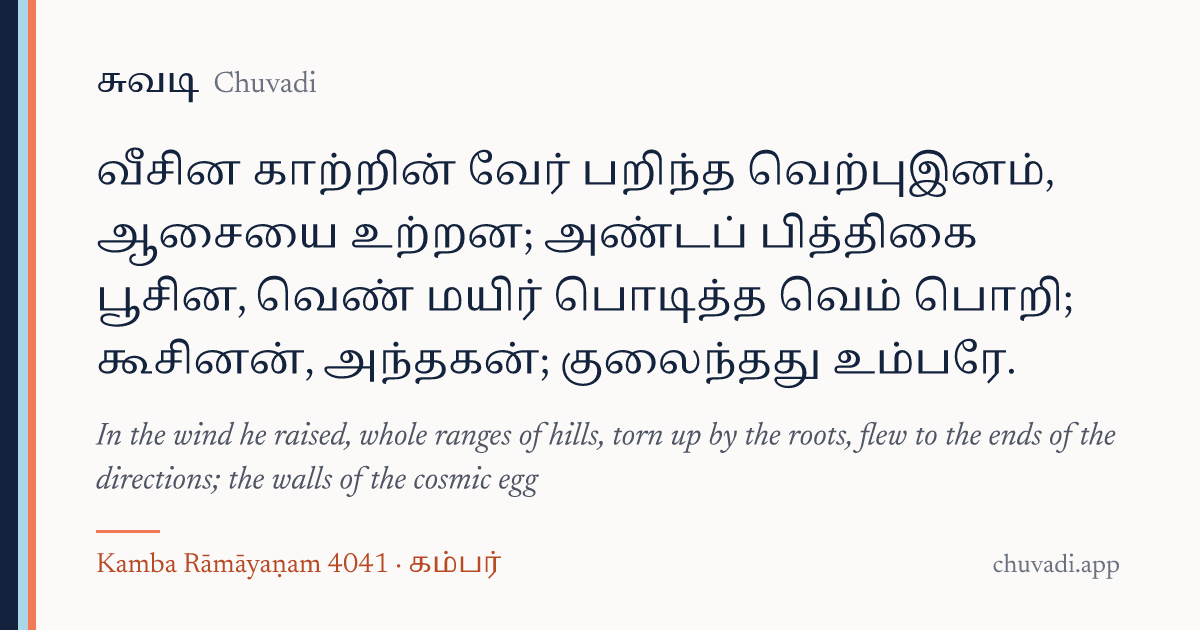
வீசின காற்றின் - (வாலி எழுந்த வேகத்தால்) வீசின காற்றினால்; வெற்பு இனம் - மலைக் கூட்டங்கள்; வேர் பறிந்து - நிலை பெயர்ந்தவனாய்; ஆசையை உற்றன - திசையின் எல்லையை அடைந்து வீழ்ந்தன; வெண்மயிர் பொடித்த வெம்பொறி - (மேனியில் அடர்ந்துள்ள) வெண்மை வாய்ந்த மயிர்க்கால் தொறும் தோன்றிய வெம்மையுடைய அனற்பொறிகள்; அண்டப் பித்திகை பூசின - அண்டப்பரப்பின் மதிற் சுவரை மறைத்தன; அந்தகன் கூசினன் - (இவ்வாறு சினத்துடன் வரும் வாலியைக்காண) யமனும் கண் கூசினான்; உம்பர் குலைந்தது - தேவர்களும் நிலை குலைந்தனர்.
இப்பாடல் வாலியின் வேகத்தையும் சினமிகுதியையும் விளக்கும். வெண் மயிர் பொடித்த வெம்பொறி - மயிர்க்கால்களில் இருந்து எழுந்த தீப்பொறிகள். 'அண்டப் பித்திகை பூசின' என்றதால் அண்டச்சுவர்கள் வரை இவன் சினத்தீப் பொறிகள் சென்று ஒளி வீசின என்பதாம். உம்பர் - மேல் உலகம்; இடவாகு பெயராய்த் தேவர்களைக் குறிக்கும். அந்தகன் - உயிர்கட்கு அந்தத்தைச் செய்வோனாகிய இயமன்.
ஆங்கிலம் · English translationAI
Translation
- In the wind he raised, whole ranges of hills, torn up by the roots,
- flew to the ends of the directions; the walls of the cosmic egg
- were plastered over by the fierce sparks that burst from his white hair;
- Death himself shrank back; the heavens were thrown into turmoil.
What the poem says
The description of Vālī's rage continues. The wind of his movement uproots hills and hurls them to the horizons. The sparks springing from the roots of his white hair fly as far as the outer shell of the universe and coat its walls with light. Even Yama, god of death, cannot bear to look at him, and the gods lose their composure.