



கம்பராமாயணம் 4050 · கிட்கிந்தா 7.28
பாடல் · The poem
Tap a word to see its gloss in the commentary and where else it occurs.
பாட வேறுபாடு · Project Madurai reads
பொருள் · Meaning in Tamil
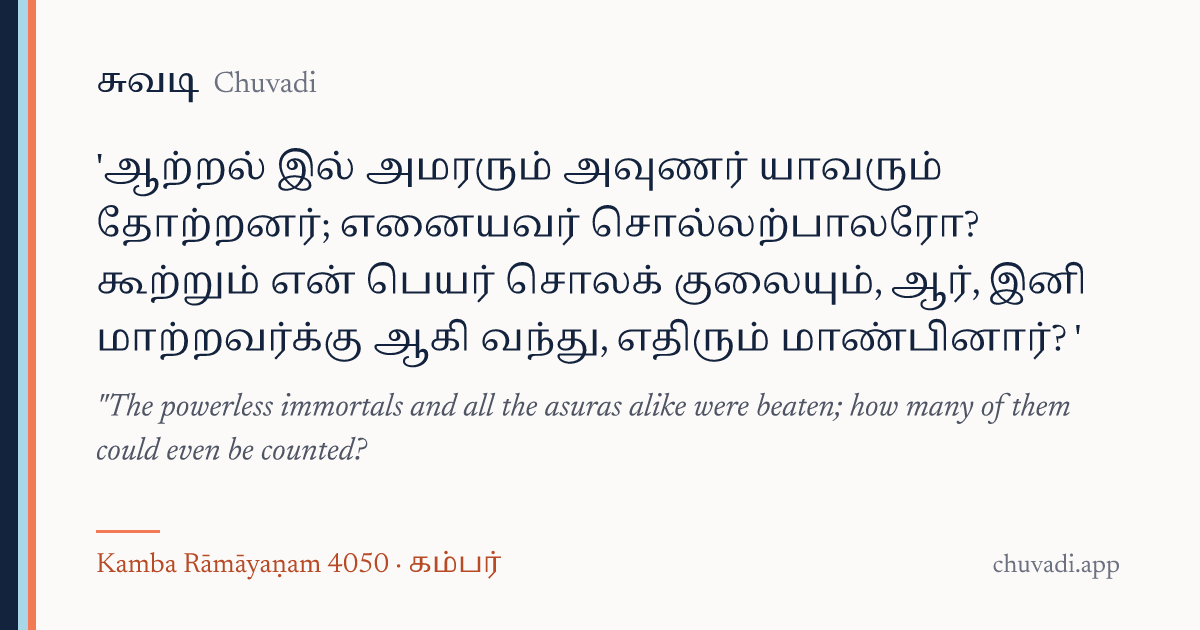
ஆற்றல் இல் அமரரும் - வலிமையில்லாத் தேவர்களும்; அவுணர் யாவரும் - அசுரர்கள் எல்லோரும்; தோற்றனர் - தோற்றுப் போனவர்கள்; எனையவர் - எத்தனை பேராவர்; சொல்லற்பாலரோ? - (என்று) சொல்லும் தன்மையர் ஆவரோ? கூற்றும் - யமனும்; என் பெயர் சொல - என் பெயரைப் பிறர் சொல்லக் கேட்டால்; குலையும் - நடுங்குவான்; மாற்றவர்க்கு ஆகிவந்து - (அதனால்) எனது பகைவனான சுக்கிரீவனுக்குத் துணையாகி வந்து; எதிரும் மாண்பினார் - என்னைப் போரில் எதிர்க்கும் திறமையுடையவர்; இனி ஆர் - இனியார் உள்ளனர்? (ஒருவரும் இலர்).
வாலி தன் வீரமிகுதியைத் தாரைக்கு உரைத்தனன். தேவர்களையும், அசுரர்களையும், யமனையும் அஞ்சுமாறு செய்யும் அவனை எதிர்க்கக்கூடியவர் எவரும் இரார் என்பதால் 'எதிரும் மாண்பினார் ஆர்?' எனத் துணிந்து பேசினான். கூற்றும் - உயர்வு சிறப்புஉம்மை.
ஆங்கிலம் · English translationAI
Translation
- "The powerless immortals and all the asuras alike
- were beaten; how many of them could even be counted?
- Death himself trembles when my name is spoken; who now
- has the stature to come out as my enemy's ally and face me?"
What the poem says
Vālī goes on boasting to Tārai. Gods and demons have all lost to him, too many to count, and even Kūṟṟu, death personified, shakes at the sound of his name. So who could possibly come to Cukkirīvaṉ's aid and stand against him? The "even" in "Death himself" marks Death as the greatest of those who fear him.