



கம்பராமாயணம் 4049 · கிட்கிந்தா 7.27
பாடல் · The poem
Tap a word to see its gloss in the commentary and where else it occurs.
பொருள் · Meaning in Tamil
மயில் இயல் குயில் மொழி - மயில் போன்ற சாயலையும் குயிலின் குரலை ஒத்த இனிய சொல்லையும் உடைய தாரையே! பெயர்வுற வலிக்கவும் - (மந்தர மலையாகிய மத்து) நிலைபெயர்ந்து சுழலுமாறு வலிந்து இழுக்கவும்; மிடுக்குஇல் பெற்றியார் - வலிமை இல்லாத் தன்மையரான தேவ அசுரர்கள்; அயர்வுறல் உற்றதை நோக்கி - தளர்ச்சி அடைந்ததைப் பார்த்து; யான் - நான்; அது தயிர் எனக் கடைந்து - அதனைத் தயிர் கடைவது போல் கடைந்து; அவர்க்கு அமுதம் தந்தது - அவர்களுக்கு அமுதத்தைக் கொடுத்த செயல்; மறக்கல் ஆவதோ - மறக்கக்கூடியது ஆகுமோ? (ஆகாது).
மயில் இயல், குயில்மொழி - உவமைத் தொகைப் புறத்துப் பிறந்த அன்மொழித்தொகை. அண்மைவிளி. மறக்கல் ஆவதோ? - வாலி கடல் கடைந்து அமுதளித்த பெருஞ்செயலைத் தாரை அறிந்ததே; எனவே, 'நீ மறக்கக்கூடியதா' எனத் தாரைக்கு உரைத்தனன். இச்செயலை உலகத்தார் மறக்கக்கூடியதா? என்று உலகினர் மறக்கமுடியாத அருஞ்செயலைச் செய்தவன் வாலி என்பதை நிறுவினன் எனவும் கொள்ளலாம். ஆவதோ - ஓகாரம் எதிர்மறை.
ஆங்கிலம் · English translationAI
Translation
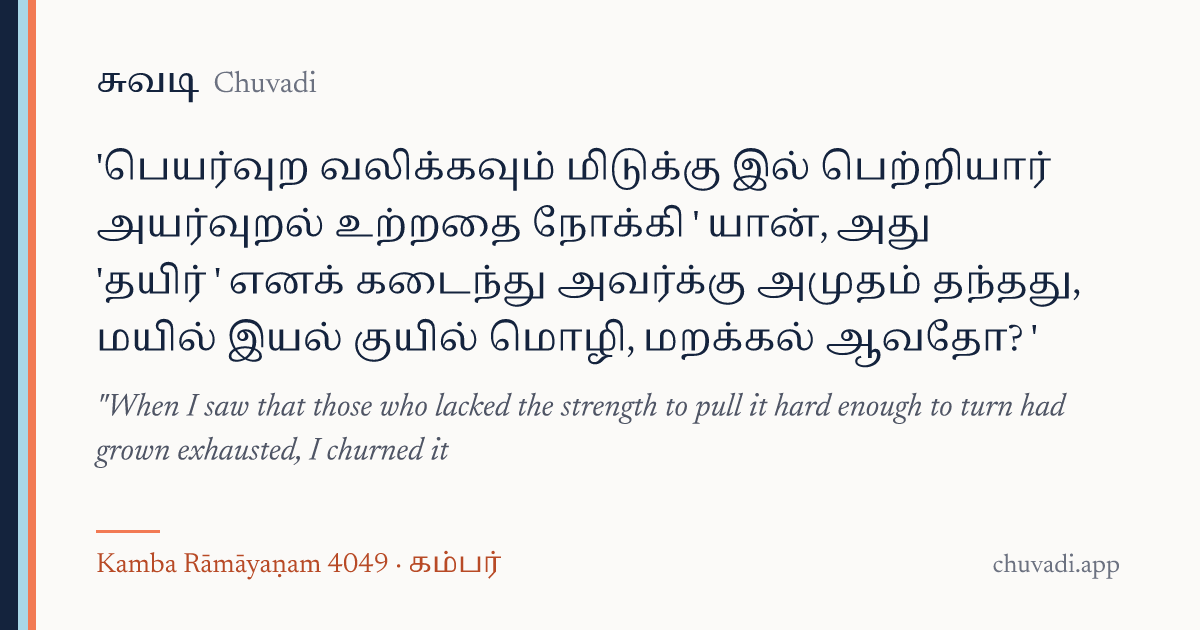
- "When I saw that those who lacked the strength to pull it hard enough to turn
- had grown exhausted, I churned it
- as if it were curds and gave them the nectar;
- you with a peacock's grace and a cuckoo's voice, can that be forgotten?"
What the poem says
Vālī finishes the story. The gods and demons could not turn the mountain and grew tired, so he churned the ocean alone, as easily as a woman churns curds for butter, and handed the gods their nectar.
He praises Tārai's grace and voice with the peacock and the cuckoo. His question, "can that be forgotten?", is meant for her, who knows the story, and also for the world: no one could forget such a deed.