



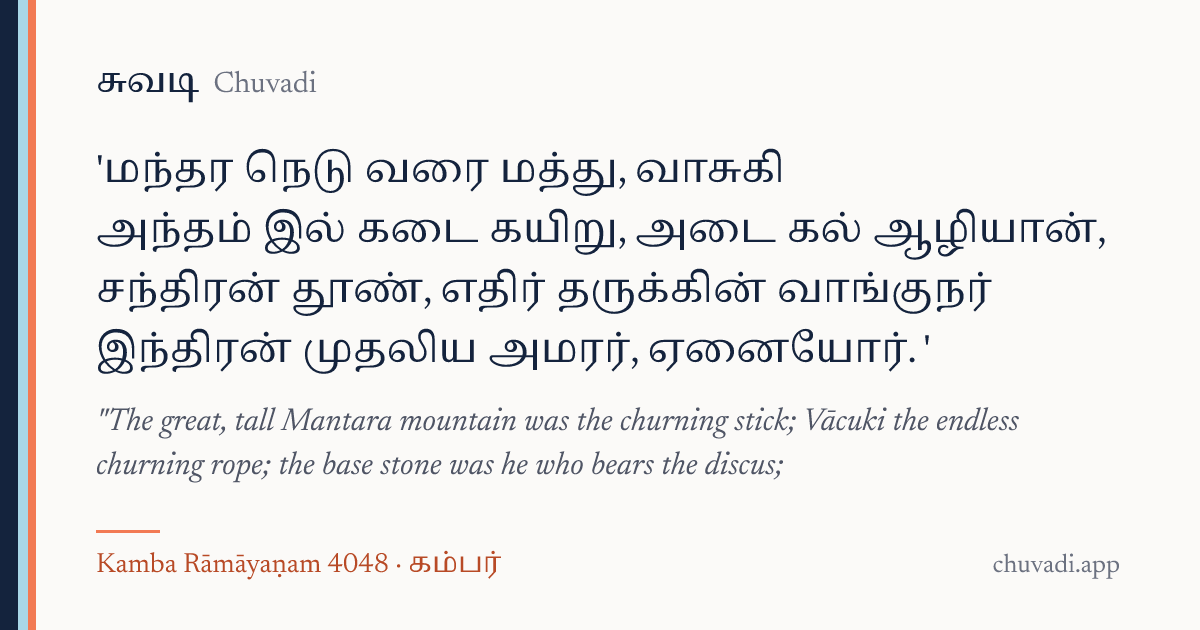
கம்பராமாயணம் 4048 · கிட்கிந்தா 7.26
பாடல் · The poem
Tap a word to see its gloss in the commentary and where else it occurs.
பாட வேறுபாடு · Project Madurai reads
பொருள் · Meaning in Tamil
மந்தர நெடுவரை - மந்தரம் என்னும் பெயருடைய பெரிய மலையே; மத்து - மத்தாகவும்; வாசுகி - வாசுகி என்னும் பாம்பு; அந்தம் இல் கடை கயிறு - எல்லையில்லாது நீண்ட கடையும் கயிறாகவும்; ஆழியான் - சக்கரப்படையினை உடைய திருமால்; அடைகல் - (ஆமை வடிவாய் மத்தினைத் தாங்கும்) அடைகல்லாகவும்; சந்திரன் - சந்திரன்; தூண் - மத்தினை நிறுத்தும் தூணாகவும்; எதிர் தருக்கின் வாங்குநர் - எதிர் எதிரே நின்ற பெருமிதத்தோடு கயிற்றை இழுத்துக் கடைபவர்; இந்திரன் முதலிய அமரர் - இந்திரன் முதலான தேவர்களும்; ஏனையோர் - (அவர்களுக்கு மாறுபட்ட) அசுரர்களும் ஆயினர்.
இதுவும் அடுத்தபாடலும் வாலி பாற்கடல் கடைந்த வரலாற்றைக் கூறுவன. தேவர்களும் அசுரர்களும் மந்தர மலையை மத்தாக, வாசுகியைக் கயிறாகக் கொண்டு பாற்கடலைக் கடைந்தபோது மந்தரமலை ஆகிய மத்து கடலில் அழுந்தி விட, அப்போது திருமால் ஆமையுருக்கொண்டு அம்மலையின்கீழ் அடைகல்லாக நின்று தாங்கினார் என்பது புராணம். அடைகல் - சுமையைத் தாங்கிக் கொள்ளுதற்கேற்ற வன்மை பொருந்திய அடியில் பீடமாக அமைக்கும் கல். இது பட்டடைக்கல் எனவும் வழங்கும். "சீரிடம் காணின் எறிதற்குப் பட்டடை" (குறள் 821), 'அட்ட வல் இரும்பு அடைகலைச் சுடுகலாததுபோல்' (5774). ஆழியான் - திருமால்; வாசுகி - எட்டு நாகங்களில் ஒன்று; ஏனையோர் - அவரினும் வேறுபட்டவராதலின் தேவர்க்குப் பகைவரான அசுரர்கள் ஆவர்.
ஆங்கிலம் · English translationAI
Translation
- "The great, tall Mantara mountain was the churning stick; Vācuki
- the endless churning rope; the base stone was he who bears the discus;
- the moon was the post; and those who pulled against each other in their pride
- were the immortals led by Intiraṉ, and the others."
What the poem says
Vālī begins the story of the churning of the Ocean of Milk. Mount Mantara served as the churning stick and the serpent Vācuki as the rope. When the mountain began to sink, Tirumāl, the bearer of the discus, became a tortoise and held it up from below like the stone block on which a load is set. The moon served as the post that holds the stick upright.
The gods under Intiraṉ pulled at one end, and "the others", their enemies the asuras, pulled at the other.