



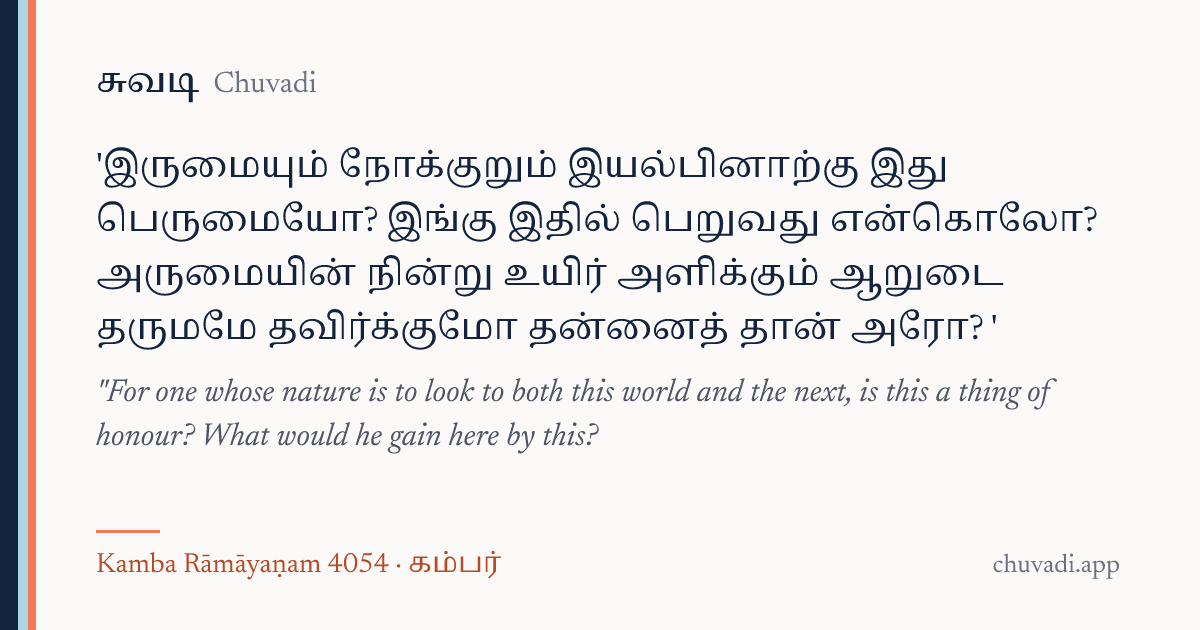
கம்பராமாயணம் 4054 · கிட்கிந்தா 7.32
பாடல் · The poem
Tap a word to see its gloss in the commentary and where else it occurs.
பொருள் · Meaning in Tamil
இருமையும் நோக்குறும் - இம்மை, மறுமை என்னும் இரண்டின் பயன்களையும் பார்க்கும்; இயல்பினாற்கு - இயல்பினையுடைய இராமனுக்கு; இது பெருமையோ - நீ கூறியபடி செய்வது பெருமையாகுமா? இங்கு இதில் பெறுவது என்கொலோ - இங்கு இவ்வாறு செய்வதில் அவன் அடையக் கூடிய பயன் யாதோ? அருமையின் நின்று - அடைதற்கரிய பொருளாய் நின்று; உயிர் அளிக்கும் - உலக உயிர்களைப் பாதுகாக்கும்; ஆறுடைத் தருமமே - நெறியுடைய தருமமே; தன்னைத் தான் தவிர்க்குமோ - தன்னைத்தானே அழித்துக் கொள்ளுமோ?
இருவர்க்கிடையில் நடைபெறும் போரில் ஒருவர்க்கு உதவியாய் இருந்து மற்றொருவரைக் கொல்லுதலாகிய அறமல்லாத செயலை இராமன் செய்யமாட்டான் என்பது வாலியின் கருத்தாகும். இராமன் தருமமே உருவெடுத்து வந்தவனாதலின், தருமத்திற்கு மாறான செயல்களைச் செய்ய மாட்டான் என்பதால் 'தருமமே தவிர்க்குமோ தன்னைத்தான்' என்றான். 'அறத்தின் மூர்த்தி வந்து அவதரித்தான்' (1349), 'மெய்யற மூர்த்தி வில்லோன்' (5882) என்பன காண்க.
தவிர்க்குமோ - ஓகாரம் எதிர்மறைப்பொருள். இது பெருமையோ - பெருமையைத் தருவதாகுமோ என்றது பழியையே தரும் என்பதைக் குறிப்பால் உணர்த்தும். தருமமே - ஏகாரம் சிறப்பு; முன்பாடலில் இராமனை அறத்தின் ஆறெலாம் இழைத்தவன் எனக் கூறிய வாலி இப்பாடலில் 'தருமமே' எனக் குறிப்பிடுகிறான்.
ஆங்கிலம் · English translationAI
Translation
- "For one whose nature is to look to both this world and the next, is this
- a thing of honour? What would he gain here by this?
- Dharma, which stands beyond reach and has the way of protecting all life,
- would it destroy its own self?"
What the poem says
Vālī insists that Irāmaṉ, who weighs the results of every act in this life and the next, would never join one side in a quarrel between two others and kill the second man. That would bring him only blame.
Irāmaṉ is dharma in person, Vālī says, and dharma cannot undo itself. The irony is strong: Irāmaṉ is about to do exactly what Vālī thinks impossible.