



கம்பராமாயணம் 4055 · கிட்கிந்தா 7.33
பாடல் · The poem
Tap a word to see its gloss in the commentary and where else it occurs.
பாட வேறுபாடு · Project Madurai reads
பொருள் · Meaning in Tamil
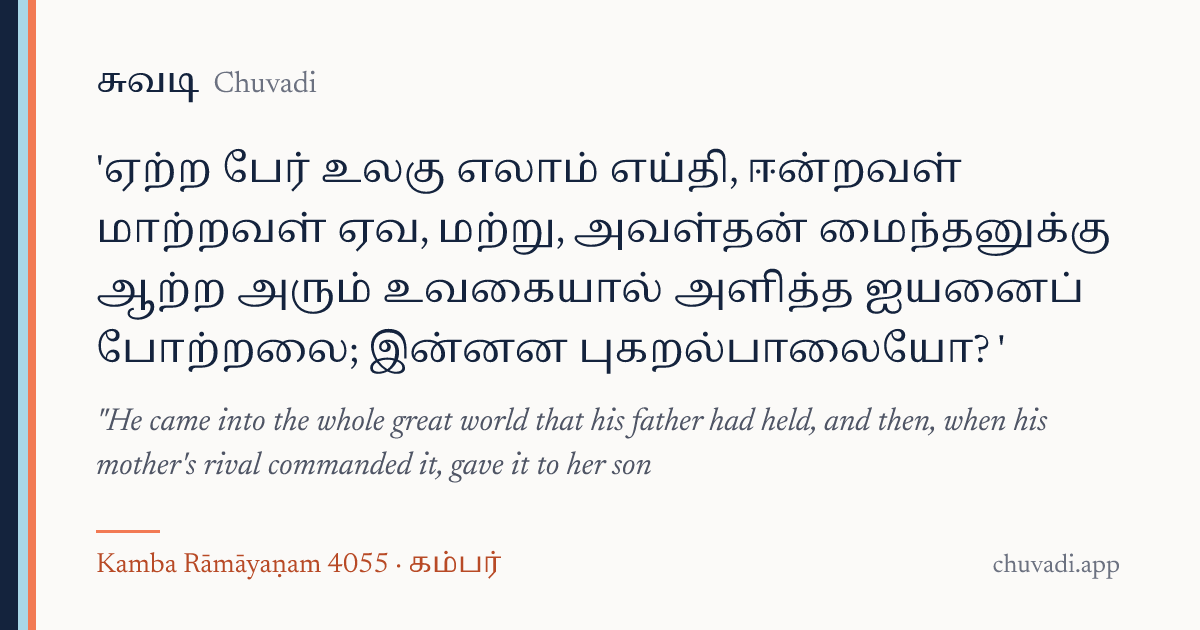
ஏற்றபேர் உலகு எலாம் - தன் தந்தை ஏற்று ஆண்டு வந்த பெரிய உலகின் ஆட்சி முழுவதையும்; எய்தி - (அவன் அளிக்க) தனக்கு உரிமையாகப் பெற்று; ஈன்றவள் மாற்றவள் ஏவ - தன் தாய்க்கு மாற்றாள் ஆகிய கைகேயி கட்டளையிட; அவள்தன் மைந்தனுக்கு - அவளது மகனான பரதனுக்கு; ஆற்ற அரும் உவகையால் - தாங்குதற்கரிய மகிழ்ச்சியோடு; அளித்த ஐயனை - (நாட்டாட்சியை) அளித்த பெரியோனாகிய இராமனை; போற்றலை - புகழ்ந்து பாராட்டாமல்; இன்னன - இத்தகைய பழிமொழிகளை; புகறல் பாலையோ - கூறத்தகுவையோ?
மூத்த மைந்தன் என்ற உரிமையால் நாடு பெற்றதால் 'எய்தி' என்றான். கைகேயியின் கொடுமை காரணமாக அவள் பெயரைக் கூற விரும்பாத வாலி 'மாற்றவள்' எனக் குறிப்பிடுகிறான். ஈன்றவள் - கோசலை; மாற்றவள்தன் மைந்தன் - கைகேயியின் மகன் பரதன். ஆற்றரும் உவகையால் அளித்தது - 'பின்னவன் பெற்ற செல்வம் அடியனேன் பெற்றதன்றோ?' (1604) என்ற இராமன் கூற்றாலும் 'இப்பொழுது எம்மனோரால்', 'தெருளுடை மனத்து மன்னன்' (1602, 1603) எனத் தொடங்கும் பாடல்களாலும் அறியலாம். 'பாராளும் படர் செல்வம் பரத நம்பிக்கே அருளி' என்றார் குலசேகரர் (பெருமாள்திருமொழி-8-5).
ஆங்கிலம் · English translationAI
Translation
- "He came into the whole great world that his father had held, and then, when his mother's
- rival commanded it, gave it to her son
- with a joy beyond bearing; instead of praising that noble lord,
- is it fitting for you to speak such words?"
What the poem says
Vālī reminds Tārai of Irāmaṉ's generosity. The kingdom was his by right as the eldest son, yet when Kaikēyi, the rival of his mother Kōcalai, demanded it, he handed it to her son Paratan with real joy.
Vālī will not even name Kaikēyi, calling her only "the rival", because of her cruelty. Irāmaṉ's own words elsewhere, that what his younger brother gains is his own gain, bear out the point, and the Vaiṣṇava poet Kulacēkarar sings of the same gift.