



கம்பராமாயணம் 4056 · கிட்கிந்தா 7.34
பாடல் · The poem
Tap a word to see its gloss in the commentary and where else it occurs.
பொருள் · Meaning in Tamil
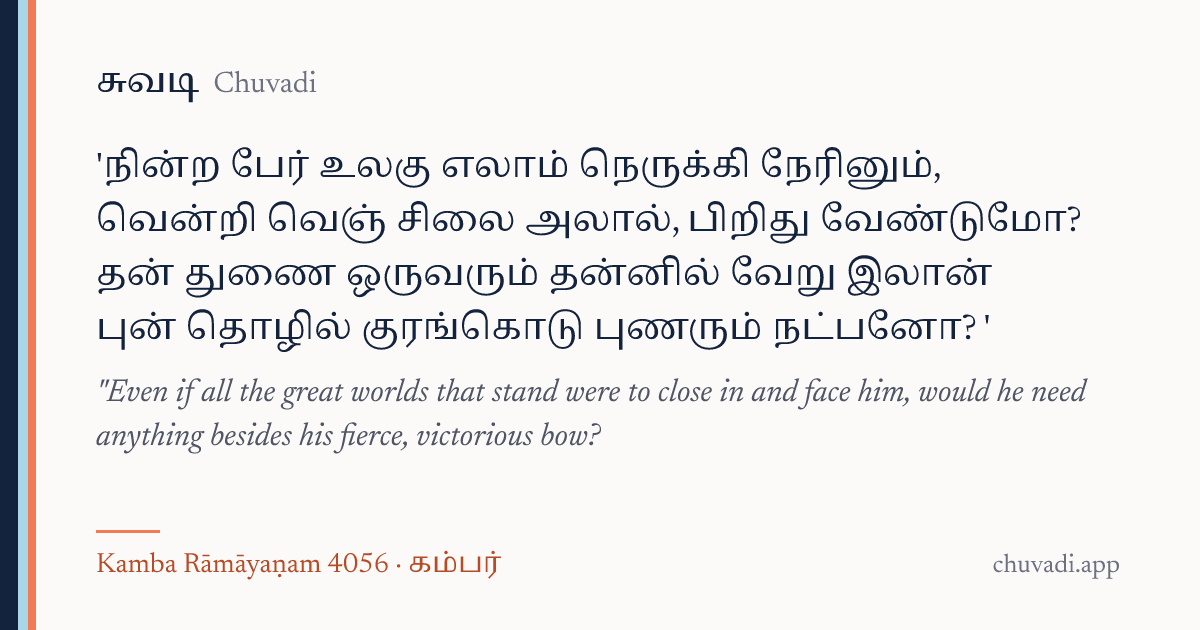
நின்ற பேர் உலகு எலாம் - நிலைபெற்றுள்ள பெரிய உலகங்கள் யாவும்; நெருக்கி நேரினும் - ஒன்று சேர்ந்து எதிர்த்தாலும்; வென்றி வெஞ்சிலை அலால் - வெற்றியைத் தரும் அவனது கொடிய கோதண்டமே அல்லாமல்; பிறிது வேண்டுமோ - வேறொன்றைத் தனக்குத் துணையாக வேண்டுவதுண்டோ? (இல்லை); தன் துணை தன்னில் - தனக்கு நிகர் தானே அல்லாமல்; வேறு ஒருவரும் இலான் - வேறொருவரும் இல்லாத இராமன்; புன்தொழில் குரங்கொடு - அற்பச் செயலை உடைய ஒரு குரங்கினோடு; புணரும் நட்பனோ - சேரும் நட்பினை உடையவன் ஆவானோ?
தனக்கு நிகர் தானே ஆதலின் 'தன்துணை ஒருவரும் தன்னில் வேறிலான்' என்றான். 'தனக்கு உவமை இல்லாதான்' என்றார் வள்ளுவர் (குறள். 7). திருவிண்ணகர் கோயில் திருமாலுக்கு ஒப்பிலியப்பன் என்பது பெயராகும். 'தன் பெருங் குணத்தால் தன்னைத்தான் அலது ஒப்பு இலான்' (3759) என்று கம்பர் அனுமனையும் குறிப்பார். 'கூட்டு ஒருவரையும் வேண்டாக் கொற்றவ' (4023) என வாலியே இராமனை விளித்துப் பேசுவதும் காண்க. இராமன் இழிதொழிலுக்கு மாறானவன் என்பதை உணர்த்த 'புன்தொழில் குரங்கொடு புணரும் நட்பனோ?' எனக் குறித்தான். ஓகாரம் இரண்டும் எதிர்மறை.
ஆங்கிலம் · English translationAI
Translation
- "Even if all the great worlds that stand were to close in and face him,
- would he need anything besides his fierce, victorious bow?
- He who has no equal and no partner but himself,
- is he one to make friends with a monkey of low deeds?"
What the poem says
Vālī argues that Irāmaṉ needs no ally. Even if all the worlds attacked him, his bow alone would win. Irāmaṉ has no equal but himself, as the Tirukkuṟaḷ says of God, and as the Vishnu of Tiruviṇṇakar is called "the Lord without compare".
So why would he bind himself in friendship to a mean, low-born monkey like Cukkirīvaṉ? Both of Vālī's questions expect the answer no.