



கம்பராமாயணம் 4082 · கிட்கிந்தா 7.60
பாடல் · The poem
Tap a word to see its gloss in the commentary and where else it occurs.
பாட வேறுபாடு · Project Madurai reads
பொருள் · Meaning in Tamil
அன்ன தன்மையர் - அத்தகைய தன்மையையுடையவர்களான வாலி சுக்கிரீவர்; ஆற்றலின் அமர்புரி பொழுதில் - வலிமையோடு போர் செய்து கொண்டிருக்கையில்; வல்நெடுந் தடந்திரள் புயத்து - வலிய, நீண்ட, பெரிய திரண்ட தோள்களையும்; அடு திறல் வாலி - பகைவரை வெல்லும் வலிமையினையும் உடைய வாலி; சொன்ன தம்பியை - மேலே குறிப்பிட்ட தம்பியான சுக்கிரீவனை; தும்பியை அரி தொலைத்தென்ன - யானையைச் சிங்கம் அழிப்பது போன்று; கொல் நகங்களின் - கொல்லவல்ல நகங்களாலும்; கரங்களின் - கைகளாலும்; குலைந்து உக மலைந்தான் - வலிமை தளர்ந்து விழும்படி செய்தான்.
தும்பி - யானை. வாலிக்குச் சிங்கமும் சுக்கிரீவனுக்கு யானையும் உவமைகள். இதனால் வாலியின் ஆற்றல் மிகுதி கூறப்பெற்றது. அரி என்பது சங்கரிக்கும் அதாவது அழிக்கும் வலிமையுடையது என்னும் பொருளில் சிங்கத்தைக் குறித்தது. தொலைத்தென்ன - இது தொகுத்தல் விகாரம். நகங்களின், கரங்களின் என்புழி இன் ஏதுப் பொருளில் வந்தது.
ஆங்கிலம் · English translationAI
Translation
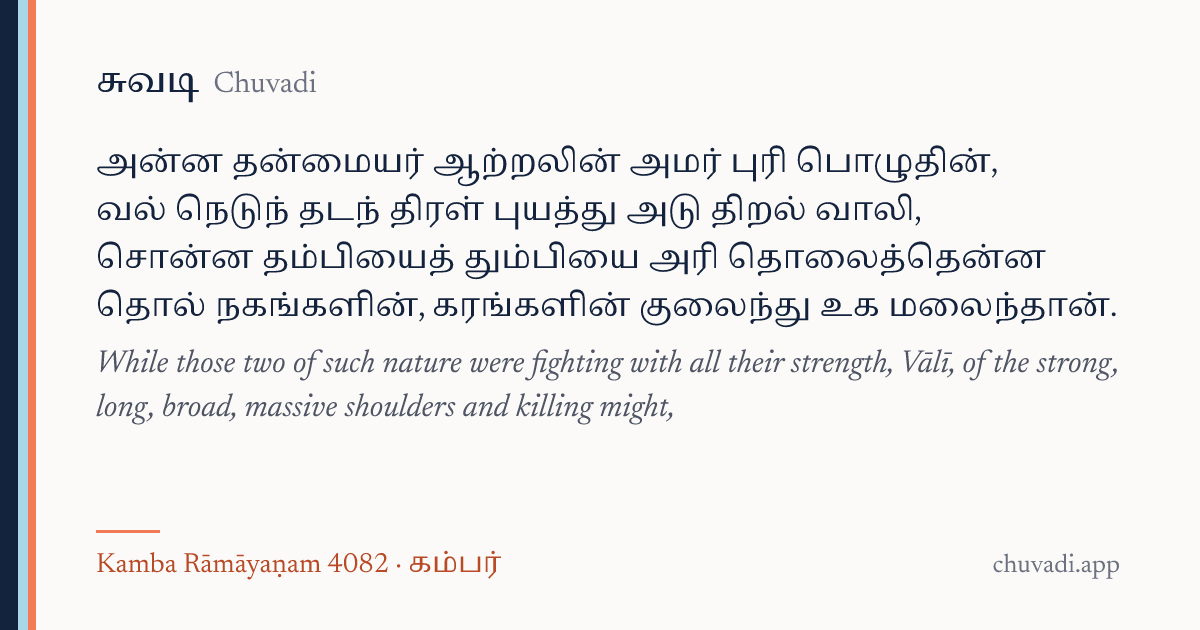
- While those two of such nature were fighting with all their strength,
- Vālī, of the strong, long, broad, massive shoulders and killing might,
- as a lion destroys an elephant, so fought that younger brother just named
- with his ancient claws and his hands that the other was broken and fell.
What the poem says
The tide turns. Vālī, the lion, gets the better of Cukkirīvaṉ, the elephant, and with claws and fists beats him until he collapses. The comparison underlines Vālī's superior strength. The word ari, lion, is understood here as "the destroyer".