



கம்பராமாயணம் 410 · பால 8.3
பாடல் · The poem
Tap a word to see its gloss in the commentary and where else it occurs.
பாட வேறுபாடு · Project Madurai reads
பொருள் · Meaning in Tamil
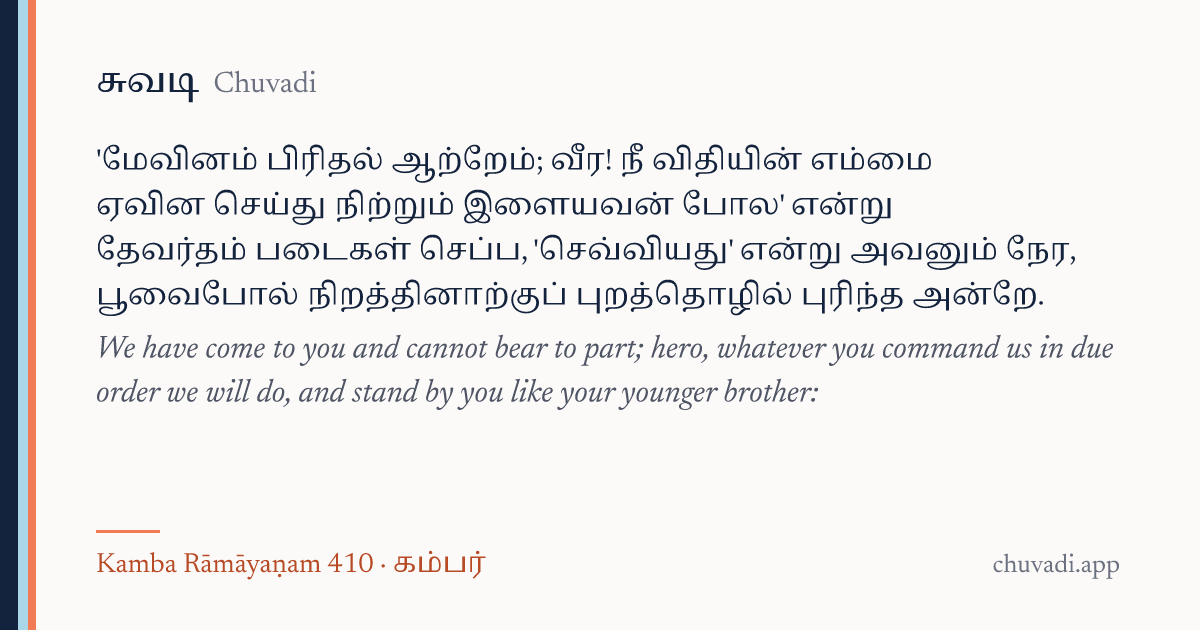
வீர! மேவினம் பிரிதல் ஆற்றேம் - வீரனே! நாங்கள் வந்து உன்னை அடைந்தோம், பிரிதல் செய்யோம்; நீ விதியின் எம்மை ஏவின செய்து - நீ முறைப்படி எங்களை ஏவிட்ட காரியத்தைச் செய்து; இளையவன் போல நிற்றும் என்று - இளையவனாகிய இலக்குவனைப்போலப் பணிபுரிந்து நிற்போம் என்று படைக்கலத் தேவதைகள் கூற; அவனும் செவ்விது என்று நேர - இராமபிரானும் நல்லது என்று ஒப்புக்கொள்ள; பூவை போல் நிறத்தினாற்கு - காயாம்பூவைப் போன்ற நிறம் கொண்ட இராமபிரானுக்கு; புறத்தொழில் புரிந்த - ஏவல் தொழிலைச் செய்திருந்தன.
மேவினம், ஆற்றேம் என்பன தன்மைப் பன்மை வினைமுற்றுகள். பிரிதல்: தொழிற்பெயர் விதியின்: முறைப்படி. நிற்றும்: செவ்விது: அழகிது. நேர: ஒப்ப. பூவை: காயாம்பூ புறத்தொழில்: ஏவல் தொழில். தெய்வப்படைக் கலங்களுக்குரிய தேவதைகள் இராமனை நோக்கி “வீரனே! நாங்கள் உன்னை அடைந்தோம். இனிப்பிரிய மாட்டோம். நீ ஏவிய பணியைச் செய்து இலக்குவனைப் போல நிற்போம் என். இராமனும் அழகிது என்று ஒப்புக் கொள்ள - அப்படைக்கலத் தேவதைகள் இராமனுக்கு ஏவல்தொழிலைச் செய்திருந்தன என்பது பொருள்.
ஆங்கிலம் · English translationAI
Translation
- We have come to you and cannot bear to part; hero, whatever you
- command us in due order we will do, and stand by you like your younger brother:
- so the weapons of the gods said; he agreed, saying, It is well;
- and they served the one whose colour is like the kāyā flower.
What the poem says
The presiding spirits of the divine weapons address Irāmaṉ. Now that they have come to him, they will never leave; they will carry out his every order and serve him as faithfully as his brother Ilakkuvaṉ does.
Irāmaṉ, dark as the blue kāyā blossom, accepts, and the weapons take up their service.