



கம்பராமாயணம் 4114 · கிட்கிந்தா 7.92
பாடல் · The poem
Tap a word to see its gloss in the commentary and where else it occurs.
பொருள் · Meaning in Tamil
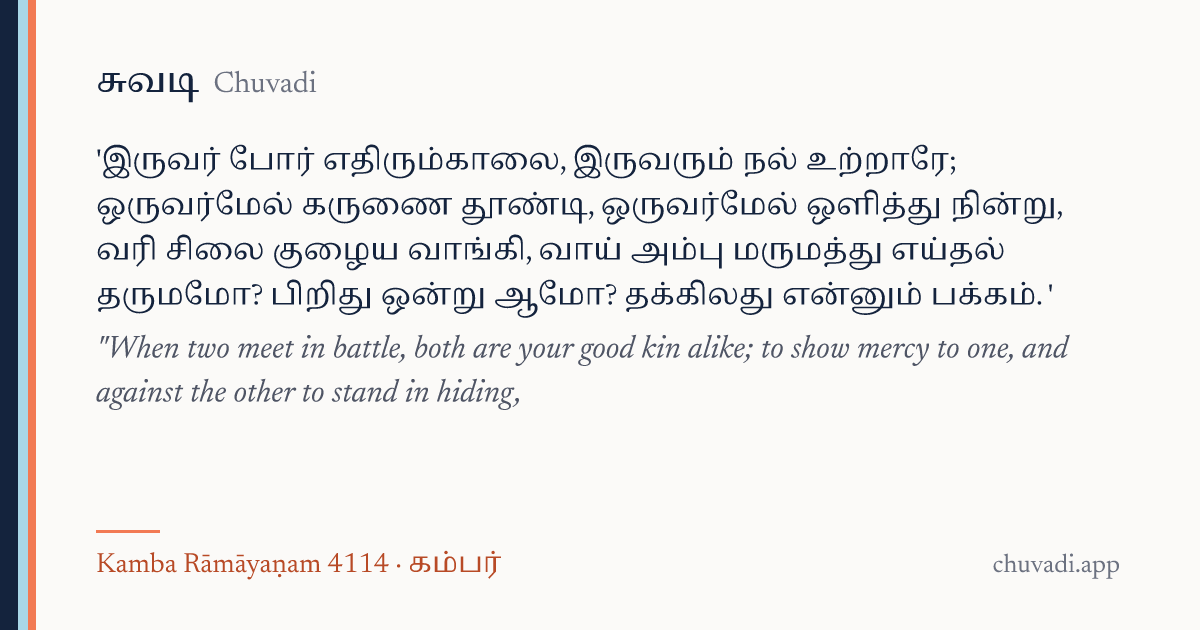
இருவர் போர் எதிரும் காலை - இருவர் தம்முள் எதிர்த்துப் போர் செய்து கொண்டிருக்கும் நேரத்தில்; இருவரும் நல் உற்றாரே - அவ்விருவரும் (மூன்றாமவருக்கு) நல்ல உறவினரே யாவர்; ஒருவர் மேல் கருணை தூண்டி - (அவ்வாறிருக்க) அவ்விருவருள் ஒருவர் மீது அருளைச் செலுத்தி; ஒருவர் மேல் ஒளித்து நின்று - மற்றொருவர்மீது குழையும்படி வளைத்து; வாய் அம்பு மருமத்து எய்தல் - கூர்மையான நுனியுடைய அம்பினை மார்பில் செலுத்துதல்; தருமமோ - அறமாகுமா? பிறிது ஒன்று ஆமோ - அன்றி அறத்திற்கு மாறுபட்டதாகுமா? தக்கிலது என்னும் பக்கம் - அச்செயல் தகுதியில்லாதது என்னும் பக்கமே சேர்வதாகும்.
இருவர் மாறுபட்டுப் போர் செய்கையில் பொதுநிலையில் உள்ளவர், ஒருவர்மாட்டுக் கருணைகொண்டு, மற்றொருவர்மீது மறைந்து நின்று அம்பு செலுத்துதல் நடுநிலைமைக்குரிய செயலன்று என வாலி உரைத்தனன். தக்கிலது என்னும் பக்கம் - அறமாகுமோ, அறமாகாதோ என்பதில் ஐயமுண்டானாலும், தக்கது என்பதில் ஐயமில்லை என்க. தகவிலது என்பது தக்கிலது என வந்தது. பக்கம் - பக்கம் ஆம் என ஆக்கச் சொல் வருவித்து முடிக்க.
ஆங்கிலம் · English translationAI
Translation
- "When two meet in battle, both are your good kin alike;
- to show mercy to one, and against the other to stand in hiding,
- bend your banded bow till it curves and shoot a sharp arrow into his vitals:
- is that dharma? Or something else? It falls on the side of the unfitting."
What the poem says
Vālī argues as one would to a judge. When two people fight, a third party ought to treat both as equals. Favouring one and shooting the other from cover, straight into the heart, is not neutral and not fair. Whatever doubt there may be about whether it is dharma, there is none that it is unworthy.