



கம்பராமாயணம் 4126 · கிட்கிந்தா 7.104
பாடல் · The poem
Tap a word to see its gloss in the commentary and where else it occurs.
பாட வேறுபாடு · Project Madurai reads
பொருள் · Meaning in Tamil
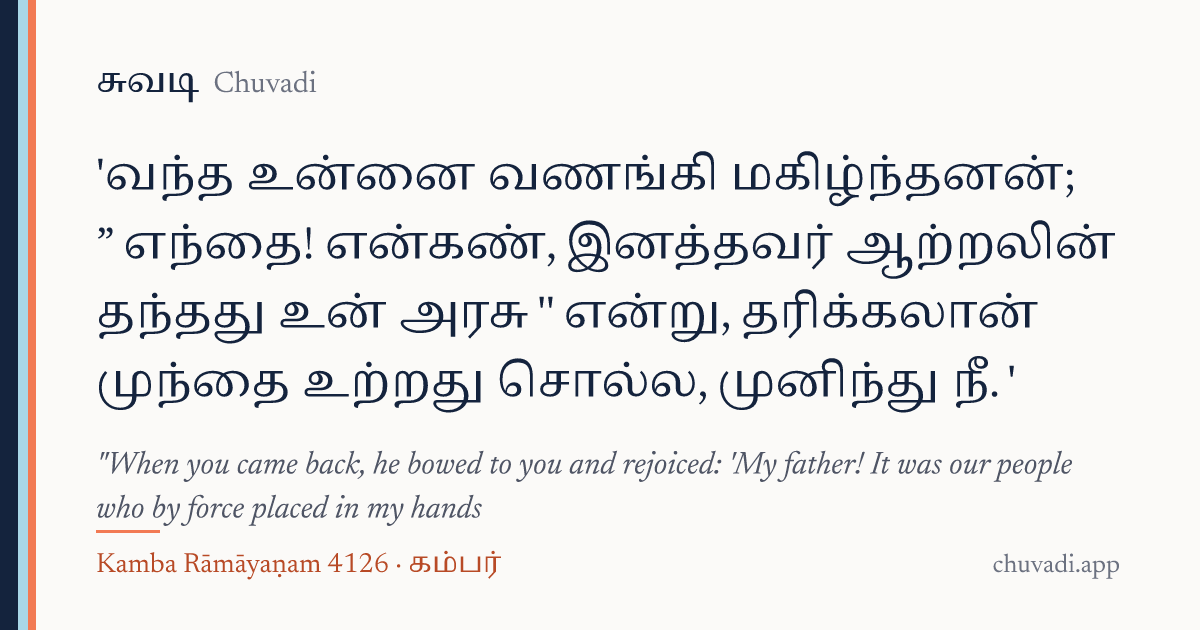
வந்த உன்னை - (மாயாவியைக் கொன்று) மீண்டு வந்த உன்னைக் கண்டு; வணங்கி மகிழ்ந்தனன் - வணங்கிப் பெரிதும் மகிழ்ந்தவனாய்; எந்தை - எந்தையே; என்கண் இனத்தவர் - என்னிடத்தில் (நமது) இனத்தவர்களான வானரர்கள்; ஆற்றலின் தந்தது - வலியக் கொடுத்தது; உன் அரசு - இந்த உன்னுடைய அரசாட்சி; என்று - என்று தொடங்க; தரிக்கலான் - (தான் அவ்வரசினைத்) தாங்கியிருக்கப் பொறாதவனாய்; முந்தை உற்றது சொல்ல - முன்பு நடந்த நிகழ்ச்சிகளை (உனக்கு) எடுத்துக் கூறவும்; நீ முனிந்து - நீ (அதனை ஏற்றுக் கொள்ளாது) சினம் கொண்டு... .
இப்பாடலில் வரும் "முனிந்து நீ" என்ற தொடர் அடுத்த பாடலில் முதலில் வரும் 'கொல்லல் உற்றனை' எனும் வினையைக் கொண்டு முடியும். சுக்கிரீவனின் தூய இயல்பு இங்கும் வற்புறுத்தப் பட்டுள்ளது. தமையன் தந்தைக்கு ஒப்பானவன் என்பதால் 'எந்தை' என அழைத்தான் சுக்கிரீவன். இஃது அண்மை விளியாதலின் இயல்பாய் நின்றது. 'உனக்குரிய அரசை நான் விரும்பி ஏற்கவில்லை. வானரர்கள் வற்புறுத்தியதால் ஏற்றுக் கொண்ட ஆட்சி இது. இவ்வரசு உன்னுடையதே' எனச் சுக்கிரீவன் தான் அரசேற்ற சூழ்நிலையை விளக்கியும் வாலி அதனை ஏற்காது சினங்கொண்டது குற்றமாகும் என இராமன் வாலிக்கு எடுத்துரைத்தான் என்பதாம். ஆற்றலின் தந்தது - தமக்குள்ள ஆற்றலால் வற்புறுத்திக் கொடுத்தது.
ஆங்கிலம் · English translationAI
Translation
- "When you came back, he bowed to you and rejoiced:
- 'My father! It was our people who by force placed in my hands
- this kingdom of yours,' and, unable to keep it,
- he told you all that had happened before; and you, in your anger,"
What the poem says
When Vālī returned from the cave, Cukkirīvaṉ welcomed him joyfully and bowed. He called his elder brother "father", since an elder brother stands in a father's place, and explained that the monkeys had forced the kingdom on him; it was still Vālī's.
The sentence breaks off at "you, in your anger": the next verse says what Vālī did.