



கம்பராமாயணம் 413 · பால 8.6
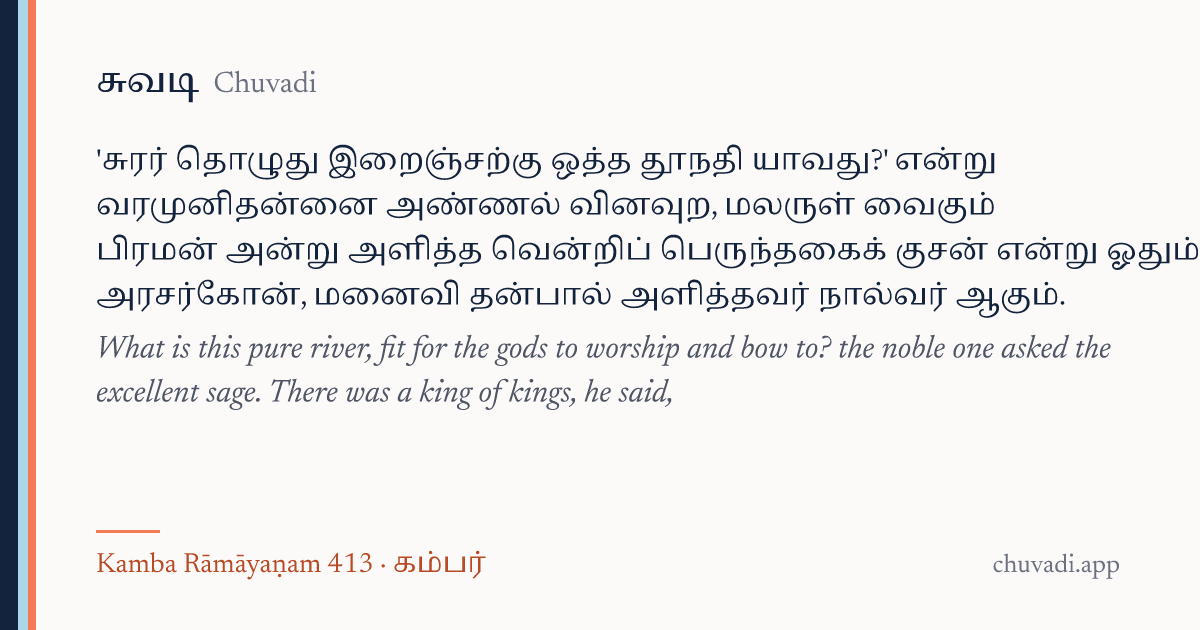
பாடல் · The poem
Tap a word to see its gloss in the commentary and where else it occurs.
பாட வேறுபாடு · Project Madurai reads
பொருள் · Meaning in Tamil
சுரர் தொழுது இறைஞ்சற்கு ஒத்த - தேவர்களெல்லாம் துதித்து வணங்குவதற்கு ஒத்ததாகிய; தூநதி யாவது என்று - தூய நதி யாதாகும் என்று; வரமுனி தன்னை அண்ணல் வினவுற - சிறந்த முனிவனாகிய விசுவாமித்திரனைப் பெருமைமிக்க ராமன் கேட்க; மலருள் வைகும் பிரமன் அன்றளித்த - தாமரை மலரில் தங்கியிருக்கும் பிரமன் முன்பு பெற்ற; வென்றிப் பெருந்தகை குசன் என்று - வெற்றியை உடைய பெருந் தன்மையன் ஆகிய குசன் என்று; ஓதும் அரசர் கோன் - பெரியோர்கள் புகழ்ந்து பேசும் மன்னர் மன்னன்; மனைவி தன்பால் அளித்த மைந்தர் அருமறை அனையார் நால்வர் - தன் மனையாள்பால் பெற்ற பிள்ளைகள் அரியமறைகளைப் போன்ற நால்வராவர்.
சுரர்: தேவர் ஒத்த: போன்ற. தூ: தூய்மை. வைகல்: தங்கல். வினவுறு: கேட்க. ஓதல்: புகழ்ந்து சொல்லுதல். மறை: வேதம். அரசர்கோன்: மன்னர் மன்னன்.
தேவர்களும் வணங்கும் அந்த நதி யாவது என ராமபிரான் விசுவாமித்திர முனிவனைக் கேட்க, அதன் வரலாறு கூறுகிறான் முனிவன். பிரமனுக்கு மகன் குசன் என்னும் வேந்தன். அவன் பெற்ற மைந்தர்கள் நான்மறைக் கொப்பான நால்வர் என்பது கருத்து.
ஆங்கிலம் · English translationAI
Translation
- What is this pure river, fit for the gods to worship and bow to?
- the noble one asked the excellent sage. There was a king of kings, he said,
- the victorious, great-souled one called Kucaṉ, whom Brahmā who dwells in the flower
- begot long ago; those his wife bore him were four.
What the poem says
Irāmaṉ asks what this holy river is, worshipped even by the gods. Vicuvāmittiraṉ answers with his own family history.
Long ago Brahmā had a son, the renowned and victorious king Kucaṉ (Kuśa). His queen bore him four sons, whom the commentary's reading compares to the four Vedas.