



கம்பராமாயணம் 412 · பால 8.5
பாடல் · The poem
Tap a word to see its gloss in the commentary and where else it occurs.
பொருள் · Meaning in Tamil
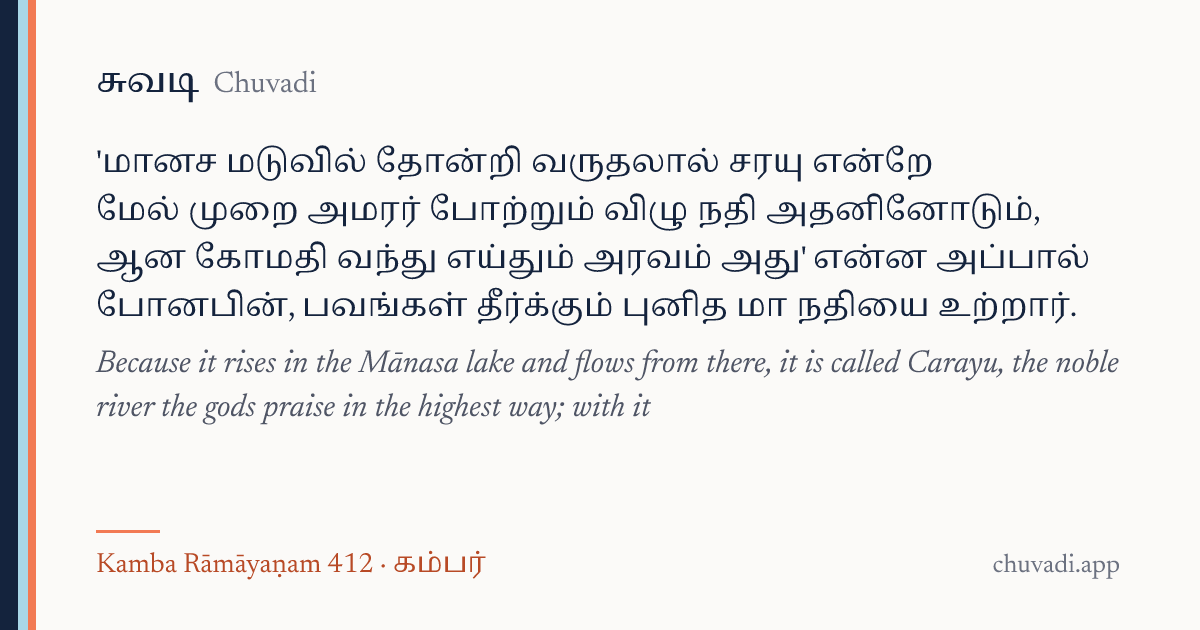
மானச மடுவில் தோன்றி வருதலால் - மானசம் என்னும் பெயருடைய மடுவிலே தோன்றிப் பெருகிவருதலால்; சரயு என்றே மேல்முறை அமரர் போற்றும் விழுநதி - சரயு என்னும் பெயர் கொண்டு மேலாம் முறையிலொழுகும் தேவர்கள் போற்றும் விழுநதியாகிய; அதனினோடும் ஆன கோமதி வந்து எய்தும் அரவம் அது என்ன - அந்த நதியுடனே கோமதி என்னும் பெயருடைய ஆறு வந்து சேர்வதால் உண்டாகும் ஓசையே அது என்று விசுவாமித்திர முனிவன் சொல்ல; அப்பால் போனபின் பவங்கள் தீர்க்கும் புனித மாநதியை உற்றார் - அதற்கு அப்புறம் சென்றபின் பிறவிப் பிணியைப் போக்க வல்ல புனிதமான ஒரு பெரிய நதியைச் சென்று சேர்ந்தார்கள்.
மானசம் என்ற மடு பிரமனது மனத்தால் தோன்றியதென்பதால் இப்பெயர் பெற்றது. “சரசு” குளம் இதிலிருந்து தோன்றியதால் சரயு என்று பெயர் பெற்றது. சரயுநதி விழுமிய நதியுமாம். கோமதி மற்றொரு ஆறு. இரு நதிகளும் கூடும் இடமிது. “எய்தும் அரவம்” இந்த இரண்டு ஆறுகளும் கலந்து சேர்வதால் உண்டாகும் ஒலி என்பது பொருள். 'புனிதமாநதி' கெளசிகை என்னும் நதியாகும். 'பவங்கள்' என்பதில் 'பவம்' பிறப்பு.
ஆங்கிலம் · English translationAI
Translation
- Because it rises in the Mānasa lake and flows from there, it is called Carayu,
- the noble river the gods praise in the highest way; with it
- the Kōmati comes and joins: that is the sound, he said; going on beyond,
- they reached a great and holy river that ends the round of births.
What the poem says
The sage explains that the roar is the meeting of two rivers. The Carayu (Sarayū), revered by the gods, takes its name from Lake Mānasa, which was born from Brahmā's mind; the Kōmati (Gomatī) flows into it here.
Going on, the travellers reach another great sacred river, which the commentary identifies as the Kaucikai, whose waters free one from rebirth.