



கம்பராமாயணம் 4135 · கிட்கிந்தா 7.113
பாடல் · The poem
Tap a word to see its gloss in the commentary and where else it occurs.
பொருள் · Meaning in Tamil
ஐய - தலைவனே! நுங்கள் அருங்குலக் கற்பின் - உங்கள் அரிய மனித குலத்திற்கு ஏற்ற கற்பின் வழிப்பட்ட; அப்பொய் இல் மங்கையர்க்கு - அந்தப் பொய்ம்மை இல்லாத மகளிர்க்கு; ஏய்ந்த புணர்ச்சி போல் - பொருந்திய திருமண முறையிலான சேர்க்கை போல; எமை - எங்களுக்கு; தே மலர் மேலவன் செய்திலன் - தேன் பொருந்திய தாமரை மலரில் வீற்றிருக்கும் நான்முகன் அமைந்திலன்; எய்தின் எய்தியது ஆக - நேர்ந்தபோது நுகர்வது என்பதாக; இயற்றினான் - (எங்களைப்) படைத்துவிட்டான்.
கருத்தொருமித்து வாழும் கற்பு நிலை மனித இனமே கடைப்பிடிக்கும் அருமையுடைத்து ஆதலின் 'அருங்குலக் கற்பின்' என்றான். நுங்கள் குலம் என்பது மனித இனத்தை. பொய்யில் மங்கையர் - தம் ஒழுக்கத்தில் தவறாத மங்கையர். மனித இனத்திற்குரிய கற்பு நெறியைக் கடைப்பிடிக்கும் வகையில் விலங்கினமாகிய வானரங்களை இறைவன் படைக்கவில்லை என்பானாய், 'தே மலர் மேலவன் செய்திலன்' என்றான். தே மலர் - தெய்வத்தன்மை பொருந்திய மலர் எனினும் அமையும். திருமணத்தால் கொள்ளும் உறவு முறை உயர்திணைப் பகுப்பினராய மனிதர்க்குரியதன்றி அஃறிணைப் பகுப்பினராய குரங்கினத்தார்க்குப் பொருந்தாது என வாலி இராமனுக்கு உரைத்தான் என்க.
ஆங்கிலம் · English translationAI
Translation
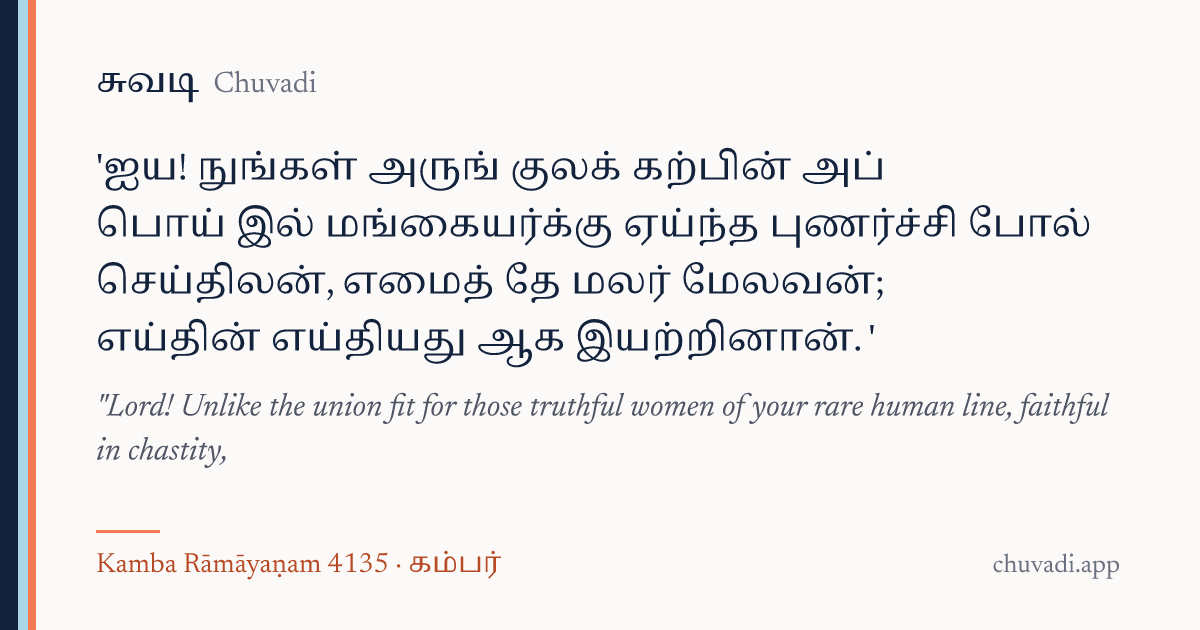
- "Lord! Unlike the union fit for those truthful women
- of your rare human line, faithful in chastity,
- he who sits on the honeyed lotus did not make us;
- he made us to take whatever comes our way."
What the poem says
Vālī argues that the institution of marriage and lifelong faithfulness belong to humans. Brahmā, seated on the lotus, did not create monkeys to live by that rule; animals simply take what comes. In Tamil grammar humans belong to the "high class" and animals to the "non-high class", and Vālī claims that marriage law applies only to the former.