



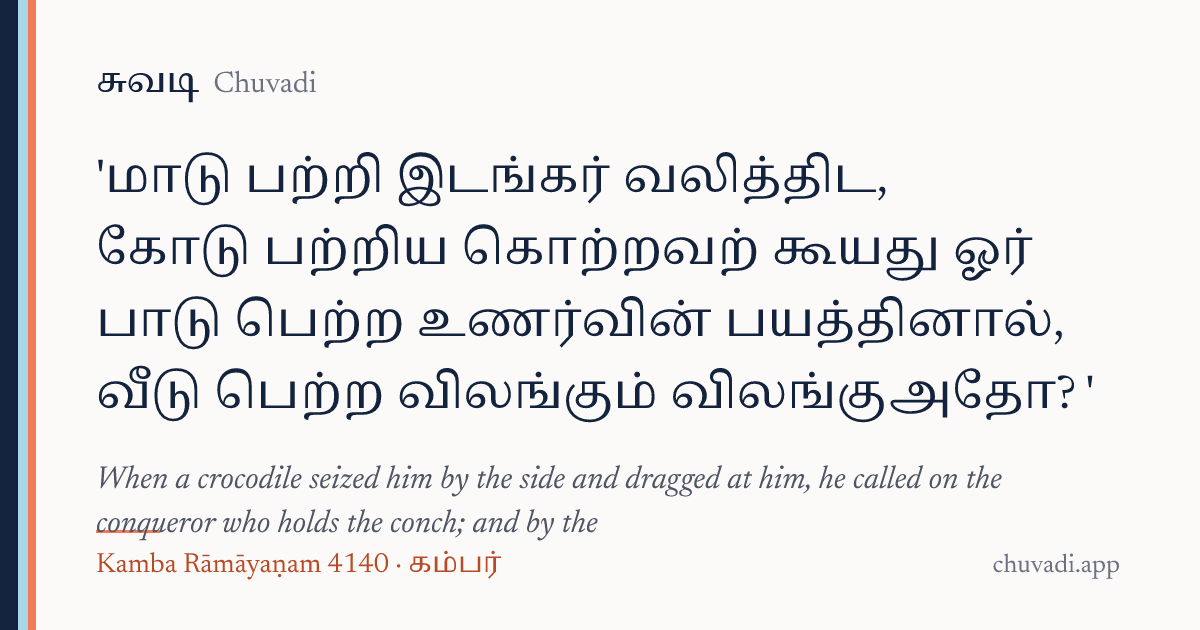
கம்பராமாயணம் 4140 · கிட்கிந்தா 7.118
பாடல் · The poem
Tap a word to see its gloss in the commentary and where else it occurs.
பொருள் · Meaning in Tamil
இடங்கர் - முதலை; மாடு பற்றி வலித்திட - (தன்னை) ஒரு பக்கத்தில் பற்றிக் கொண்டு இழுத்ததால்; கோடு பற்றிய கொற்றவன் - பாஞ்சசன்யம் என்னும் சங்கினைத் தாங்கிய திருமாலை; கூயது - கூவி அழைத்ததாகிய; ஓர் பாடு பெற்ற - ஒப்பற்ற பெருமை வாய்ந்த; உணர்வின் பயத்தினால் - நல்லறிவின் பயனாக; வீடு பெற்ற விலங்கும் - (முதலையின் வாயினின்று) விடுதலை பெற்று நற்கதி அடைந்த கசேந்திரனான யானையும், விலங்கு அதோ - விலங்கு என எண்ணத் தக்கதோ? (அன்று).
இப்பாடலில் உயர்கதி பெற்ற ஒரு விலங்கு உதாரணமாகக் கூறப்பெற்றது. இடங்கர் - முதலை. வெற்றிக்கு அறிகுறியாகச் சங்கை ஊதுதலும், சங்கின் நாதத்தால் பகைவரை அச்சுறுத்தி வெல்லுதலும் தோன்ற 'கோடு பற்றிய கொற்றவன்' என்றான்.
கசேந்திரன் போலவே வாலியும் சாதாரண விலங்கு எனக் கொள்ளத்தக்கவன் அல்லன். ஆதலால் விலங்குச் செயலாகச் சுக்கிரீவன் மனைவியைக் கவர்ந்தது பெருந்தவறாகும் என்பதை இராமன் உணர்த்தினான்.
ஆங்கிலம் · English translationAI
Translation
- When a crocodile seized him by the side and dragged at him,
- he called on the conqueror who holds the conch; and by the
- fruit of that awareness, which won such glory,
- the beast that gained release, was he merely a beast?
What the poem says
Irāmaṉ gives an example of an animal raised above its kind: the elephant Kajēntiraṉ, seized by a crocodile, called out to Viṣṇu, the victor who bears the conch, and was freed and granted salvation. Such a being cannot be dismissed as a mere animal.
The point is that Vāli, like the elephant, is no ordinary beast; so seizing his brother's wife cannot be excused as animal behaviour. It is a grave wrong.