



கம்பராமாயணம் 4145 · கிட்கிந்தா 7.123
பாடல் · The poem
Tap a word to see its gloss in the commentary and where else it occurs.
பாட வேறுபாடு · Project Madurai reads
பொருள் · Meaning in Tamil
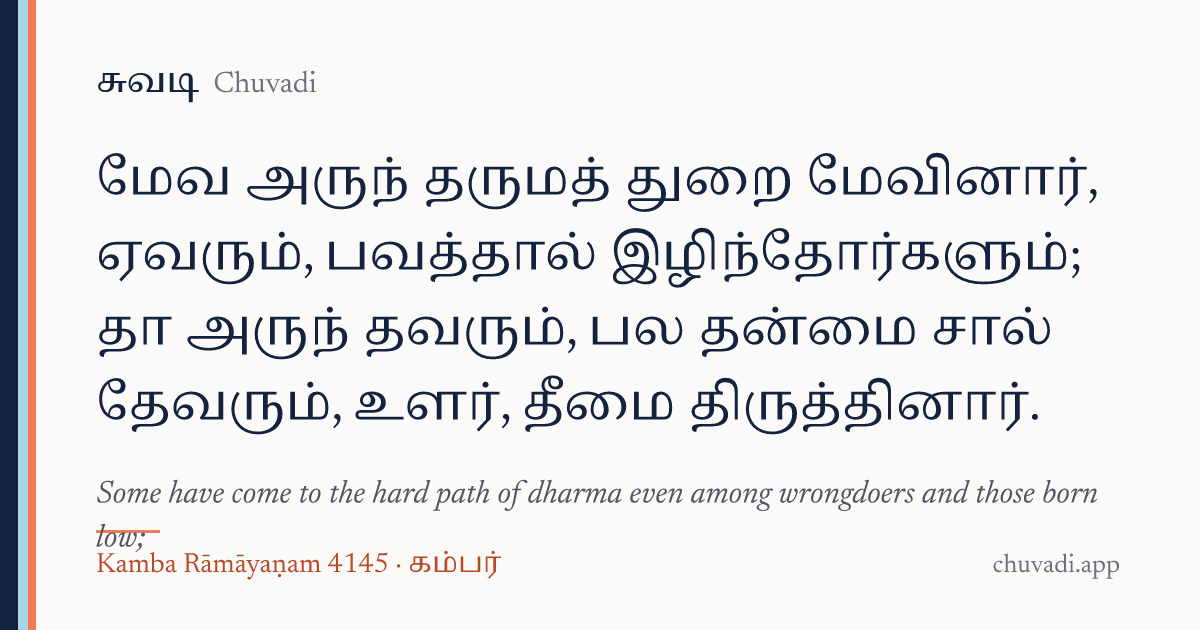
ஏவரும் - குற்றமே செய்யும் இயல்புடையாரிலும்; பவத்தால் இழிந்தோர்களும் - பிறப்பினால் இழிந்த கீழோரிலும்; மேவ அரும் தருமத்துறை - அடைதற்கு அரிய அறவழியில்; மேவினார் - பொருந்தினார் உளர்; தா அருந்தவரும் - குற்றமில்லாத தவம் புரியும் முனிவர்களிலும்; பல தன்மைசால் தேவரும் - பல்வகைப்பட்ட குணங்களில் சிறந்த தேவர்களிலும்; தீமை திருத்தினார் - தீய செயல் செய்தவர்கள்; உளர் - உள்ளனர்.
இன்னார் நல்லனவே செய்வர்: இன்னார் தீயனவே செய்வர் எனக் கூற இயலாது என்பது உணர்த்தப்பட்டது. ஏவம் - குற்றம். அதனைச் செய்பவர் ஏவர்: ஏவம் செய்தவர் என்க. பவம் - பிறப்பு, பிறப்பால் உயர்ந்தவர்கள் தீமை செய்வதும் இழிந்தவர்கள் அறநெறியில் நிற்றலும் உலகில் காண்பனவே. விசுவாமித்திரர் மேனகையிடம் மயங்கியது; இந்திரன் அகலிகையை விரும்பியது என்பன முனிவர்களும், தேவர்களும் தவறு செய்வர் என்பதற்கு எடுத்துக்காட்டுக்களாகும். எளிய வேடர்குலம் எனினும், குகன் காட்டிய அன்பிற்கு அளவில்லை. எனவே உயர்ந்தோர், தாழ்ந்தோர் என்பது பிறப்பு, குலம் என்பவற்றால் அல்லாமல் செய்யும் செயல்வகைகளால் கருதப்படுவது என்பது கூறப்பட்டது. "மேலிருந்தும் மேலல்லார் மேலல்லர் கீழிருந்தும், கீழல்லர் கீழல்லவர்" (973) என்னும் குறள் ஈண்டு ஒப்புநோக்கத்தக்கது.
ஆங்கிலம் · English translationAI
Translation
- Some have come to the hard path of dharma
- even among wrongdoers and those born low;
- and among flawless ascetics and gods
- of many virtues, there are some who did evil.
What the poem says
No one can be said to do only good, or only evil, because of birth. Some of low birth, or prone to wrong, have reached righteousness, while sages and gods have stumbled.
The commentary gives examples: the sage Vicuvāmittiraṉ infatuated with the nymph Mēṉakai, Indra's desire for Akalikai, and on the other side the boatman Kukaṉ, of humble hunter stock, whose love for Irāmaṉ was boundless. It compares the Tirukkuṟaḷ (973): those placed high are not high if they act basely, and those placed low are not low if they do not.