



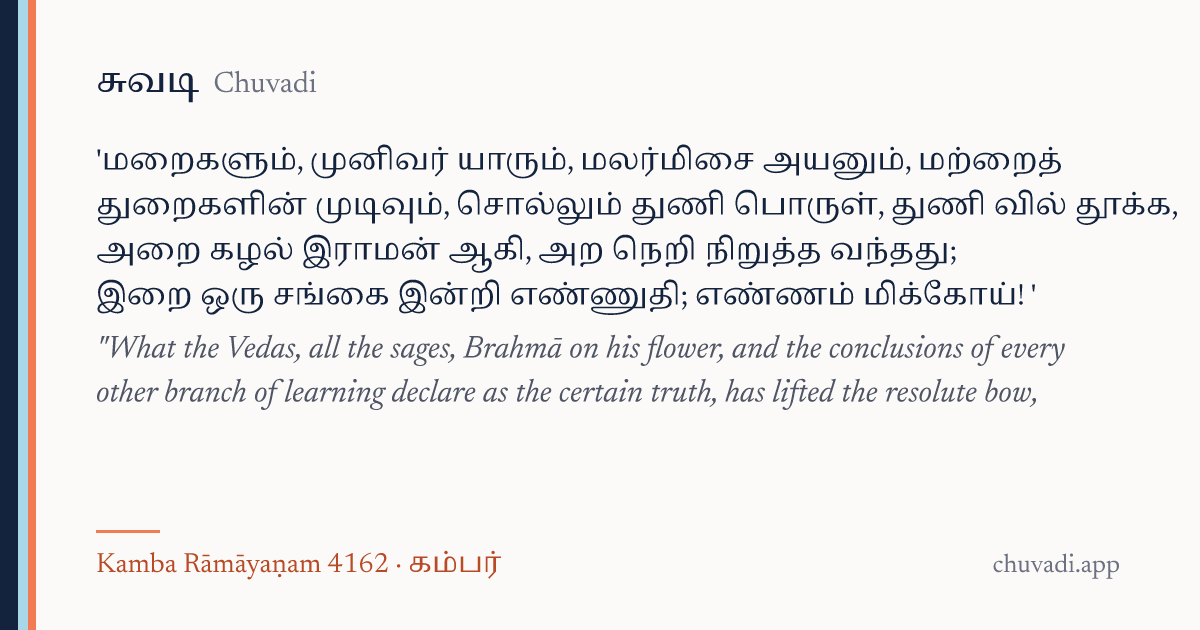
கம்பராமாயணம் 4162 · கிட்கிந்தா 7.140
பாடல் · The poem
Tap a word to see its gloss in the commentary and where else it occurs.
பாட வேறுபாடு · Project Madurai reads
பொருள் · Meaning in Tamil
எண்ணம் மிக்கோய் - ஆலோசனையில் சிறந்தவனே! மறைகளும் - வேதங்களும்; முனிவர் யாரும் - எல்லா முனிவர்களும்; மலர்மிசை அயனும்- தாமரை மலரில் வீற்றிருக்கும் நான்முகனும்; மற்றைத் துறைகளின் முடிவும்- மற்ற சாத்திரங்களின் முடிபுகளும்; சொல்லும் துணி பொருள் - சொல்லுகின்ற தேர்ந்த பொருளாகிய பரம்பொருள்; துணிவில் தூக்கி - (பகைவரைத்) தண்டிக்கும் வில்லை ஏந்திக் கொண்டு; அறை கழல் இராமன் ஆகி - ஒலிக்கின்ற கழலணிந்த இராம பிரானாகிய; அறநெறி நிறுத்த வந்தது- உலகில் அறநெறியை நிலை நிறுத்துவதற்காக அவதரித்து உள்ளது. இறை ஒரு சங்கை இன்றி - இவ்வுண்மையை ஒரு சிறிதும் சந்தேகம் இல்லாமல்; எண்ணுதி - மனத்தில் கொள்வாய்.
அழித்தற்கரிய தன்னைக் கொல்ல நல்ல துணைவனைச் சுக்கிரீவன் தன் ஆலோசனைத் திறத்தால் பெற்றவனாதலின் 'எண்ணம் மிக்கோய்' என வாலி விளித்தான். பரம்பொருளே இராமனாக வந்துள்ளான் என வாலி சுக்கிரீவனுக்கு உணர்த்தினான். இக்கருத்து நூலின் பல இடங்களில் வெளிப்படையாகவும் குறிப்பாகவும் உணர்த்தப்பட்டுள்ளது.
"காலமாகக் கணிக்கும் நுண்மைக் கணக்கையும் கடந்து நின்ற மூலமாம் முடிவு இலாத மூர்த்தி இம் முன்பன்" (1585)
"மூலமும் நடுவும் ஈறும் இல்லதோர் மும்மைத்தாய காலமும் கணக்கும் நீத்த காரணன் -கைவில் ஏந்தி ..... அயோத்தி வந்தான்" (5884)
என வரும் இந்நூலின் அடிகள் ஈண்டு ஒப்பு நோக்கத்தக்கன.
ஆங்கிலம் · English translationAI
Translation
- "What the Vedas, all the sages, Brahmā on his flower, and the conclusions
- of every other branch of learning declare as the certain truth, has lifted the resolute bow,
- become Irāmaṉ with ringing anklets, and come to establish the path of dharma.
- Think on this without the slightest doubt, you who are wise in counsel."
What the poem says
Vāli tells Cukkirīvaṉ who Irāmaṉ really is: the supreme reality that the scriptures, sages and the creator god all proclaim, now come in human form with a bow, to set dharma on its feet.
He calls his brother "great in counsel," since it was Cukkirīvaṉ's planning that won an ally strong enough to kill the unconquerable Vāli. The commentary points to other places in the poem where Irāmaṉ is named the timeless, causeless First Being.