



கம்பராமாயணம் 4161 · கிட்கிந்தா 7.139
பாடல் · The poem
Tap a word to see its gloss in the commentary and where else it occurs.
பொருள் · Meaning in Tamil
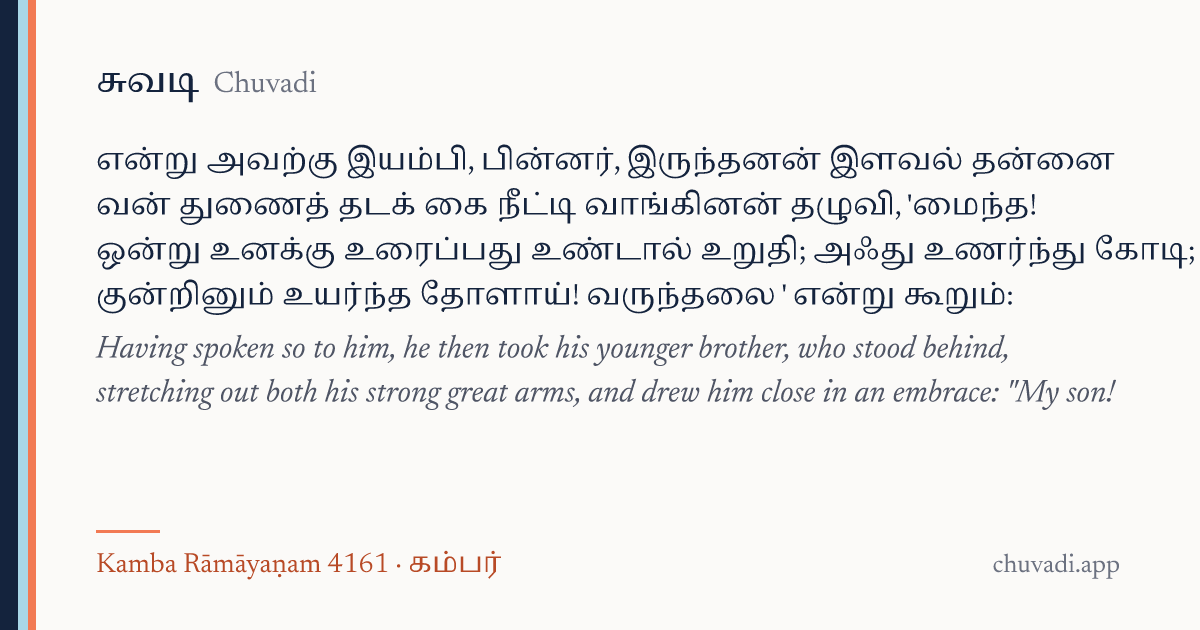
என்று அவற்கு இயம்பி - என்று (வாலி) அந்த இராமனுக்குக் கூறி; பின்னர் - அவனுக்குப் பின்னே; இருந்தனன் இளவல் தன்னை - (வருத்தத்துடன்) இருந்தவனாகிய தன் தம்பி சுக்கிரீவனை; வன் துணைத் தடக்கை நீட்டி - வலிய இரண்டு பெரிய கைகளையும் நீட்டி; வாங்கினன் தழுவி - சேர்த்து அணைத்துக் கொண்டு; 'மைந்த - மைந்தனே! குன்றினும் உயர்ந்த தோளாய்! - மலையினும் உயர்ந்த தோள்களை உடையவனே! உனக்கு உரைப்பது - உனக்குச் சொல்வதான; உறுதி ஒன்று உண்டு - நன்மை தரும் காரியம் ஒன்று உள்ளது; அஃது உணர்ந்து கோடி - அதனை நீ உணர்ந்து ஏற்றுக் கொள்வாயாக; வருந்தலை - (எனது இறப்பினை எண்ணி) வருந்தாதே; என்று கூறும் - என்று கூறி மேலும் கூறுவான்.
பின்னர் இருந்தனன் - தன் செயலுக்கு வெட்கமுற்று முன் வரத் தயங்கி இருந்தனன் எனலாம். பின்னர்- அதன் பிறகு எனவும் பொருள் கொள்ளலாம். டம் தந்தையோடு ஒப்பவனாதால், மகனொடு ஒப்பவனான தம்பியை 'மைந்த' என அன்பின் மிகுதியால் விளித்தான். வருந்தலை - முன்னிலை எதிர்மறை வினைமுற்று.
ஆங்கிலம் · English translationAI
Translation
- Having spoken so to him, he then took his younger brother, who stood behind,
- stretching out both his strong great arms, and drew him close in an embrace: "My son!
- There is one thing for your good that I must tell you; understand it and take it to heart;
- you whose shoulders are higher than mountains, do not grieve," he said, and went on:
What the poem says
Vāli now turns from Irāmaṉ to Cukkirīvaṉ, who has hung back, perhaps ashamed of his part in his brother's death. The dying Vāli reaches out with both arms and embraces him.
He calls his younger brother "my son": an elder brother stands in place of a father, so the younger is like a son, and the word shows the depth of his love. He tells him not to mourn and prepares to give him parting counsel.