



கம்பராமாயணம் 4179 · கிட்கிந்தா 7.157
பாடல் · The poem
Tap a word to see its gloss in the commentary and where else it occurs.
பாட வேறுபாடு · Project Madurai reads
பொருள் · Meaning in Tamil
பொன் உயிர்த்து ஒளிரும் பூணாய்- பொன்னால் செய்யப்பட்டு ஒளி வீசும் அணிகலன்களை உடையவனே! என் உயிர்க்கு இறுதி செய்தான் - எனது உயிருக்கு (இந்த இராமன்) அழிவைச் செய்தான்; என்பதை இறையும் எண்ணாது - என்பதைச் சிறிதும் கருதாமல், உன் உயிர்க்கு உறுதி செய்தி - உனது உயிர்க்கு நிலையான நன்மையைத் தரும் செயல்களைச் செய்வாயாக; இவற்கு அமர் உற்றது உண்டேல் - (அதாவது) இராமனுக்குப் பகைவரோடு போர் செய்யும் நிலைமை ஏற்படுமானால், பொது நின்று தருமம் போற்றி - நடுவுநிலைமையில் பிறழாது நின்று அறத்தை ஆதரித்து; மன்னுயிர்க்கு உறுதி செய்வான் - நிலைபெற்ற எல்லா உயிர்களுக்கும் நன்மை செய்பவனான இராமனது; மலரடி சுமந்து வாழ்தி - தாமரை மலர் போன்ற திருவடிகளைத் தலைமேற் கொண்டு - (அவன் ஏவிய தொண்டுகளைச் செய்து) வாழ்வாயாக.
உயிர்க்கு இறுதி - மரணம். உயிர்க்கு என்றும் அழிவில்லை யாதலின் 'மன்னுயிர்' எனப்பட்டது. இராமனுக்குத் தொண்டு செய்வதால் நிலையான ஆக்கங்கள் பெறுதல் உறுதி என்பதால் 'உன் உயிர்க்கு உறுதி செய்தி' என்றான். இராமன் தன் தந்தையைக் கொன்றவன் என்னும் எண்ணத்தை விட்டு உண்மையான தந்தையும் தெய்வமும் இனி இராமனே எனத் தெளிந்து அவன் இட்ட பணியை உவந்து செய்யுமாறு வாலி அங்கதனுக்கு அறிவுறுத்தினான். தருமம் காக்கவே இராமன் வந்துள்ளான் என்பதை வாலி அங்கதனுக்கு அறிவித்தலைக் காணலாம். இராமன் திருவடிகளின் அழகும் மென்மையும் கருதி 'மலரடி' என்றான்.
ஆங்கிலம் · English translationAI
Translation
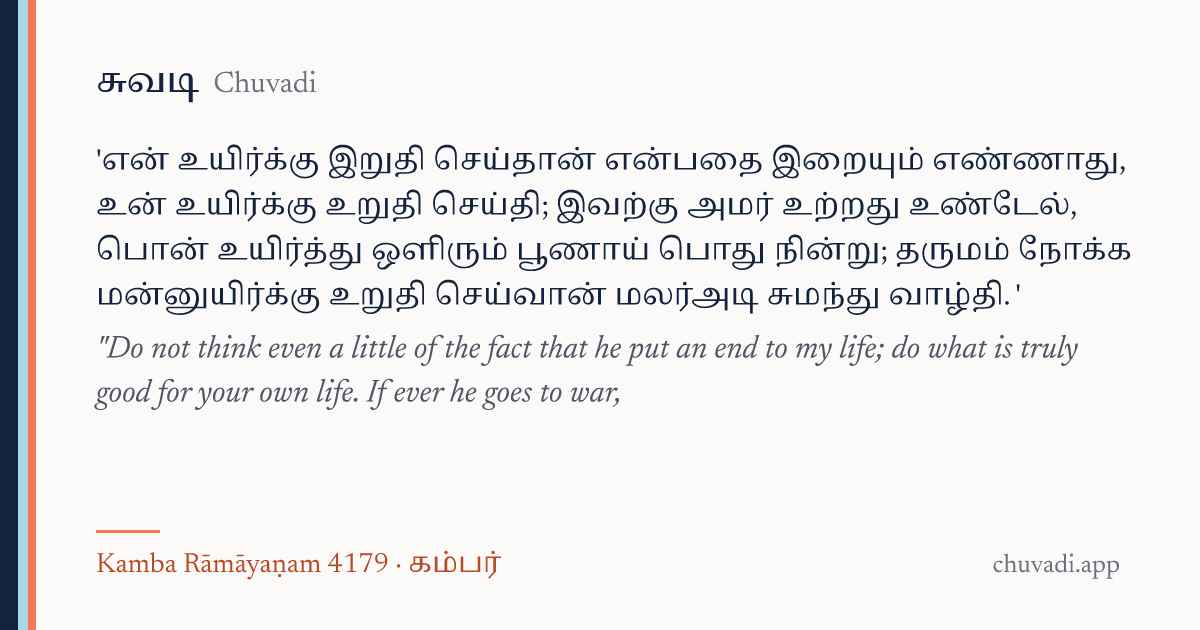
- "Do not think even a little of the fact that he put an end to my life;
- do what is truly good for your own life. If ever he goes to war,
- you with gleaming ornaments of gold, stand firm and true and, guarding dharma,
- live carrying on your head the flower feet of him who does good to all living things."
What the poem says
Vāli asks his son to set aside the thought that Irāmaṉ killed his father. The lasting good of his own soul lies in serving Irāmaṉ. If Irāmaṉ goes to war, Aṅkataṉ must stand by him impartially, uphold dharma, and live with Irāmaṉ's lotus-soft feet on his head, that is, carrying out his orders.
From now on Irāmaṉ is to be both father and god to him. Irāmaṉ has come to protect dharma and to do good to all living beings.