



கம்பராமாயணம் 419 · பால 8.12
பாடல் · The poem
Tap a word to see its gloss in the commentary and where else it occurs.
பாட வேறுபாடு · Project Madurai reads
பொருள் · Meaning in Tamil
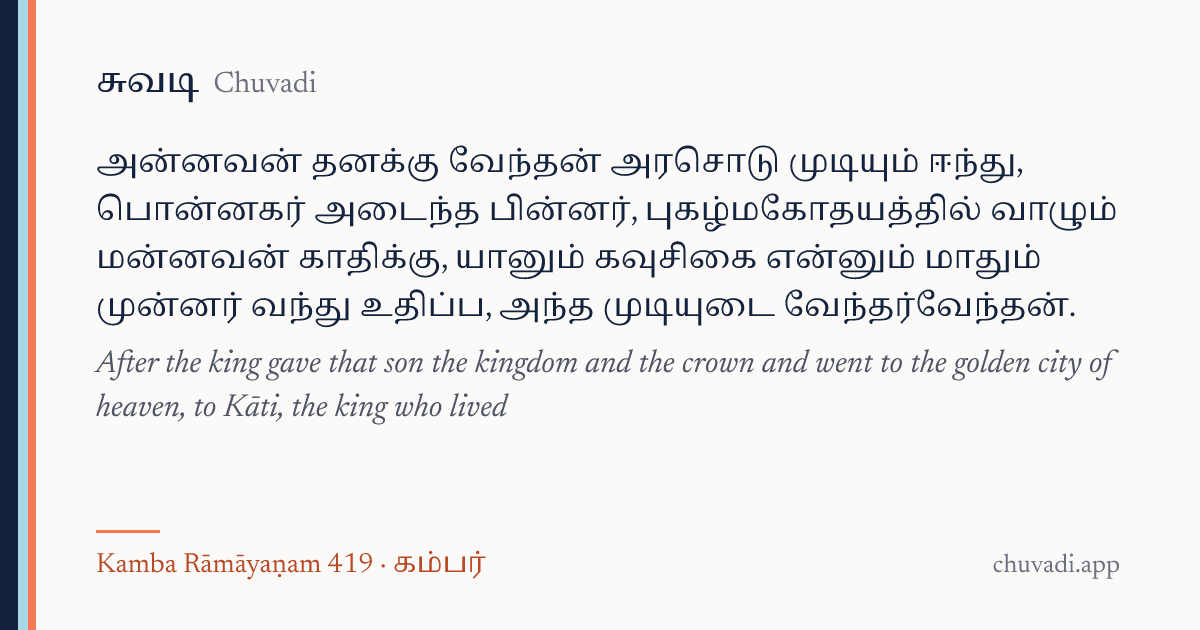
அன்னவன் தனக்கு வேந்தன் - அந்தக் காதி என்னும் பெயருடைய அரச குமாரனுக்குத் தந்தையான குசநாபன்; அரசொடு முடியும் ஈந்து - ஆட்சியுடன் அதற்குரிய மணிமுடியும் தந்து; பொன்னகர் அடைந்த பின்னர் - விண்ணுலகு சென்றபின்பு; புகழ் மகோதயத்தில் வாழும் காதிக்கு - புகழ்மிகுந்த மகோதயம் என்ற நகரில் அரசு புரிந்து வாழ்ந்து வந்த காதிக்கு; யானும் கவுசிகை என்னும் மாதும் முன்னர் வந்து உதிப்ப - யானும் எனக்கு முன்பு வந்துதித்த கவுசிகை என்ற பெண்ணும் வந்து பிறக்க; அந்த முடி உடை வேந்தர் வேந்தன் - மணிமுடி புனைந்த அந்த மன்னர் மன்னனான காதி வேந்தன்.
இது குளகப்பாட்டு. அடுத்த பாட்டுடன் பொருள் முடியும். முடி: மகுடம். பொன் நகர்: சுவர்க்கம். 'பொன்' உயர்வைக் குறிக்கும் உபசாரச் சொல் “காதிக் கியானும்” இதில் 'கி' குற்றியலிகரம். மாதர்: அழகு. பண்பாகு பெயராய்ப் பெண்களை உணர்த்தும். “எம்முனாள்” எனப் பின்னும் கூறுவது கொண்டு “முன்னர் வந்து உதிப்ப” எனப்பொருள் கூறப்பட்டது. “குசநாபன், தனது மகனான காதிக்கு அரசும் முடியும் தந்து, பின் விண்ணுலகேக, காதிக்கு கவுசிகை என்ற மாதும், யானும் (விசுவாமித்திரன்) வந்து பிறந்தோம்” என்றான்.
ஆங்கிலம் · English translationAI
Translation
- After the king gave that son the kingdom and the crown
- and went to the golden city of heaven, to Kāti, the king who lived
- in famous Makōtayam, I and the maiden named Kaucikai
- were born, she first; and that crowned king of kings,
What the poem says
Kucanāpaṉ hands his kingdom and crown to Kāti and departs for heaven. Kāti rules from the renowned city of Makōtayam, and two children are born to him: first a daughter, Kaucikai, and then Vicuvāmittiraṉ himself. So the sage is revealing that the holy river is connected with his own sister.
The verse is incomplete; its sentence runs on into the next.