



கம்பராமாயணம் 420 · பால 8.13
பாடல் · The poem
Tap a word to see its gloss in the commentary and where else it occurs.
பாட வேறுபாடு · Project Madurai reads
பொருள் · Meaning in Tamil
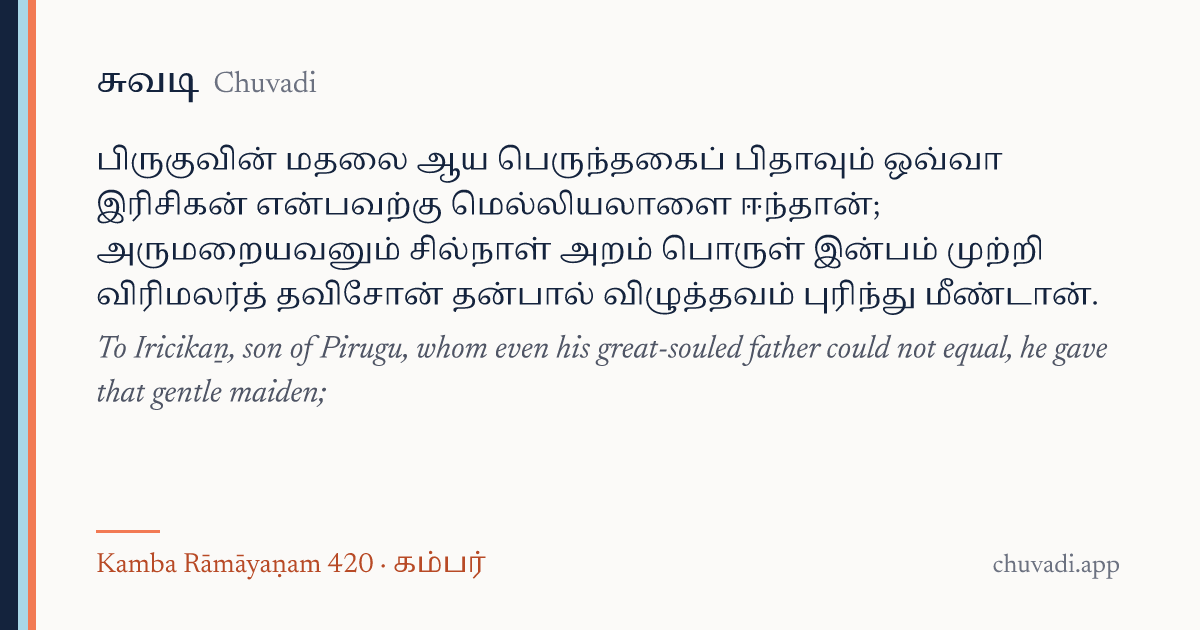
பிருகுவின் மதலைஆய - பிருகு என்பவனுக்குப் புத்திரன் ஆனவனும்; பெருந்தகைப் பிதாவும் ஒவ்வா - பெருந்தகைமை வாய்ந்த தந்தையும் ஒப்பாகாத தன்மையினனுமான; இரிசிகன் என்பவற்கு - இரிசிகன் என்ற பெயர் கொண்டவனுக்கு; மெல்லியலாளை ஈந்தான் - மென்மைத் தன்மையினளான கெளசிகையை (எனது தமக்கையை) மணம் செய்து தந்தான்; அருமறையவனும் சில்நாள் - அரிய வேதங்கள் வல்ல அந்த இரிசிக முனியும் சில காலம் (அம்மங்கையுடன் வாழ்ந்து); அறம் பொருள் இன்பம் முற்றி - அற வாழ்வில், பொருளீட்டி இன்பம் துய்த்து வாழ்ந்து முடித்து, பின் வீடு பேறெய்த விரும்பி; விரிமலர்த் தவிசோன் தன்பால் - விரிந்த தாமரை மலரில் வாழ்கின்ற பிரமதேவனிடத்தே; விழுத்தவம் புரிந்து மீண்டான் - சிறந்த தவம் செய்து அங்கு அடைந்தான்.
மதலை: விழுது. விழுதுபோன்ற மக்களைக் குறித்தது. பிதா: தந்தை. ஒவ்வா: ஒவ்வாத (ஈறுகெட்ட எதிர்மறைப் பெயரெச்சம்). முற்றி: முற்றுப்பெற்று. தவிசு: இருக்கை. விழுத்தவம்: சிறந்ததவம். புரிதல்: செய்தல். மெல்லியலாள்: மென்மைக் குணம் உடையவள். “பிதாவும் ஒவ்வா இரிசிகன்” என்றதால் பெருந்தகை வாய்ந்த தந்தையான பிருகுவைவிடச் சிறந்தவன் என்பது கருத்தாகும். இத்தகைய முனிவனான இரிசிகனுக்கு, காதிமன்னன், “கவுசிகை” என்ற தன் மகளை மணம் செய்து தந்தான். இல்லறத்தில் இனிதே வாழ்ந்து வீடு பேறடைய விரும்பிய இரிசிகன் அதற்குரிய தவம் செய்து பிரமலோகம் சேர்ந்தான்.
ஆங்கிலம் · English translationAI
Translation
- To Iricikaṉ, son of Pirugu, whom even his great-souled father could not equal,
- he gave that gentle maiden;
- and that master of the rare Vedas, after some days, having fulfilled dharma, wealth and pleasure,
- performed lofty penance and went back to him whose seat is the open flower.
What the poem says
Vicuvāmittiraṉ continues his family story. King Kāti gave his daughter Kaucikai in marriage to the sage Iricikaṉ (Ṛcīka), son of Bhṛgu and greater even than his illustrious father.
Iricikaṉ lived with her for a time and completed the three aims of a householder's life: virtue, wealth and pleasure. Then, seeking liberation, he performed great austerities and went to the world of Brahmā.