



கம்பராமாயணம் 4190 · கிட்கிந்தா 7.168
பாடல் · The poem
Tap a word to see its gloss in the commentary and where else it occurs.
பாட வேறுபாடு · Project Madurai reads
பொருள் · Meaning in Tamil
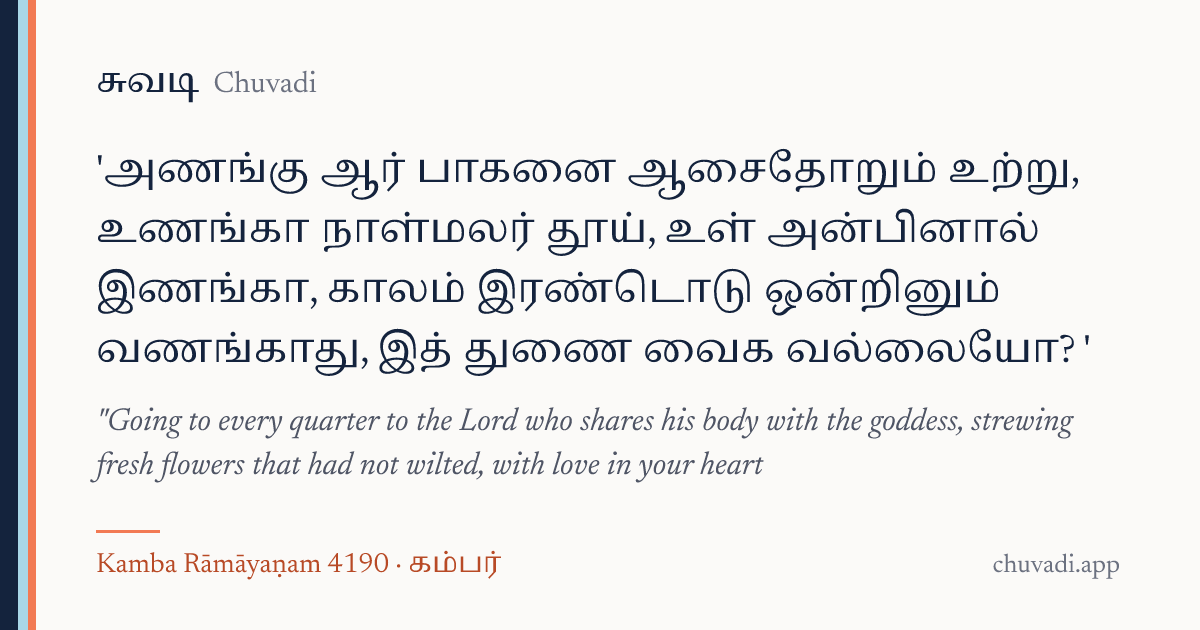
ஆசை தோறும் உற்று - திசைகள் தோறும் சென்று; உள் அன்பினால் இணங்கா - உள்ளத்துப் பக்தியோடும் கூடி; உணங்கா நாள் மலர் தூய் - வாடாத புதிய மலர்களைத் தூவி; காலம் இரண்டொடு ஒன்றினும் - காலை, மாலை நண்பகல் ஆகிய மூன்று காலங்களிலும்; அணங்கு ஆர் பாகனை - மாதொரு பாகனாகிய சிவபெருமானை; வணங்காது - வழிபடாமல்; இத்துணை - இவ்வளவு நேரம்; வைக வல்லையோ - தங்கியிருக்க வல்லாயோ?
வாலி நாள்தொறும் எல்லாத் திசைகளுக்கும் சென்று சிவபிரானை வழிபட்டு வரும் வழக்கமுடையவன் என்பதை 3822, 3825, எண்ணிட்ட பாடல்களிலும் காண்க. 'கோலமா மலரொடு தூபமும் சாந்தமும் கொண்டு போற்றி, வாலியார் வழிபடப் பொருந்தினார்'; 'நீல மா மணிநிறத் தரக்கனை இருபது கரத்தோடு ஒல்க வாலினால் கட்டிய வாலி வழிபட வணங்கும் கோயில்' என்னும் திருஞானசம்பந்தர் தேவாரமும் (வடகுரங்காடுதுறை : 6,8) ஈண்டுக் காணத்தக்கது. நாள்மலர் - அன்றலர்ந்த மலர்; வாலியின் சிவபூசையைத் தாரை நேரில் அறிந்தவளாதலின் 'வணங்காது இத்துணை வைக வல்லையோ' எனப் புலம்பினாள். 'முப்போதும் திருமேனி தீண்டுவார்' என்று நம்பியாரூரரும் மூன்று காலங்களைக் குறித்துள்ளமை காண்க. திருத்தொண்டத் தொகை. (10.7)
ஆங்கிலம் · English translationAI
Translation
- "Going to every quarter to the Lord who shares his body with the goddess,
- strewing fresh flowers that had not wilted, with love in your heart
- devoted, at the three times of the day,
- can you stay so long now without worshipping?"
What the poem says
Every day Vāli travelled to all the directions of the world to worship Śiva, who shares his body with the goddess Umā, offering fresh flowers at dawn, noon and dusk. Tārai, who knew his devotion, cannot believe he would lie still for so long and miss his worship.
The commentary quotes Campantar's Tēvāram hymn on the shrine of Vaṭakuraṅkāṭutuṟai, which says Vāli worshipped Śiva there, the same Vāli who bound Irāvaṇaṉ with his tail.