



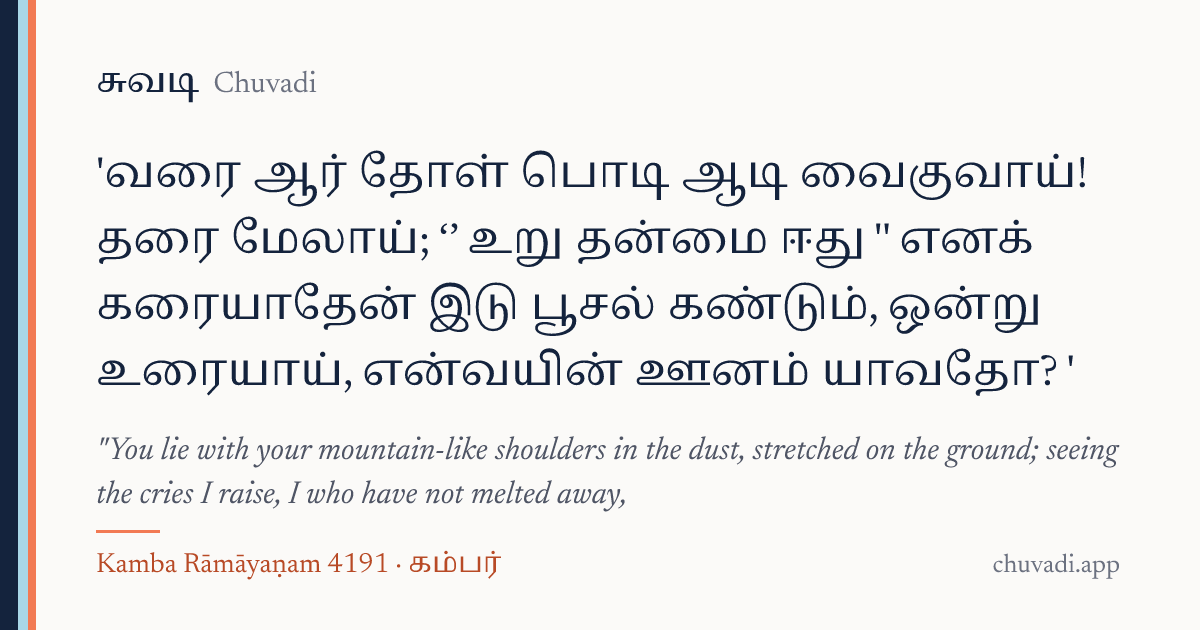
கம்பராமாயணம் 4191 · கிட்கிந்தா 7.169
பாடல் · The poem
Tap a word to see its gloss in the commentary and where else it occurs.
பொருள் · Meaning in Tamil
தரை மேலாய் - தரை மீது கிடப்பவனே! வரை ஆர் தோள் - மலைகள் போல் விளங்கும் உனது தோள்கள்; பொடி ஆடி வைகுவாய்- புழுதி படியக் கிடப்பவனே! உறு தன்மை ஈது என - நீ அடைந்த கதி இதுவோ என்று; கரையாதேன் - கரைந்துருகப் பெறாதவளாகிய யான்; இடு பூசல் கண்டும் - (உன் எதிரில் நின்று) கதறும் அழுகையைப் பார்த்தும்; ஒன்று உரையாய் - (என் துயர் போக்கும் வண்ணம்) மாற்றம் ஒன்றும் கூறினாய் அல்லை. என் வயின் ஊனம் யாவதோ - (இவ்வாறு நீ என்னை வெறுத்தொதுக்க) என்னிடத்தில் உள்ள குற்றம் யாதோ?
பொடியாடல் - தூசி படிந்திருத்தல். மலை போன்ற தோளினை "வரை சேர் தோளிடை" (4098) என முன்னரும் கூறியது காண்க. தன்துயர் பொறா வாலி, இப்பொழுது தன் துயர் நீக்கும் வண்ணம் பேசாதிருத்தலை நோக்கித் தாரை என்னிடம் உள்ள குற்றம் யாதெனக் கேட்டுப் புலம்பினாள். 'என்னுறு துயர் கண்டும் இடருறும் இவள் என்னீர் பொன்னுறு நறுமேனி பொடியாடிக் கிடப்பதோ' (சிலப்- ஊர்சூழ். வரி39.40) எனப் புலம்பிய கண்ணகியின் துயரம் ஈண்டு ஒப்பு நோக்கத் தக்கது. வாலிக்கு ஏற்பட்ட கொடிய நிலையைத் 'தரைமேலாய்' எனும் தொடர் உணர்த்தும்.
ஆங்கிலம் · English translationAI
Translation
- "You lie with your mountain-like shoulders in the dust,
- stretched on the ground; seeing the cries I raise, I who have not melted away,
- saying 'Is this the state you have come to?', you do not
- speak a single word. What fault is there in me?"
What the poem says
Tārai is distressed that Vāli, who could never bear to see her sorrow, now lies in the dust and says nothing to comfort her. She asks what fault of hers has made him turn away.
The commentary compares Kaṇṇaki's lament in the Cilappatikāram over her husband's body lying in the dust.