



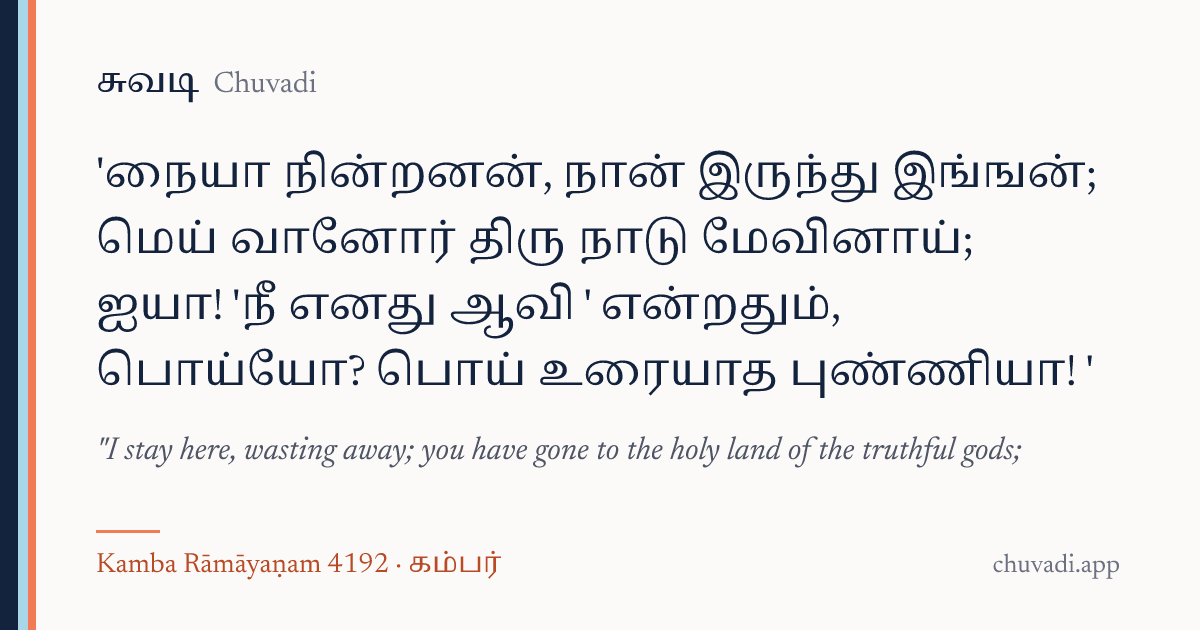
கம்பராமாயணம் 4192 · கிட்கிந்தா 7.170
பாடல் · The poem
Tap a word to see its gloss in the commentary and where else it occurs.
பொருள் · Meaning in Tamil
பொய் உரையாத புண்ணியா - பொய்ம்மொழி பேசாப் புண்ணியனே! நான் இங்ஙன் இருந்து - நான் இங்கே இருந்து; நையா நின்றனென் - துயர் உற்று வருந்தி நின்றேனாக; மெய் வானோர் திருநாடு - (நீயோ) வாய்மையில் வழாத தேவர்கள் வாழும் விண்ணுலகை, மேவினாய் - அடைந்தாய்; ஐயா - என் தலைவனே! நீ எனது ஆவி என்றதும் - (நீ என்னை நோக்கி) 'நீயே எனது உயிர்' என்றதும்; பொய்யோ - பொய்தானா?
வாலி தாரையை உயிராகக் கருதியது போல, தாரையும் வாலியை உயிராகக் கருதியதை 'உயிர் போனால் உடலாரும் உய்வரோ?' (4100) என்ற அடிகள் உணர்த்தும். வாலியும் தாரையும் வாழ்ந்த வாழ்வின் அன்பு நிலையை இதனால் அறியலாம். குடும்பத் தலைவன், தலைவியருள் ஒவ்வொருவரும் தம்மை உடலாகவும், மற்றவரை உயிராகவும் அன்பு காட்டி வாழ்வது இயல்பாகும். எனவே தான் இங்குத் தன் உயிர் துடிக்க, உடல் பிரிதல் இல்லை என்பதால் 'நீ எனது ஆவி என்றதும் பொய்யோ' என்றாள். என்றதும் - உயர்வு சிறப்பும்மை. 'நீ எனது ஆவி' எனச் சொன்னது உண்மையாயின் தன்னை விட்டுப் பிரிந்திருக்கக் கூடாதன்றோ' எனப் புலம்பினாள். பொய் உரைத்துவிட்டு உண்மை பேசும் தேவர்கள் உலகில் எங்ஙனம் செல்ல முடிந்தது என்பதற்கு 'மெய் வானோர்' என்றாள். பொய்யோ - ஐயவினா.
ஆங்கிலம் · English translationAI
Translation
- "I stay here, wasting away;
- you have gone to the holy land of the truthful gods;
- my lord, when you said, 'You are my life,'
- was that a lie, virtuous one who never spoke a lie?"
What the poem says
Vāli used to call Tārai his life. If that were true, she says, he could not have left her behind. So was it a lie, from one who never lied? And if he lied, how could he enter the world of the gods, who are always truthful?
The commentary notes that Tārai has called Vāli her life as well. Husband and wife in a loving home each regard the other as the life that animates the body.