



கம்பராமாயணம் 4193 · கிட்கிந்தா 7.171
பாடல் · The poem
Tap a word to see its gloss in the commentary and where else it occurs.
பாட வேறுபாடு · Project Madurai reads
பொருள் · Meaning in Tamil
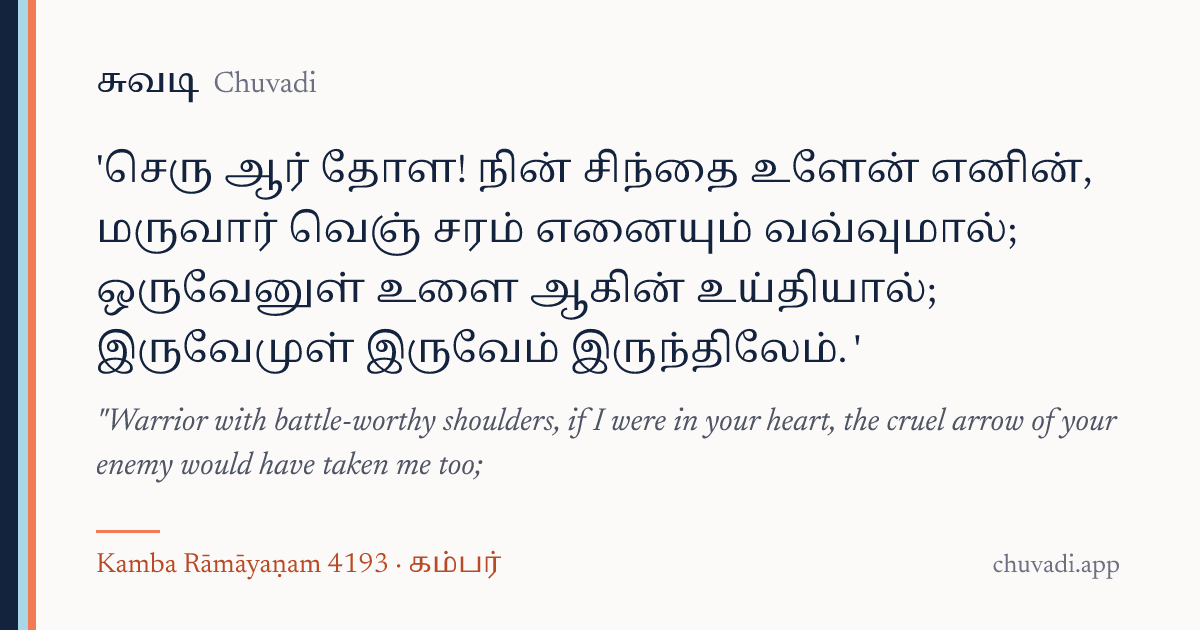
செரு ஆர் தோள - போர்த் தொழில் வல்ல தோள்களை உடையவனே! நின் சிந்தை உளேன் எனில் - உன்னுடைய மனத்தில் யான் இருப்பது உண்மை என்றால்; மருவார் வெஞ்சரம் - பகைவரது கொடிய அம்பு; என்னையும் வவ்வும் - என்னுயிரையும் கொன்றிருக்கும்; ஒருவேன் உள் உளை ஆகின் - தனியளாகிய என் நெஞ்சில் நீ நீங்காது இருப்பவனாயின்; உய்தி - நீ இறவாது பிழைத்திருப்பாய். இருவேம் உள் - (அதனால்) ஒருவர் உள்ளத்தில் ஒருவராக; இருவேம் இருந்திலேம் - நாம் இருவரும் இருந்தோம் அல்லோம்.
வாலியும் தாரையும் ஒருவர் உள்ளத்தில் மற்றொருவர் இருந்தனர் எனக் கூறத்தக்க அன்பு வாழ்க்கை நடத்தினர் எனத் தெரிகிறது. 'உன்னுடைய மனத்தில் நான் இருந்திருந்தால் உன்னைத் தாக்கிய அம்பு என்னைத் தாக்கியிருக்கும். அல்லது என் மனத்தில் நீ இருப்பது உண்மையானால் யான் பிழைத்திருப்பதால் நீயும் பிழைத்திருப்பாய். இவ்விரண்டினுள் எதுவும் நிகழாமையை எண்ணுகையில் ஒருவர் சிந்தையில் மற்றொருவர் இருந்தனம் எனும் மொழி உண்மையாகாது என்ன மற்றன்ன, மடந்தையொடு எம்மிடை நட்பு (குறள் - 1122) என்ற குறள் ஈண்டு ஒப்பு நோக்கத்தக்கது.
ஆங்கிலம் · English translationAI
Translation
- "Warrior with battle-worthy shoulders, if I were in your heart,
- the cruel arrow of your enemy would have taken me too;
- if you were within me, who am one alone, you would have survived;
- so it seems neither of us was within the other."
What the poem says
Tārai reasons in her grief. If she truly dwelt in Vāli's heart, the arrow that pierced it would have killed her too. If he truly dwelt in hers, he would have lived on with her. Since neither happened, their saying that each lived in the other's heart must have been untrue.
The commentary compares the Tirukkuṟaḷ (1122), where a lover says the bond between him and his beloved is like that between body and soul.