



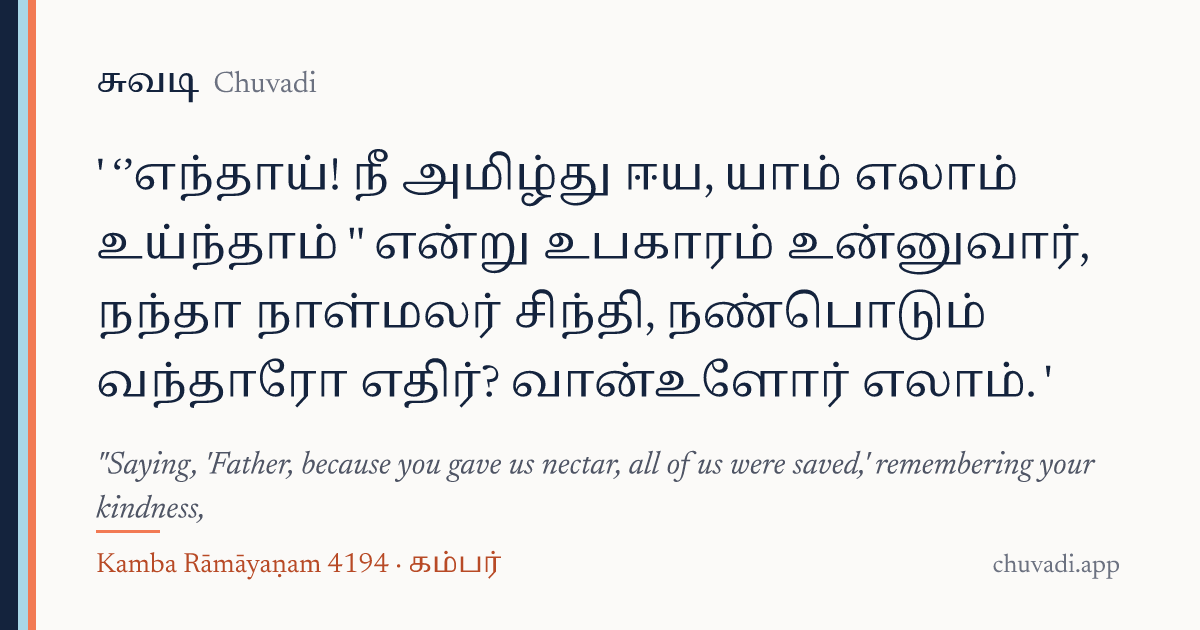
கம்பராமாயணம் 4194 · கிட்கிந்தா 7.172
பாடல் · The poem
Tap a word to see its gloss in the commentary and where else it occurs.
பொருள் · Meaning in Tamil
வான் உளோர் எலாம் - விண்ணுலகில் வாழ்கின்ற தேவர்களெல்லாரும்; உபகாரம் உன்னுவார் - நீ செய்த பேருதவியை மறவாது நினைப்பவராய்; 'எந்தாய் - 'எம் தந்தை போன்றவனே! நீ அமிழ்து ஈய- பாற்கடலைக் கடைந்து நீ உண்ணாமல் அமுதத்தை எமக்குக் கொடுக்க; யாம் எலாம் உய்ந்தேம் - நாங்கள் எல்லோரும் அதனை உண்டு இறவா நிலை பெற்றோம்; என்று - என்று உன்னைப் புகழ்ந்து; நந்தா நாள் மலர் சிந்தி - வாடாத அப்பொழுது அலர்ந்த (கற்பகம் முதலிய) மலர்களைத் தூவி; நண்பொடும் - நட்புரிமையோடு; எதிர் வந்தாரா - எதிர் கொண்டழைக்க வந்தார்களோ?
முன்பு தேவர்களுள் ஒருவனான யமனை 'உபகாரம் சிந்தியா தான்' (4100) எனப் பழித்த தாரை இப்பொழுது மனம் மாறி ஏனைய தேவர்களின் உபகாரச் சிந்தையை நினைப்பவளானாள். நந்தா நாள் மலர் - சந்தனம், அரிசந்தனம், மந்தாரம், பாரிசாதம், கற்பகம் என்பன. எந்தை எனும் பெயர் விளிவேற்றுமைக் கண் எந்தாய் எனத் திரிந்தது. யாமெலாம் - தேவர்கள் எல்லோரையும் குறித்தது. வந்தாரா - ஐயவினா.
ஆங்கிலம் · English translationAI
Translation
- "Saying, 'Father, because you gave us nectar, all of us
- were saved,' remembering your kindness,
- scattering fresh, unfading flowers, with friendship,
- did all those who live in heaven come out to meet you?"
What the poem says
Tārai's mood shifts. Having blamed Yama for forgetting Vāli's gift, she now wonders whether the other gods, mindful of the nectar he gave them, came out to welcome him into heaven with garlands of unfading heavenly flowers.
The flowers meant are those of the trees of paradise, such as the kaṟpakam and pārijāta.