



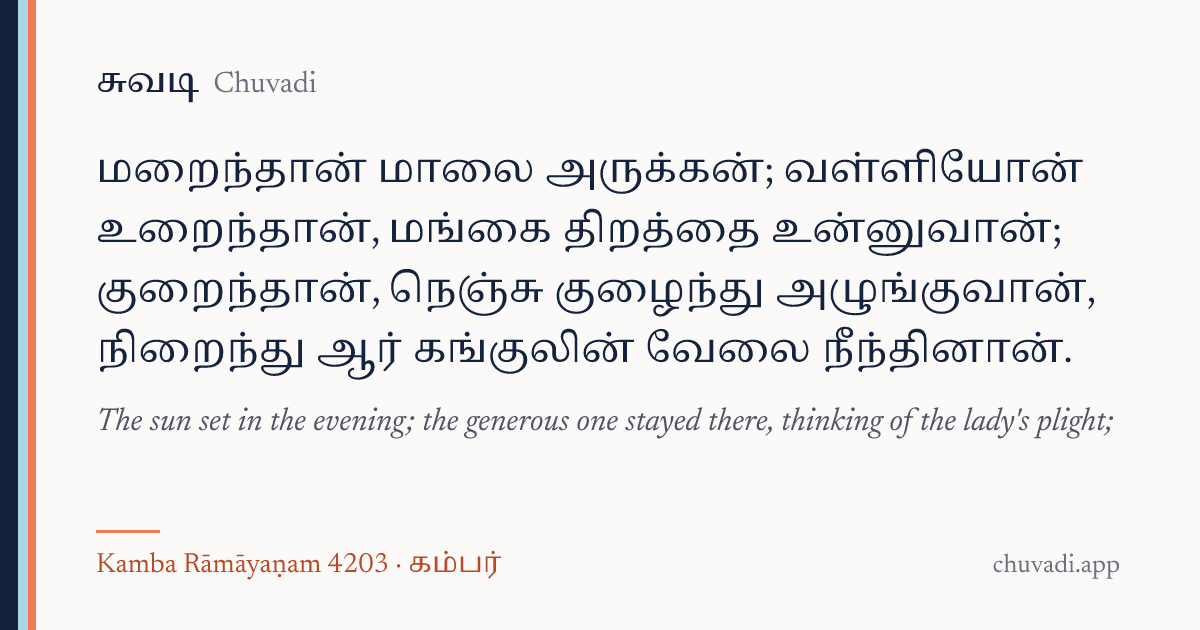
கம்பராமாயணம் 4203 · கிட்கிந்தா 7.181
பாடல் · The poem
Tap a word to see its gloss in the commentary and where else it occurs.
பொருள் · Meaning in Tamil
அருக்கன் - சூரியன்; மாலை மறைந்தான் - மாலைப் பொழுதில் மறைந்தான். வள்ளியோன் - வண்மைக் குணமுடைய இராமன்; மங்கை திறத்தை உன்னுவான் - சீதையின் நிலையைக் கருதுபவனாய்; உறைந்தான்- (அங்கு ஓர் இடத்தில்) தங்கி; குறைந்தான் - மெலிந்து; நெஞ்சு குழைந்து அழுங்குவான் - மனம் நொந்து வருந்துவானாகி, நிறைந்து ஆர் கங்குலின் வேலை - நிறைந்து பரவிய இரவுப் பொழுதாகிய கடலை; நீந்தினான் - அரிதில் கடந்தான்.
மனைவியைப் பிரிந்து வருந்துவார்க்கு இராப்பொழுது நீண்டதாகத் தோன்றுவதாலும் அதனைக் கழித்தல் கடினமாக இருப்பதாலும் 'நிறைந்தார் கங்குலின் வேலை நீந்தினான்' என்றார். 'இரவரம்பாக நீந்தினமாயின் . . . . கங்குல் வெள்ளம் கடலினும் பெரிதே' (குறுந்தொகை - 387), 'இந்நாள் நெடிய கழியும் இரா' (குறள். 1168) என்பன ஒப்பு நோக்கத்தக்கன. கங்குலின் - இன் சாரியை. உன்னுவான், குறைந்தான், அழுங்குவான் என்னும் வினை முற்றுக்கள் எச்சப் பொருளில் வந்து முற்றெச்சங்கள்.
ஆங்கிலம் · English translationAI
Translation
- The sun set in the evening; the generous one
- stayed there, thinking of the lady's plight;
- he wasted, his heart melting in grief,
- and swam across the brimming ocean of the night.
What the poem says
The day of Vāli's death ends. Irāmaṉ rests, but his thoughts turn to Cītai, and he spends the night in grief. For one separated from a beloved, the night seems endless, an ocean to be crossed by swimming.
The commentary compares a classical Tamil love poem that calls the flood of night wider than the sea, and the Tirukkuṟaḷ (1168) on the long nights of lovers apart. This verse closes the episode of Vāli's slaying.