



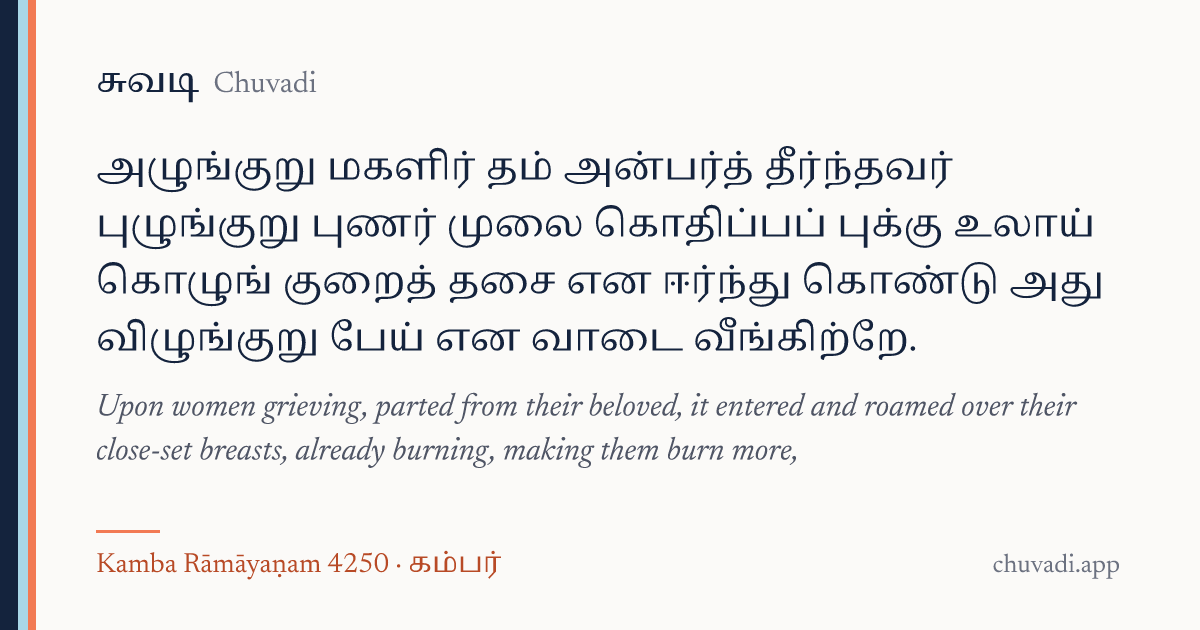
கம்பராமாயணம் 4250 · கிட்கிந்தா 9.13
பாடல் · The poem
Tap a word to see its gloss in the commentary and where else it occurs.
பொருள் · Meaning in Tamil
வாடை - வாடைக் காற்று; தம் அன்பர் தீர்ந்தவர் - தன் அன்புமிக்க தலைவரைப் பிரிந்தவர்களாய்; அழுங்குறு மகளிர் - வருந்துகின்ற பெண்களின்; புழுங்குறு புணர் முலை - (மனவேதனையினால்) வெதும்புகின்ற நெருங்கிய கொங்கைகள்; கொதிப்பப் புக்கு உலாய் - மேலும் கொதிப்பு அடையுமாறு அவற்றின் மீது சென்று வீசி; கொழுங் குறைத் தசை என - (அக்கொங்கையைச் செழுமையான மாமிசத் துண்டம் என நினைத்து; ஈர்ந்து கொண்டு - அரிந்தெடுத்துக் கொண்டு; அது விழுங்குறு - அத்தசையை விழுங்க வந்த; பேய் என - பேய் போல; வீங்கிற்று - ஓங்கி வளர்ந்து வீசியது.
கணவரைப் பிரிந்த மகளிரின் கொங்கைகள் மிகக் கொதிக்குமாறு வீசி, அவற்றை மாமிசத்துண்டமென நினைத்து உண்ணவரும் பேய் போல் வாடைக் காற்று வீசியது என அதன் கடுமை கூறப்பட்டது. வடக்கிலிருந்து வீசுவதால் வாடை எனப்பட்டது. பிரிந்துறை மகளிரை வாடை வருத்தும் என்பதை "தழல் வீசி உலா வரு வாடை தழீஇ அழல்வீர்" (5232), 'பனிப்பியல்வாக வுடைய தண்வாடை யிக்காலம் இவ்வூர்ப் பனிப்பியல்வெல்லாந் தவிர்ந்தெரி வீசும்' (திருவிருத்தம் 5) என்ற அடிகள் உணர்த்தும். பேய், பிறர் அஞ்சத்தக்க பெரிய வடிவம் கொண்டாற்போல, வாடையும் விஞ்சியது எனக் கூறவேண்டி, வாடை வீசிற்று என்னாது 'வீங்கிற்று' என்றார். அன்பர்த் தீர்ந்தவர் - இரண்டாம் வேற்றுமைத் தொகை; தசை - இலக்கணப் போலி.
ஆங்கிலம் · English translationAI
Translation
- Upon women grieving, parted from their beloved,
- it entered and roamed over their close-set breasts, already burning, making them burn more,
- as if it took them for rich slices of flesh, tore them off,
- and were a demon come to swallow them: so the north wind swelled.
What the poem says
The north wind is pictured as a ghoul. Women whose husbands are away already burn inside with longing. The cold wind falls on their breasts and makes them burn even more, as if a demon had taken them for fat pieces of meat and come to tear them off and eat them.
The poet says the wind "swelled" rather than simply "blew", to suggest a demon growing to a terrifying size. Once more the suffering of separated lovers reflects Irāmaṉ's own grief.