



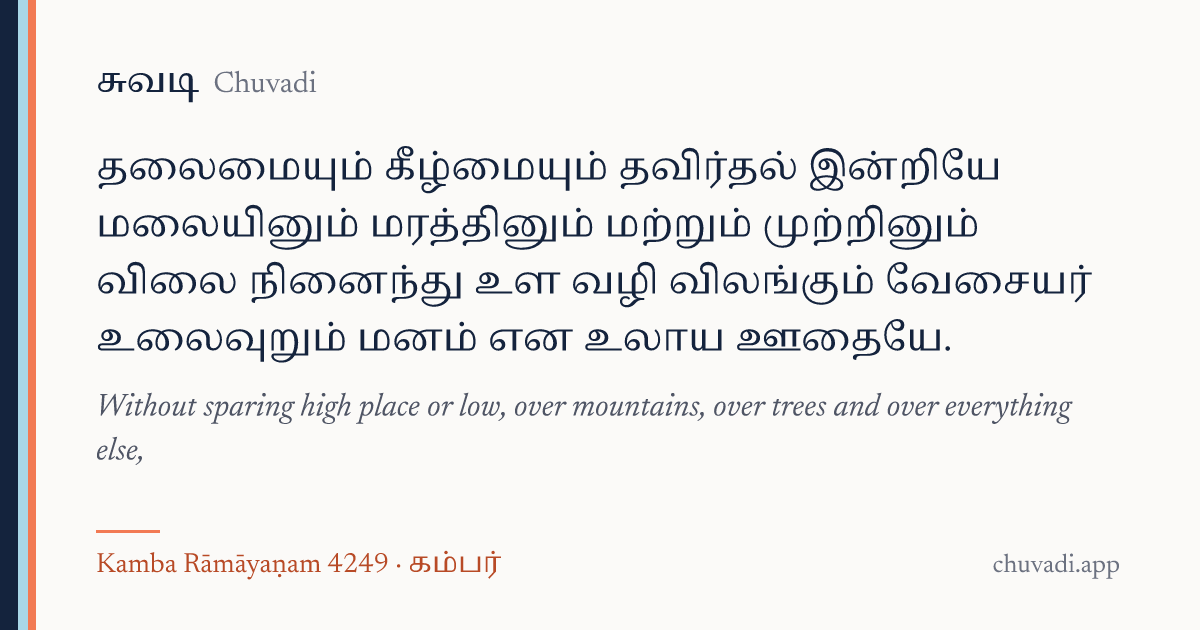
கம்பராமாயணம் 4249 · கிட்கிந்தா 9.12
பாடல் · The poem
Tap a word to see its gloss in the commentary and where else it occurs.
பொருள் · Meaning in Tamil
ஊதையே - அந்த வாடைக்காற்று; தலைமையும் கீழ்மையும் - உயர்ந்த இடத்திலும் தாழ்ந்த இடத்திலும்; தவிர்தல் இன்றியே - நீங்குதல் இல்லாமல்; மலையினும் மரத்தினும் - மலைகளிலும் மரங்களிலும், மற்றும் முற்றினும் - மற்று எல்லா இடங்களிலும்; விலை நினைந்து - (பொருள்) கொடுப்பவருடைய உயர்வு, தாழ்வு கருதாமல் தாம் தரும் இன்பத்திற்கு) விலையாகக் கொடுக்கக்கூடிய பொருளையே கருதி; உள வழி விலங்கும் - அப்பொருள் உள்ள இடத்திற்குப் பாய்ந்து செல்லும்; வேசையர் - விலைமகளிரது; உலைவுறும் மனம் என - நிலையின்றிச் சுழலும் மனம் போல; உலாய - வீசியது.
விலை மகளிர் பொருள் ஒன்றையே குறிக்கோளாகக் கொண்டு மேலோர் கீழோர் என்னும் வேறுபாடு கருதாது பொருள் கொடுப்பாரிடம் தம்மைக் கொடுப்பவராவர். இவர்கள் பொருட் பெண்டிர் வரைவில் மகளிர் எனவும் குறிக்கப்படுவர் "மெய்வரு போகம் ஓக்க உடன் உண்டு விலையும் கொள்ளும் பை அரவு அல்குவார் தம் உள்ளமும்" (495); "நிலையா மன வஞ்சனை நேயம் இலா விலை மாதர்" (8280), 'நிதி வழி நேயம் நீட்டும் மன்றலம் கோதை மாதர் மனம்' (3309) என்று முன்னரும் விலைமகளிர் இயல்பு கூறப்பட்டது. விலங்குதல் - விலகிச்செல்லுதல்.
ஆங்கிலம் · English translationAI
Translation
- Without sparing high place or low,
- over mountains, over trees and over everything else,
- like the restless mind of harlots who, thinking only of the price, swerve to wherever it is found,
- the cold wind roamed.
What the poem says
The cold north wind of the rains blows everywhere without distinction, over hilltops and lowlands, through trees and over everything. The poet compares it to the fickle mind of women who sell themselves, who care nothing for whether a man is high-born or low and go wherever money is to be had.
The comparison is pointed: the wind, like such a mind, has no fixed loyalty and never stays in one place. Kampaṉ uses the same type of figure elsewhere in the epic.