



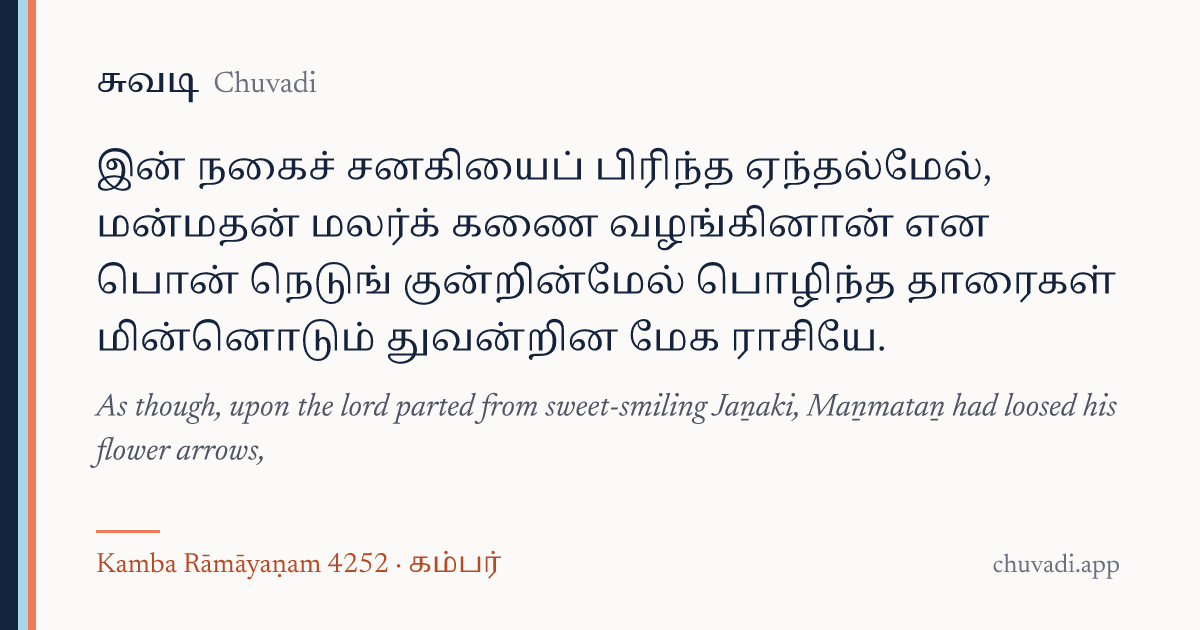
கம்பராமாயணம் 4252 · கிட்கிந்தா 9.15
பாடல் · The poem
Tap a word to see its gloss in the commentary and where else it occurs.
பொருள் · Meaning in Tamil
இன் நகைச் சனகியை - இனிய புன்முறுவலையுடைய சீதையை, பிரிந்த ஏந்தல் மேல் - பிரிந்த இராமன் மேல், மன்மதன் மலர்க்கணை வழங்கினான் என - மன்மதன் தன் மலர் அம்புகளை எய்தது போல; மின்னொடும் துவன்றின - மின்னல்களுடன் நெருங்கி நிறைந்த; மேக ராசி - மேகக் கூட்டங்கள்; பொன் நெடுங் குன்றின் மேல் - பொன் மயமான பெரிய மலையில் மேல்; தாரைகள் பொழிந்த - மழைத் தாரைகளைச் சொரிந்தன.
ஏந்தல் - பெருமையில் சிறந்தவன் இராமன். பிரிந்து நிற்கும் நிலையில் மன்மதன் மலர்க்கணை எய்தல் இயல்பாதலின் 'பிரிந்த ஏந்தல் மேல்' என்றார். சீதையின் புன்னகை, இராமன் துயரம் மிக, ஏதுவாயது கருதி, 'இன்னகைச் சனகி' என்றார். தாமரைப்பூ, மாம்பூ அசோகப்பூ முல்லைப்பூ நீலோற்பலப்பூ என்னும் ஐந்தும் மன்மதனின் மலரம்புகளாம். அம்புமாரி எனக் கூறுதல் மரபு ஆதலின் மழைத்தாரைக்கு மன்மதனின் மலர்க்கணை வழங்கல் உவமையாயது. பொறுமை, சலியாமை, பெருமை, வண்மை முதலிய குணங்களை உடைய இராமன், அவ்வியல்புகளை உடைய மலைக்கு உவமையாகத் தக்கவன். பொன்னெடுங் குன்று என்றது, அப்பொழுது இராமன் தங்கியிருந்த பிரசிரவணம் என்னும் மலையை.
ஆங்கிலம் · English translationAI
Translation
- As though, upon the lord parted from sweet-smiling Jaṉaki,
- Maṉmataṉ had loosed his flower arrows,
- the masses of cloud, crowded close with lightning,
- poured down streams of rain upon the tall golden hill.
What the poem says
The rain begins. The clouds, thick with lightning, pour sheets of rain onto the golden hill where Irāmaṉ is staying. It is as if Maṉmataṉ, the god of love, were shooting his flower arrows at Irāmaṉ, who is separated from Cītai, daughter of Caṉakaṉ, with her lovely smile.
Love's arrows are said to strike hardest at those parted from their beloved. Since a "rain of arrows" is a stock phrase, the downpour easily becomes a volley from the love god. The great hill, steady and generous, is itself a fitting image for Irāmaṉ.