



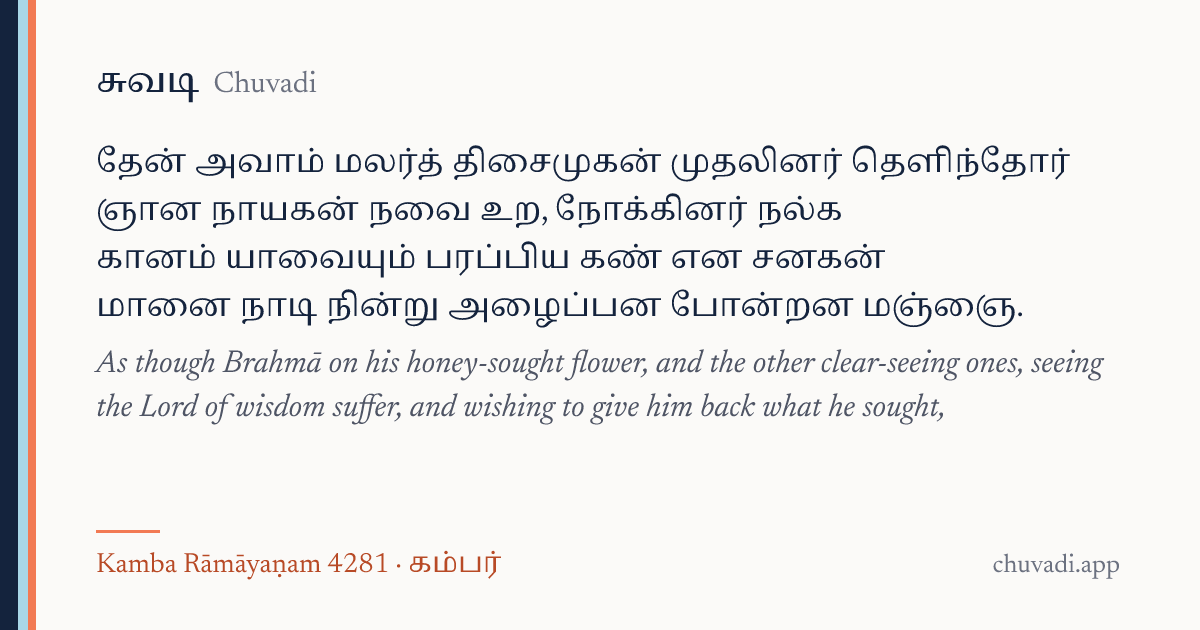
கம்பராமாயணம் 4281 · கிட்கிந்தா 9.44
பாடல் · The poem
Tap a word to see its gloss in the commentary and where else it occurs.
பாட வேறுபாடு · Project Madurai reads
பொருள் · Meaning in Tamil
தேன் அவாம் மலர்த்திசைமுகன் - வண்டுகள் விரும்புகின்ற தாமரைமலரில் வீற்றிருக்கும் நான்முகன்; முதலினர் தெளிந்தோர் - முதலான தெளிந்த அறிவுடையோர்களெல்லாரும்; ஞான நாயகன் - ஞான நாயகனாக விளங்கும் இராமன்; நவை உற - (சீதையைப் பிரிந்து) துன்பம் அடைய; நோக்கினர் நல்க - அதைப் போக்குவான் வேண்டி) சீதையைத் தேடித்தர (எண்ணி); கானம் யாவையும் பரப்பிய - காடுகளில் எல்லாம் பரப்பிய; கண் என - கண்கள் போலத் தோன்ற; மஞ்ஞை - மயில்கள் (தோகைக்கண்களைப் பரப்பி); சனகன் மானை - சனகன் மகளான மான் போன்ற பார்வையையுடைய சீதையை, நாடி நின்று - தேடி நின்று; அழைப்பன போன்றன - அழைப்பனவற்றை ஒத்தன.
மலர்த்திசை முகன் - திருமாலின் நாபிக்கமலத்தில் எழுந்த நான்முகன் என்றும் உரைக்கலாம். காலமிடையிட்டவற்றையும் தேயமிடையிட்டவற்றையும் அறிய வல்லராதலின் 'தெளிந்தோர்' என்றார் துன்புறும் இராமன் சீதையைத் தேடிக் காணுவதற்கு உதவ விரும்பி நான்முகன் முதலியோர் எங்கணும் கண்களைப் பரப்பி வைத்தது போலக் கானகம் எங்கணும் மயில்தோகைக் கண்கள் அமைந்தனவாம். கார்காலத்தில் மயில்கள் தோகை விரித்தாடுதலும், அகவுதலும் இயற்கை. மயில்கள் தமது தோகைக் கண்கள் கொண்டு இராமனுக்கு உதவச் சீதையைத் தேடுவது போலவும், குரல் கொண்டு கூவி அழைப்பது போலவும் நின்றன என்றது தற்குறிப்பேற்ற அணியாகும். 'தேடா நின்ற என்னுயிரைத் தெரியக் கண்டாய். சிந்தையுவந்து, ஆடா நின்றாய்; ஆயிரம் கண்ணுடையாய்க்கு ஒளிக்குமாறு உண்டோ?" (3734) என இராமன் மயிலை நோக்கிக் கூறியது இங்கு நினையத்தகும்.
ஆங்கிலம் · English translationAI
Translation
- As though Brahmā on his honey-sought flower, and the other clear-seeing ones,
- seeing the Lord of wisdom suffer, and wishing to give him back what he sought,
- had spread their eyes over every forest, the peacocks
- seemed to stand searching for Caṉakaṉ's fawn-eyed daughter and calling her.
What the poem says
Peacocks spread their tails, covered in eye-like spots, and give their loud rainy-season calls. The poet imagines that Brahmā, seated on his lotus, and the other all-knowing gods saw Irāmaṉ grieving and set eyes everywhere in the forest to help find Cītai, Caṉakaṉ's deer-eyed daughter. The peacocks' tails are those eyes, and their cries are calls to her.
This is another fancied cause. Earlier in the epic Irāmaṉ himself asked a peacock how anything could hide from a creature with a thousand eyes.