



கம்பராமாயணம் 4301 · கிட்கிந்தா 9.64
பாடல் · The poem
Tap a word to see its gloss in the commentary and where else it occurs.
பாட வேறுபாடு · Project Madurai reads
பொருள் · Meaning in Tamil
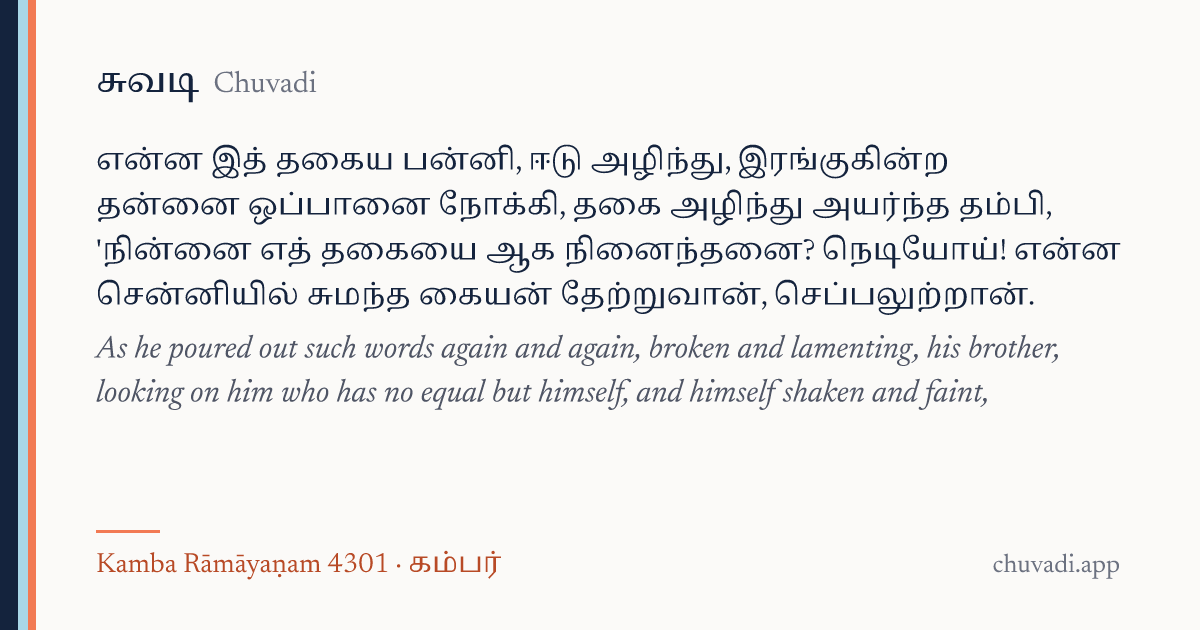
என்ன இத்தகைய பன்னி - என்று இத்தன்மையவான சொற்களைப் பல முறை சொல்லி; ஈடு அழிந்து இரங்குகின்ற - வலிமை அழிந்து வருந்துகின்ற; தன்னை ஒப்பானை நோக்கி - (தனக்கு உவமை இல்லாதவனாதலின்) தனக்குத் தானே ஒப்பான இராமனை நோக்கி; தகை அழிந்து அயர்ந்த தம்பி - (அவன் துயர் கண்டு) தன் துணிவையும் ஓரளவு இழந்த தம்பி இலக்குவன்; சென்னியில் சுமந்த கையன் - தன் தலைமீது உயர்த்திய கைகளை உடையவனாய்; தேற்றுவான் - (தன் அண்ணனைத்) தேற்றும் பொருட்டு; நெடியோய் - (அப்பெருந்தகையைப் பார்த்துப்) பெரியவனே! நின்னை எத் தகையை ஆக நினைந்தனை - உன்னை எத்தன்மை உடையவனாகக் கருதிவிட்டாய்? என்னா - என்று கூறி; செப்பல் உற்றான் - மேலும் பல சொல்லத் தொடங்கினான்.
ஈடு அழிதல் - உடல் வலிமையும் மனவலிமையும் இழத்தல். இராமன் 'தன்னை ஒப்பான்' எனப்பட்டான். இதனைப் பொது நீங்கு உவமை என்பர் "தன் துணை ஒருவரும், தன்னில் வேறு இலான்" (3968) என்றதும் காண்க. தனக்குவமை இல்லாதவன் கடவுளாதலின் இராமனின் தெய்வநிலை உணர்த்தப் பெற்றது. பெருமைக்குரியவன் என்பதைச் சுட்டவே 'நெடியோய்' என விளித்தான். நெடியோய் என்ற விளி இராகவனுடைய இறைத் தன்மையையும் குறிப்பாகக் கூறுவதாகும். இலக்குவனின் அடக்கம் 'சென்னியில் சுமந்த கையன்' என்ற தொடரில் புலனாம். தேற்றுவான் - வான் ஈற்று வினையெச்சம்.
ஆங்கிலம் · English translationAI
Translation
- As he poured out such words again and again, broken and lamenting,
- his brother, looking on him who has no equal but himself, and himself shaken and faint,
- saying, "Great one, what do you take yourself to be?",
- with his hands raised above his head, began to speak to comfort him.
What the poem says
Ilakkuvaṉ, himself shaken at the sight of his brother's grief, joins his palms above his head in reverence and begins to console him. The poem calls Irāmaṉ "the one who resembles only himself", a way of saying he has no equal, which hints at his divinity.
Ilakkuvaṉ's opening question, what Irāmaṉ takes himself to be, is a gentle reproof: has he forgotten his own greatness? The gesture of raised hands shows Ilakkuvaṉ's humility even as he presumes to advise his elder.